The Tamesis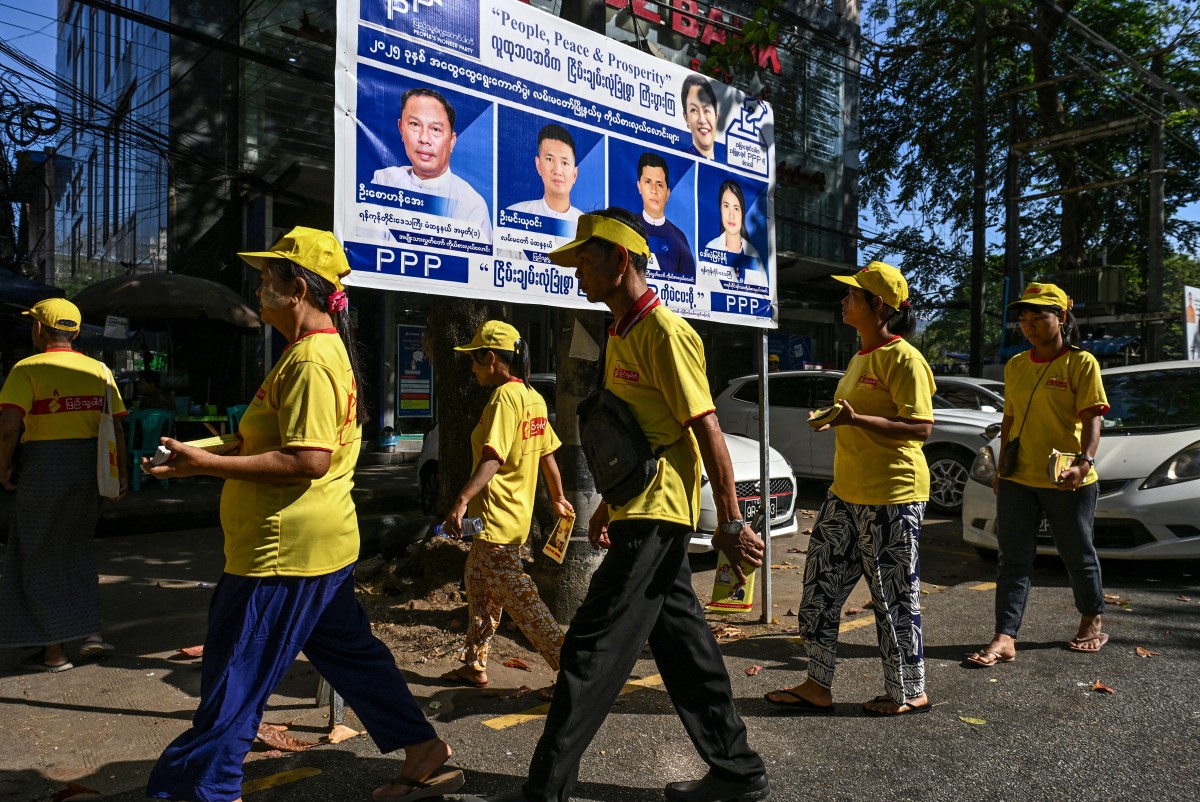
January 9, 2026
Tokyo – On December 28, Myanmar voters went to the polls to participate in the first phase of the country’s general election. Voting will also take place from January 11 to 25.
Japan’s former ambassador to Myanmar, Ichiro Maruyama, spoke to the Yomiuri Shimbun about the country’s military rule and the ongoing elections. Maruyama, 72, has long been engaged in Japan’s diplomacy with Myanmar and has a close relationship with Aung San Suu Kyi.
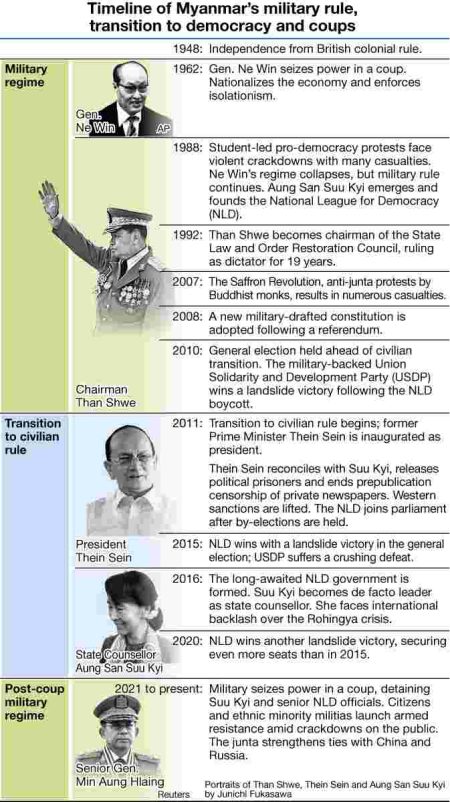
Photo and text: Yomiuri Shimbun
Yomiuri Shimbun: Has the military always aspired to control the country?
Ichiro Maruyama: The first time I went to Myanmar was in 1979, under the military dictatorship of Ne Win’s socialist government. At that time, no organizations other than the military were allowed, and most administrative officials below the ministerial level were former military personnel. During Than Shwe’s reign, the situation was essentially the same.
Immediately after independence from Britain, the army fought against the Karen and the Burmese Communists, fueling the uprising.
Government employees also participated in pro-democracy demonstrations in 1988. I distinctly remember a senior military officer in Than Shwe’s government saying that this was why they could not trust civilians or civil servants. The official said only the military has a responsibility to the country.
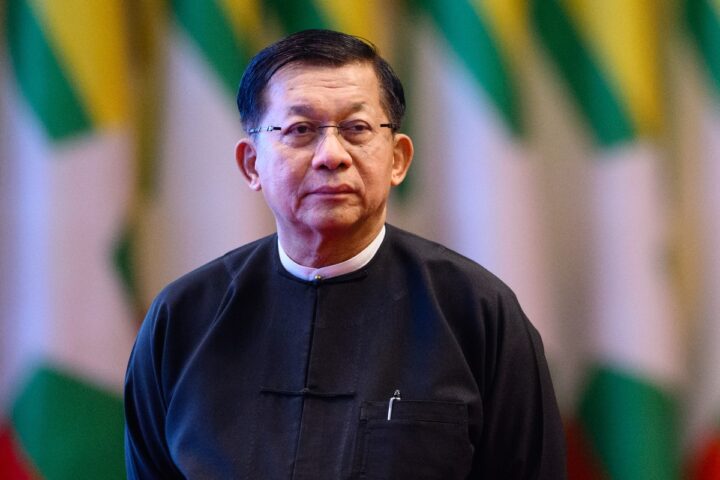
Recently, Supreme Commander of the Military Min Aung Hlaing stated in his speech that given the historical background and current situation, the military must continue to play a political leadership role. I feel that this strong belief has been passed down in the military since the 1962 coup.
Yomiuri: Several other Southeast Asian countries have had developmental authoritarian or military regimes.
Maruyama: Myanmar continued to pursue an isolationist policy until 1988, and its impact was very significant. Therefore, it has no engagement with the international community.
Around the same time, countries such as Thailand, Indonesia and the Philippines were developing under developmental dictatorships, attracting foreign investment and building relationships with foreign governments and companies. Since they are also linked to the United States and European countries as members of the Association of Southeast Asian Nations, it is impossible for the military to seize absolute power and stop the economies of these countries.
Yomiuri: How has public consciousness changed in Myanmar?
Maruyama: During Ne Win’s reign, everyone hated him, and even a bad word meant being taken away by the secret police. Without jobs, everyone falls into poverty. The only way to get foreign information is to listen to shortwave radio stations like Voice of America or the BBC. People fail to understand the differences between their own country and other countries.
Public sentiment changed dramatically after the 1988 pro-democracy movement in Myanmar. Aung San Suu Kyi [who was visiting her sick mother in the country from Britain] At that time, public opposition to the army began at rallies. “You must leave politics,” she told the military in a solemn tone in front of the people – something the people themselves had always wanted to say.
She also has the charm of being a daughter [the nation’s founding father] General Aung San. I think she is truly an amazing character and someone who deserves respect.
The international community has also begun to pay attention to Myanmar. I think without Aung San Suu Kyi, Myanmar would be a forgotten country.
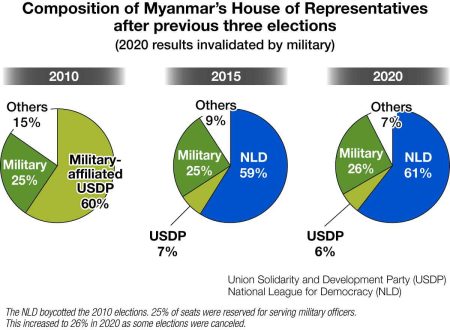
Photo and text: Yomiuri Shimbun
Yomiuri: The people of Myanmar are experiencing freedom for the first time since Myanmar transitioned to civilian government in 2011.
Maruyama: The government led by former President Thein Sein was controlled by former military personnel, but the people preferred it to military rule. In the 2015 general election, the National League for Democracy won an overwhelming victory, and the government of Aung San Suu Kyi was established the following year. This is the first time in 54 years since the 1962 coup that a government has been elected by the people themselves.
Myanmar has undergone such incredible changes [during the about 10 years of civilian rule] —enough for the country to be considered the freest in Southeast Asia. But everything was destroyed in one day by a coup. The frustration and anger of the people are immense and will not subside anytime soon.
Yomiuri: What will happen to the country after the election?
Maruyama: Closer to home, the current system based on military rule will only continue without any real change. Commander-in-Chief Min Aung Hlaing will serve as president and ministers will be civilian-clothes military personnel. The economy will deteriorate further.
Yomiuri: Is reform possible within the military?
Maruyama: There has never been an instance of anyone within the top ranks of the military rebelling against the leadership. We cannot expect any positive developments such as democratization or national reconciliation.
Yomiuri: How do you think the international community views Myanmar?
Maruyama: A serious concern is that China has revealed its true nature. In order to protect its national interests, China has fully intervened. It has huge advantages in putting pressure on Myanmar’s military regime [at any time]using pro-China ethnic minority armed organizations.
Another concern is that U.S. President Donald Trump’s administration has shown no interest in Myanmar. Washington is used to responding to such moves in and around Myanmar. The United States shocked the public by ending Temporary Protected Status for Myanmar nationals and shutting down the U.S. Agency for International Development. It can be said that the indifference of the United States has turned Myanmar into a country where China and Russia can do whatever they want.
Yomiuri: How should Japan respond?
Maruyama: Japan has consistently urged the military regime to prioritize three things: an end to violence, the release of all detainees, including Aung San Suu Kyi, and the restoration of democracy. Real progress on these three points is the minimum requirement recognized by Japan. [the Myanmar administration after the election]which is impossible under the current circumstances.
Yomiuri: Where will Japan’s official development assistance go?
Maruyama: Given that Myanmar will continue to be led by the military after the election, providing assistance to Myanmar is difficult and inappropriate. On the other hand, it is more important to strengthen support to the people of Myanmar in need through the United Nations and Japanese NGOs.
ASEAN must take a firm stand
The Myanmar military regime is accelerating to strengthen relations with China, Russia and Belarus, including cooperation in the military field through weapons procurement and other means.
After the coup, ASEAN and the military government reached a five-point consensus calling for measures, including an immediate end to violence by military authorities. The military junta continues to ignore the agreement. It has increasingly shown that it values China and Russia more than ASEAN, raising concerns that such a posture could ultimately destabilize the entire Indo-Pacific region.
When ASEAN admitted Myanmar as a member in 1997, one of the reasons was the fear that isolating the country would allow China to pull it entirely into its orbit. Malaysian Prime Minister Mahathir Mohamad and Indonesian President Suharto later pushed for the decision in more cautious tones.
Western governments and Aung San Suu Kyi strongly oppose the move, arguing it would lend legitimacy to the military regime. The military junta has not ended its repression. The then US Secretary of State Hillary Clinton once put pressure on ASEAN, saying that if Aung San Suu Kyi was not placed under house arrest, ASEAN should consider expelling Myanmar.
When civilian rule was established, relations with the West were normalized. But Myanmar has since turned back to military rule, once again tilting toward China and Russia, leaving ASEAN feeling betrayed.
The regime deployed Chinese and Russian-made weapons in the civil war. China is developing a port and special economic zone at Kyaukpyu on the Indian Ocean coast. Russia is also considering developing a port near Dawei, near Thailand, at the request of the military junta. It is unclear whether the two ports developed with the support of the military regime are for civilian use only. China may also seek to use the military government to influence ASEAN’s decision-making on issues such as territorial issues in the South China Sea.
ASEAN, bound by its principle of non-interference in internal affairs, did not impose harsh penalties on the military junta. But firm measures must be taken against human rights violations.
Singapore, Malaysia, Indonesia and the Philippines have all condemned the regime, and former Japanese ambassador to Myanmar Ichiro Maruyama noted that “Japan needs to share a sense of urgency and coordinate with ASEAN.” Both sides should rebuild their approach to Myanmar and coordinate actions.