The Tamesis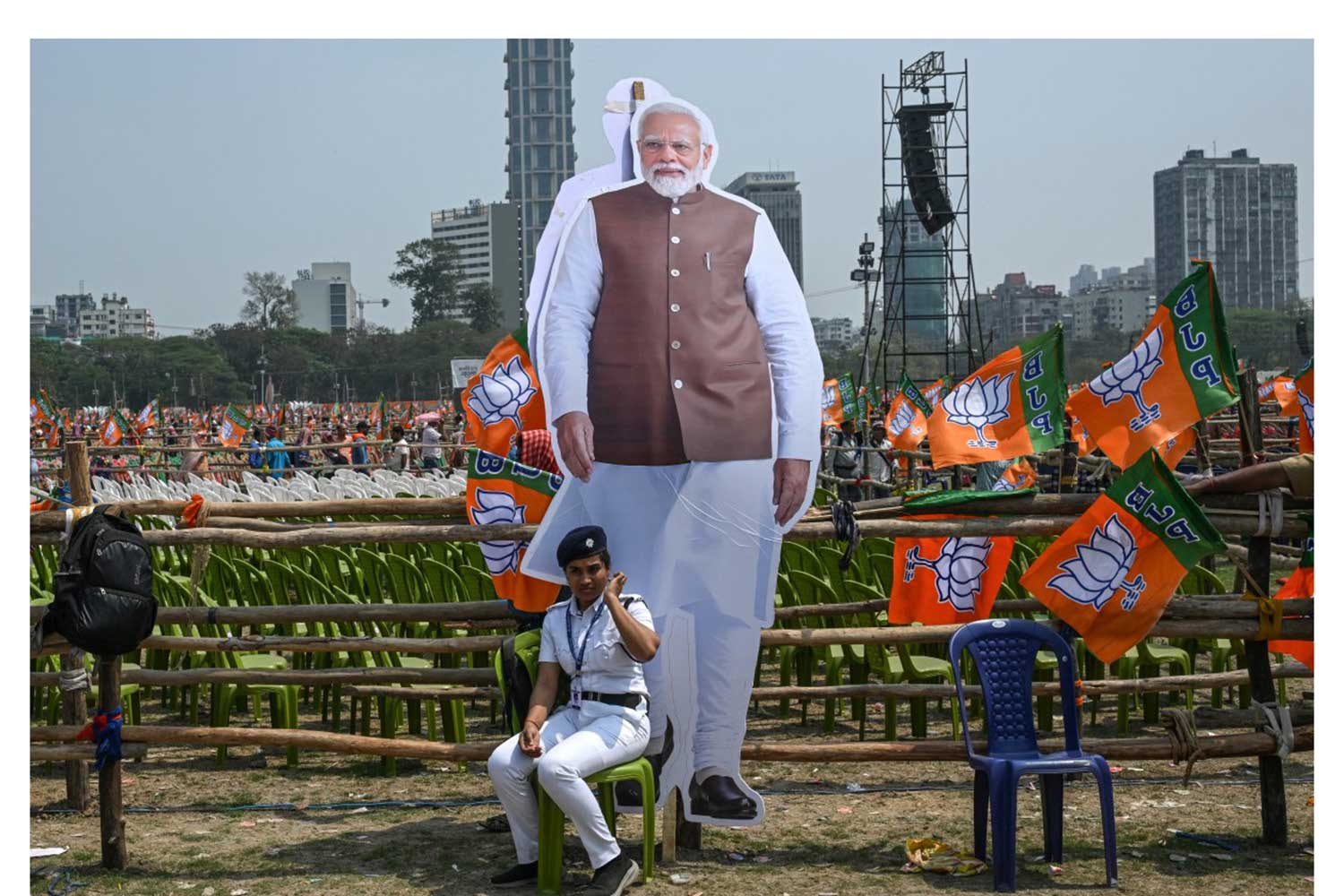
May 8, 2026
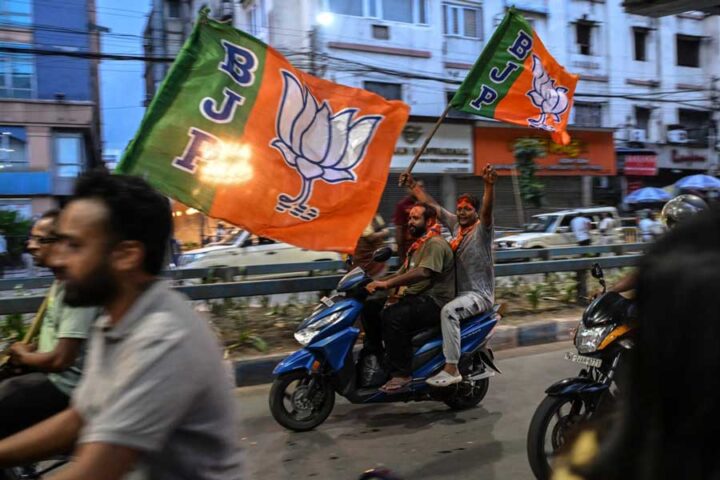
Kochi – The ruling Bharatiya Janata Party (BJP) has bolstered Prime Minister Narendra Modi’s agenda and dominance by claiming control of another state in recent state elections.
The Hindu nationalist Bharatiya Janata Party retains Assam in the northeast and Puducherry in the south, but more notably, it claims West Bengal, a challenging eastern state that has long rejected the party.
With this feat, the BJP now rules 22 of India’s 28 states and 8 Union Territories or is part of the ruling coalition.
“The lotus blooms from the Gangotri river to Gangasagar,” enthuses Modi, referring to the source of the mighty Ganga to where it empties into the sea.
Voters overwhelmingly opted for change, not just in West Bengal, where they handed the BJP a victory over the ruling Trinamool Congress, but also in the southern states of Tamil Nadu and Kerala.
In Kerala, the Congress-led alliance defeated the Left alliance, while in Tamil Nadu, actor Joseph Vijay’s newly formed party defeated the Dravida Munnetra Kazhagam (DMK).
The three losing parties all fought the Modi government over some of its policies.
With the political opposition at a disadvantage, local votes for change could bolster the BJP’s national hopes of winning a fourth consecutive term in the next general election. Regardless, it will have greater influence to push for some controversial policies at the federal level.
Ashok Malik, partner at policy and business advisory group Asia Group, told The Straits Times: “These victories give the Modi government and the BJP greater political strength. They are now the more popular candidates in 2029.”
The Bharatiya Janata Party has grown from strength to strength since it came to power in India in 2014, when it ruled only seven states. During the same period, the number of seats in power of the once powerful Congress party and its allies fell from 14 to 6, while regional and other parties fell from 7 to 3 today.
Bharatiya Janata Party’s influence grows under Modi
Independent policy consultant Tara Krishnaswamy told The Straits Times that the BJP’s flexible campaign machinery has enabled its electoral rise by continually adding new groups of voters to its core base of supporters of the Hindu-first ideology.
“The BJP is deliberately trying to expand its umbrella because it knows that the core base of any party can ossify. And anything that doesn’t expand will shrink,” she said.
The BJP has brought in Dalits and backward castes, wooed Catholics in Kerala and even embraced some Muslims in Bihar.
It focuses on chanting the name of Lord Murugan in Tamil Nadu, where he is revered, rather than focusing on his core nationalist worship of Lord Ram or Lord Hanuman; eating fish in West Bengal to allay concerns over the party’s ban on meat and seafood, as in other states; and expanding targeted tribal outreach in the northeast.
Political observer Yamini Aiyar said the BJP’s “flexible and nimble” approach to building a vote bank has cemented its political dominance, while also employing “legal and illegal” political tactics, including bottomless political financing, Hindutva vote consolidation, using corruption cases to orchestrate the defections of local heavyweights and disempowering regional parties allied with it.
The BJP ensured its re-election in Assam, a state it was already expected to win, by redrawing constituency boundaries in 2023. Although voters are ready to oust the ferocious regional force that has ruled West Bengal for 15 years, some election analysts claim that the removal of millions of voters in West Bengal amid bitter disputes has contributed to the BJP’s vote loss.
The national agenda that inspires Modi
Vibrant, colorful regional parties in West Bengal, Kerala and Tamil Nadu have waged a vigorous pushback against Modi’s government for years, even as the great old Congress struggled to see it as a credible alternative.
The ideologies, languages and demography represented by DMK’s MK Stalin, Left Alliance’s Pinarayi Vijayan and Trinamool’s Mamata Banerjee stand in stark contrast to the Hindu nationalist, Hindi-dominated, authoritarian politics of the BJP.
“The loudest and most outspoken defense of federalism, and resistance to the BJP’s boundary-drawing, religiously differentiated citizenship and one-nation-one electoral agenda, has come from these regional leaders,” Ms Aiyar told The Straits Times.
With these state governors weakened and distracted by their own existential crises after suffering huge losses, the BJP may be emboldened to advance its national agenda faster and with little resistance, she added.
Without them, it’s unclear whether there would be nuanced, nonpartisan discussions on key issues that could change India’s future.
One key piece of legislation that the Modi government is likely to introduce soon is “one nation, one election”, a proposal to synchronize national and all state elections to cut electoral costs. Critics say it would undermine national autonomy in a diverse country.
Additionally, the government could re-introduce a delimitation proposal that redraws constituencies based on population, which was blocked by a parliamentary opposition vote in March 2026.
Other issues on the right-wing BJP’s to-do list are making citizenship and rights for Muslims more precarious, while replacing religion-based personal laws on marriage, inheritance and divorce with a unified set of laws.
For some of the issues mentioned above, the government needs more votes in the upper house of parliament, where legislators are nominated by the states. Analysts say the BJP does not currently have a majority as it does in the Lok Sabha, but with more states now under its banner, it may soon overcome that hurdle.
Today, most states are no longer governed by regional parties but by national parties (mainly the Bharatiya Janata Party).
“This could provide policy stability for the next eight years, and potentially a lifetime of stability in the context of a period of global turmoil,” Mr Malik said.
But Ms Krishnaswamy believes this is detrimental to India’s federal compact.
“One-party rule seems to lead to smoother governance and simple, homogeneous policies. But you cannot govern an essentially heterogeneous collection of regions with a single lens. Balance in the federation can only come from an entity whose entire job is to advocate for and care about sub-national, regional rights.”
“Unlike smaller or non-democratic states that are more homogeneous, governance on a subcontinental scale is not easy. Indian states are too diverse in terms of culture, language, economy, living standards, gender equality, education and infrastructure to be ruled by Delhi alone,” she said.
Bangladesh considerations
But considering the Iran war and India’s energy security issues, the situation of the Modi government is not all smooth sailing. These may have implications for governments until 2029.
Moreover, analysts expect India’s hostility to Bangladesh to intensify once the BJP government is sworn in in the border states of West Bengal and Assam.
The BJP’s campaign in the two states has raised the specter of cross-border infiltration and stoked xenophobic fears. In fact, India’s 250,000 refugees and 4 million foreigners constitute only 0.4% of its 1.4 billion population.
The Indian government hopes to re-establish strained diplomatic ties with Bangladesh’s new government led by Prime Minister Barun Shah, but has also promised Indians that it will raise taller and tighter fences to curb security concerns caused by illegal immigration.
“It is certainly possible for India to find a new balance with Bangladesh. But India should be cognizant of the fact that using foreign policy to further politicize the country will always limit our ability to flexibly use our foreign strategy,” Ms. Aiyar said.