The Tamesis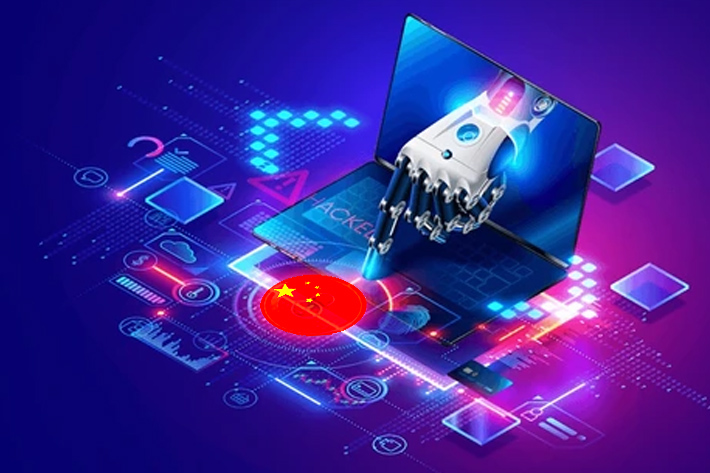
China said on Tuesday it was willing to cooperate with the United States on artificial intelligence governance.
The two leaders discussed the topic of artificial intelligence when U.S. President Donald Trump visited Beijing late last week, despite their fierce competition in advanced technology.
This led to the announcement at a Ministry of Foreign Affairs press conference in the Chinese capital on Tuesday, with spokesman Guo Jiajin saying that China and the United States “should work together to promote the development and governance of artificial intelligence.”
See also: China consumer spending and factory output decline in April
“The two heads of state had constructive discussions on artificial intelligence-related issues and agreed to launch an intergovernmental dialogue on artificial intelligence,” Guo said.
His comments confirmed U.S. Treasury Secretary Scott Bessant’s speech last week Regarding the establishment of an artificial intelligence security agreement between the two countries.
Guo added that as major countries in the field, countries should also work together to “make artificial intelligence better serve the progress of human civilization and the common welfare of the international community.”
Shared concerns about artificial intelligence weapons
Analysts said ahead of the summit that concerns about autonomous AI weapons, cybersecurity and the threat of new AI-designed bioweapons were concerns shared by Xi and Trump.
In 2024, Xi Jinping agreed with Trump’s predecessor Joe Biden that humanity must continue to control the decision to launch nuclear weapons.
But there has been no further cooperation so far as China moves to narrow the U.S. lead in strategic areas.
The White House recently accused Chinese entities of stealing U.S. technology on an “industrial scale,” while Beijing accused Chinese entities of stealing U.S. technology. Blocking tech giant Meta from acquiring Chinese-founded AI proxy tool.
But at the same time, artificial intelligence network security threats have also been highlighted. mytha powerful new model that US startup Anthropic has banned from public release to prevent it from being exploited by hackers.
Bessant told CNBC on Thursday that Washington and Beijing would work out an “agreement” on the development of artificial intelligence, specifically “to ensure that non-state actors don’t get hold of these models.”
Bessant said the world’s “two AI superpowers will start talking.”
US delays new attacks on Iran
Meanwhile, oil prices retreated on Tuesday but remained above $100 a barrel, while stocks were volatile as investors tracked a potential deal between the United States and Iran to end a war that has sent energy prices soaring.
President Donald Trump said he was delaying a new major attack on Tehran because he saw hope for a deal to end the conflict sparked by a February attack on Iran by the United States and Israel.
European stocks were higher in afternoon trading, but off earlier highs as Wall Street indexes, which have hit record highs in recent sessions, opened slightly lower in New York.
“Investors are relieved that tensions have not escalated,” Russ Mould, investment director at AJ Bell, told AFP.
However, he added that “oil prices remain high enough to put pressure on the global economy.”
Brent crude, the international benchmark, is hovering around $110 a barrel, down from Monday but still up more than 50% since the Middle East war began.
Investors are also nervously watching a rise in government bond yields in major economies such as the United States and Japan, a sign that investors are selling bonds on concerns that inflation will hamper economic growth.
The divergence between bond investor concerns and stock market enthusiasm for strong corporate earnings and a technology boom fueled by artificial intelligence is increasingly prompting investor caution.
Trump said on Tuesday he was halting an alleged attack plan at the urging of Gulf Arab allies, while Iran’s military warned it would “open new fronts” if the United States resumed attacks.
“The durability of this détente, and whether it will translate into a sustained decline in oil prices, remains the most important driver of global bond yields,” said Michael Wan of Mitsubishi UFJ Financial Group.
Technology stocks fall
Asian technology stocks retreated following a rout on Wall Street ahead of U.S. chip giant Nvidia’s quarterly results on Wednesday, as investors questioned whether huge spending on artificial intelligence data centers justified potential returns.
In South Korea, artificial intelligence heavyweight SK Hynix fell by more than 5%, and Samsung Electronics fell by about 1%.
Stocks in Hong Kong and Shanghai rose, while Tokyo’s Nikkei 225 ended slightly lower, even as Japan reported first-quarter gross domestic product growth of 0.5%, beating market expectations.
In other corporate news, Standard Chartered fell 1.3% after the British bank revealed plans to cut thousands of jobs and deploy artificial intelligence to replace staff in a range of executive roles.
Key figures around GMT 1345
North Sea Brent crude oil: fell 0.7% to $111.27 a barrel.
West Texas Intermediate crude oil: unchanged at $104.38 a barrel.
TOKYO – Nikkei 225: down 0.4% to 60,550.59 (close).
Hong Kong’s Hang Seng Index: rose 0.5% to 25,797.85 (close).
Shanghai – Composite Index: up 0.9% to 4,169.54 (close).
NEW YORK – Dow: down 0.7% to 49,345.72.
NEW YORK – S&P 500: down 0.4% to 7,373.20.
NEW YORK – Nasdaq: down 0.4% to 25,994.02.
LONDON – FTSE 100: up 0.1% to 10,338.00.
PARIS – CAC 40: up 0.3% to 8,011.22.
FRANKFURT – DAX 30: up 0.8% to 24,497.35.
USD/JPY: rose from 158.93 yen to 159.13.
- Jim Pollard and AFP
See also:
Beijing summit yields meager results, stocks fall, oil prices rise
Xi Jinping warns Taiwan could cause ‘conflict’ as Trump summit begins
China DeepSeek says new V4 AI model can run on Huawei chips
Chinese AI circuit board company raises US$2 billion, becomes Hong Kong listed company of the year
China’s top streaming site criticized for AI actor ‘database’
Bytedance’s viral video model shows China’s growing control over AI
New DeepSeek model delayed online to test China’s AI chip strength
Nexperia’s Chinese subsidiary’s chips “nearly fully localized”
China beats U.S. again in global patent battle, Huawei maintains lead
China now requires chipmakers to use at least 50% domestic equipment
China’s big technological secret: Dutch chip-making machine replicated in laboratory