The Tamesis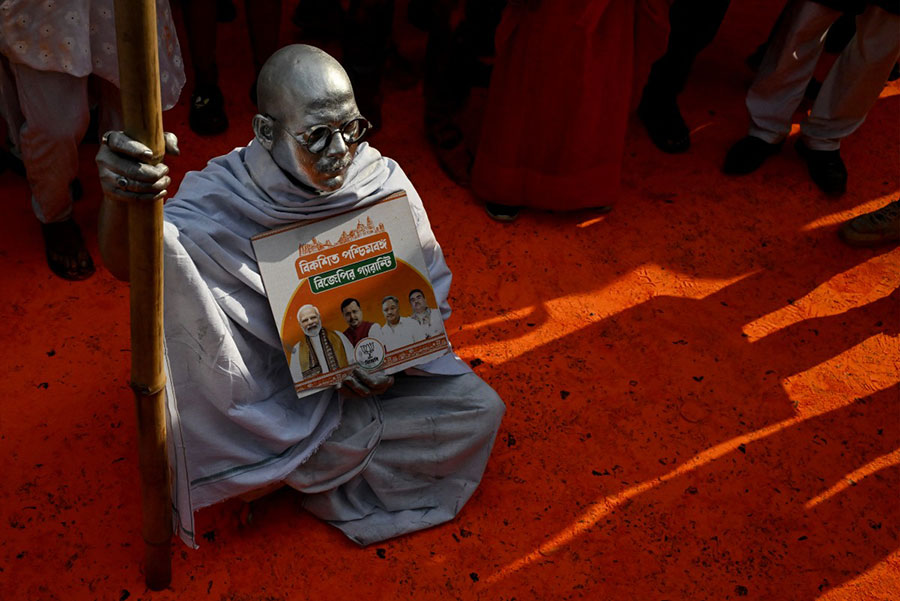
May 8, 2026
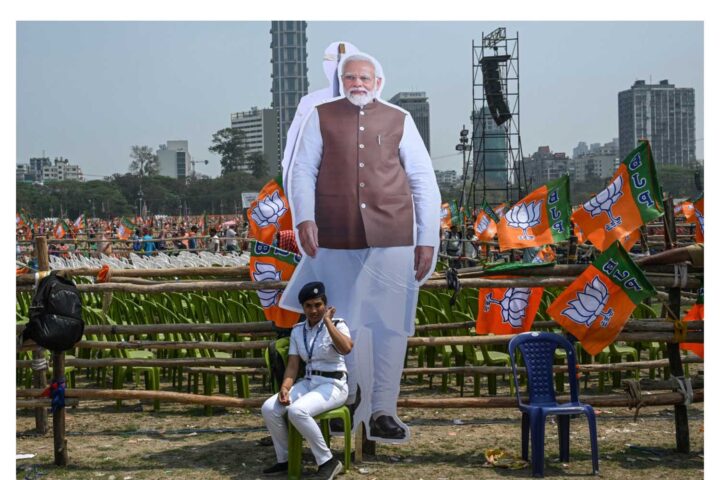
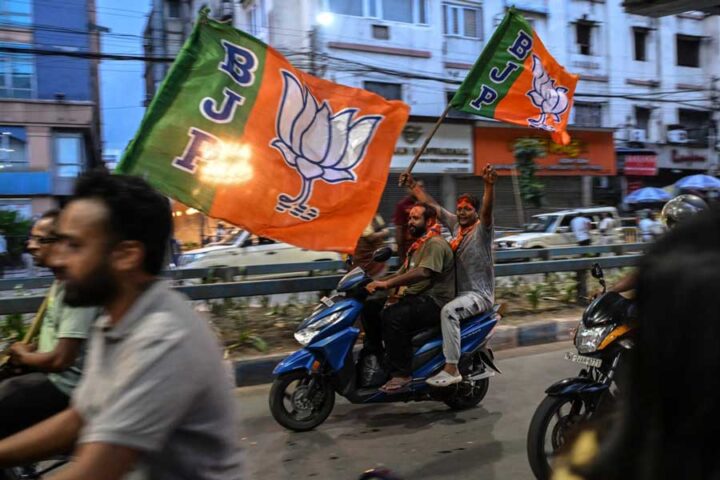
New Delhi – For the first time in over fifty years, Eastern India stands on the threshold of political alignment, policy stability and economic possibility. The 2026 election results are not just another change of government; It may well mark the beginning of a tectonic shift in the fortunes of a region that once represented India’s intellectual, industrial and commercial hub. In a historic milestone after independence, the BJP now rules all four major eastern states: Bihar, West Bengal, Odisha and Assam, becoming the first party since 1974 to simultaneously hold power in the eastern belt and have a government at the centre.
The last time such an alliance emerged was during the Congress era, when India’s political and economic landscape looked completely different. The significance of this development lies not just in electoral arithmetic but also in the strategic opportunity it creates for one of India’s most underutilized regions. The judgments in Assam and West Bengal are particularly noteworthy. In Assam, the BJP single-handedly crossed the majority mark, increasing its seats from 60 seats in 2021 to 82 seats in 2026, while increasing its vote share from 33.21% to nearly 37.8%.
In West Bengal, the party achieved a historic breakthrough, securing a majority for the first time in the state’s history and crossing the two-thirds mark in the 294-member Assembly. Its vote share climbed sharply from 10.16% in 2016 to 37.9% in 2021, and reached an impressive 45.85% in 2026. The verdict reflects a larger national trend: Voters increasingly value governance stability, a development orientation and institutional coordination over fragmented regional politics. In several states, people appear increasingly tired of politics centered around welfare dependence, identity mobilization and anti-industrial rhetoric. This shift has been most profound in West Bengal.
At the time of independence, Bengal was one of the most prosperous and culturally influential regions in India. Kolkata is not just a city; It is India’s gateway to the world and is a thriving center of trade, manufacturing, finance, art, literature and intelligence. Bengal gave birth to Nobel laureates, industrial pioneers, thinkers, artists and reformers who shaped modern India. Over the decades, however, the state gradually lost economic vitality. Successive governments have failed to create an enabling environment for industry, investment and business. An entrenched anti-business culture, policy unpredictability, labor militancy and ideological rigidity have gradually eroded investor confidence.
The result was long-term industrial decline, capital flight, and massive brain mobility. The numbers tell a sobering story. West Bengal’s share of India’s GDP has fallen from nearly 10.5% in 1960-61 to around 5.6% today. Per capita income, once well above the national average, is now below the national average. It is estimated that more than 6,600 companies closed or relocated after 2011, further reinforcing the perception of Bangladesh as an uncertain investment destination. What makes this decline particularly tragic is that Bengal has never lacked natural or strategic advantages. It has fertile agricultural land, a long coastline, major ports, proximity to Southeast Asia, and perhaps the most strategic geographical location in eastern India. West Bengal is India’s gateway to Bangladesh, Nepal, Bhutan and the Northeast. Few areas of the country enjoy such geographical advantages. However, location alone does not create prosperity. Institutions do.
For decades, the lack of political alliance between the central and eastern states has prevented the region from developing a coherent development strategy. Major projects requiring intergovernmental coordination, logistics corridors, port modernization, industrial zones, trade infrastructure and border connectivity suffer from fragmented execution and competing political priorities. Now that barrier may be removed. A politically coherent Eastern Corridor creates the possibility of long-term planning on a scale not seen in decades. The East Coast Economic Corridor, development of Tajpur port, expansion of logistics infrastructure, industrial manufacturing clusters and deeper integration with the Centre’s Look East Policy can now be taken forward with greater policy coherence. The economic potential is huge.
India’s trade with Bangladesh alone exceeds Rs 180 crore annually, but West Bengal captures only a fraction of the value generated by this trade flow. Nepal and Bhutan rely heavily on Bangladesh’s transit infrastructure, while the entire Northeast relies on the region’s maritime connectivity. Kolkata and Haldia remain the only major maritime gateways in eastern India and the proposed Tajpur deep-sea port could become a transformational asset for the entire region. But infrastructure alone cannot revive Bangladesh. The real challenge is to restore confidence – fiscal, investor and citizen confidence. Currently, West Bengal’s public debt burden is estimated to be close to Rs 7.7-8 trillion, limiting fiscal flexibility. Productive capital spending tends to lag welfare-driven spending.
The task ahead, therefore, is not to abolish welfare programs but to transform welfare into a basis for productivity and participation. This distinction is crucial. Schemes like Lakshmir Bhandar, Kanyashree and Krishak Bandhu have created a wide network of social protection and must continue. However, long-term prosperity cannot be achieved through transfers alone. Welfare must be transformed from being a mere safety net to a launching pad for entrepreneurship, skills, women-led enterprises, MSME growth and value addition in agriculture. Bangladesh’s future lies not in subsidy politics but in enabling ordinary citizens to participate meaningfully in the economy. Equally important is the modernization of governance. A transparent, digitally driven administrative framework, including predictable approvals, digitized land records, direct benefit transfers and time-bound permissions, is now essential.
Investors seek predictability as much as incentives. Young talent seeks both opportunity and identity. Bangladesh’s massive brain drain is not irreversible; it reflects the lack of an ecosystem that rewards ambition and innovation. The opportunities facing eastern India are therefore historic. For the first time in the past 50 years, the region has the possibility of political coordination, strategic continuity, and unified development direction. If governance remains stable, if investment confidence is rebuilt, and if infrastructure is matched by institutional reforms, eastern India could once again emerge as one of the key engines of India’s growth story. Bangladesh’s rise is not only good for Bangladesh. It will reshape India’s economic geography itself. After decades of wandering, eastern India may finally have its defining moment.
The authors are a part-time member of the Prime Minister’s Council of Economic Advisers and the Deputy Commissioner of Police, Delhi.