The Tamesis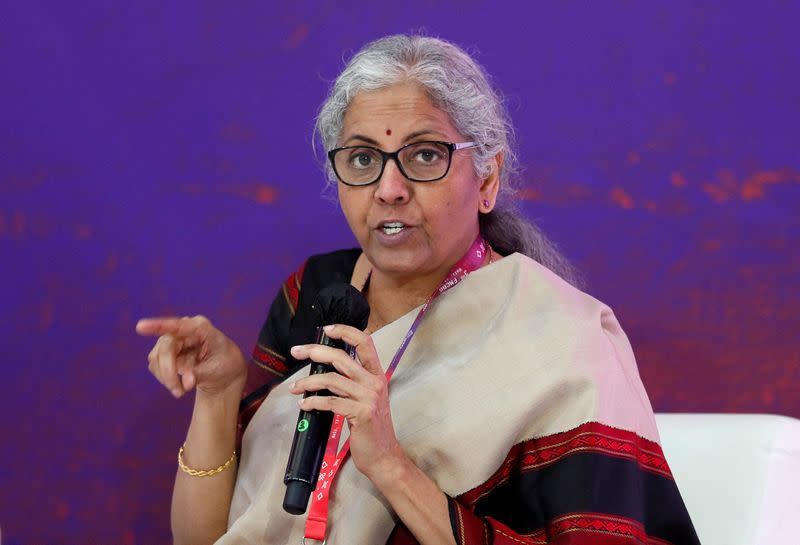
Finance Minister Nirmala Sitharaman made it clear while presenting India’s annual budget on Sunday that New Delhi wants to attract more investment in artificial intelligence and data centers.
Sitharaman promised that foreign companies using data centers established in the country to serve global customers would not be taxed on these outbound services until 2047.
However, Sitharaman added that these companies will need to provide services to domestic customers through Indian resale entities, meaning New Delhi will still earn tax revenue from them.
Also on AF: China plans to send artificial intelligence data centers into space within the next 5 years
The finance minister further proposed that companies providing data center services in India would be eligible for a 15% cost safe harbor if they are associated entities.
announcement Making it clear that India is looking to position itself as a hub for the upcoming global investment in AI computing as the industry shifts from developing chatbots to building agent AI infrastructure.
India has built dozens of data centers in recent years, with investments worth billions of dollars announced in the past four months alone.
OctoberGoogle announced an investment of US$15 billion to build an artificial intelligence data center project in Andhra Pradesh, and at the same time DecemberMicrosoft announced that it will invest US$17.5 billion by 2030 to build artificial intelligence-centered data centers. This is the Windows maker’s largest investment in Asia.
In the same month, Amazon also announced an investment of more than $35 billion in India by 2030 to enhance its artificial intelligence capabilities and increase exports.
Investment is also expected OpenAI from Sam Altmanand Indian conglomerates Adani and Reliance.
Reuters reported that Sitharaman’s statement on Sunday helped ease concerns about such potential investments, as companies had worried that New Delhi could impose taxes on their global income in the future for using data centers located in the country.
“This announcement will help provide clarity to foreign companies and keep their tax positions in India stable until 2047,” Vaibhav Gupta, partner at tax firm Dhruva Advisors, told Reuters.
India aims to position itself as a global leader in services and capture 10% of the global share by 2047. Sitharaman said her tax incentives are aimed at supporting critical infrastructure and increasing investment in data centers.
Indian IT Minister Ashwini Vaishnav also told reporters on Sunday, “Data centers will be India’s main advantage through which we can provide new services to the world.”
big opportunity
New Delhi’s desire for more AI investment is linked to its already strengthened role in the services sector, particularly due to Huge industry at a global competence center (Gulf Cooperation Council).
India is home to more than half of the world’s GCC centers, which serve as offices for multinational companies and support their day-to-day operations, finance, research and development. Experts have previously said that India’s GCC market could be worth $100 billion by the end of this decade, while creating as many as 2.8 million jobs.
In turn, the GCC is closely linked to the expansion of data centers, particularly through their high demand for cloud, artificial intelligence and data processing infrastructure that powers the service industry. These GCCs require significant amounts of data storage capacity and computing resources – a requirement that mature data centers can directly address.
Apart from this, India is also playing catch-up in the global expansion of artificial intelligence. Finance Minister Sitharaman on Sunday outlined plans to integrate artificial intelligence into education, agriculture, trade and even governance, all of which will require powerful data centers.
bigger challenge
But New Delhi faces very real challenges in realizing its data center dreams. data center needs lots of electricity and water India is already struggling to adequately provide both resources.
Just last week, millions of people in India’s capital lose water source Six of the city’s nine main water plants were shut for more than a week due to severe pollution in the Yamuna river, the city’s main water source.
Water shortages in India are so severe that in 2018, a government agency It can even be said The country is dealing with the “worst water crisis in history.” The years of uncertain weather, heat waves and droughts that followed didn’t help either.
Most data centers in India are also located in densely populated urban centers such as Mumbai and Hyderabad, where water demand continues to soar.
S&P Global Commodity Insights noted in a report last September: “With data center cooling water use estimated at about 25.5 million liters per year per 1 megawatt load, according to the Uptime Institute, computing infrastructure in these cities could be at risk of operational disruption without government intervention.”
Similar issues plague newly announced projects, such as one by Google in Andhra Pradesh. Days after announcing the investment, advocacy group Human Rights Forum said Google’s data centers represented a “looming environmental and economic disaster.”
“In Visakhapatnam (one of the cities in which Google has invested), groundwater depletion, erratic rainfall and climate change are already causing severe water stress, and projects like this will almost certainly exacerbate the crisis and cause grave injustice by taking precious water away from local residents,” HRF said. in a statement October.
Likewise, data centers in Uttar Pradesh, India’s most populous state, are being built in areas already facing clean water shortages. According to local reports.
Power demand surges
Experts have also expressed concerns over how India will meet power needs for data center expansion.
S&P said in September that rapid data center growth in India will cause its share of electricity demand to more than double from 0.8% in 2024 to about 2.6% in 2030.
India’s power demand is expected to grow at an average annual rate of 5.3% during the period, but demand for data centers will grow at a faster pace, reaching 28%, it added.
This presents serious challenges as the country faces an increasingly harsh summer.
“Imagine data centers shutting down during peak summer months due to lack of cooling water — how that would impact banking services, hospital healthcare systems using cloud services, transportation system operations, etc.,” said Sahana Goswami, senior project manager of the Water Resilience Practice at think tank WRI India. told bbc news Last November.
“Data center is a double-edged sword”
In any case, the Narendra Modi-led government does not appear to be in denial about these challenges.
exist Economic Survey 2025-26 A report released by India’s finance ministry last week noted that “addressing structural constraints such as energy shortages is critical for India to position itself as a global hub for artificial intelligence data centers.” The Economic Survey presents the government’s annual review of economic progress, key structural impediments and key policy priorities.
“Data centers are also a double-edged sword because they are very energy-intensive,” the survey noted.
It proposes enabling energy-intensive data centers to access renewable energy. It also called for “the deployment of artificial intelligence in an economically fundamental and socially responsive manner” and warned that data centers “could put significant pressure on existing energy systems even in advanced economies.”
“If India expands the size of its AI data centers, it risks putting significant pressure on our already strained groundwater and freshwater reserves,” the survey warned.
Nonetheless, the inquiry concluded that “India has the benefit of hindsight” and noted that the challenge for India will be to “design AI systems from the outset that are more resource efficient and aligned with public objectives”.
Also read:
Nvidia joins India in spending $12 billion to back AI, robotics and chip companies
Amazon, Microsoft will invest more than $50 billion in artificial intelligence in India
India launches plan to let users shop online through ChatGPT
India uses artificial intelligence to predict the economic impact of extreme weather
Data centers, AI, cryptocurrencies boost Asia’s power demand – IEA
India to inject $1.2 billion into AI projects and startups
Asian data center companies secure billions in investment from global investors
Morgan Stanley: Data center boom will drive clean energy development
Artificial intelligence data centers use far more water than expected
Actual emissions from big tech company data centers are 660% higher
The ‘Big Short’ is betting $1 billion that the ‘AI bubble’ will burst
India’s green transition in trouble