The Tamesis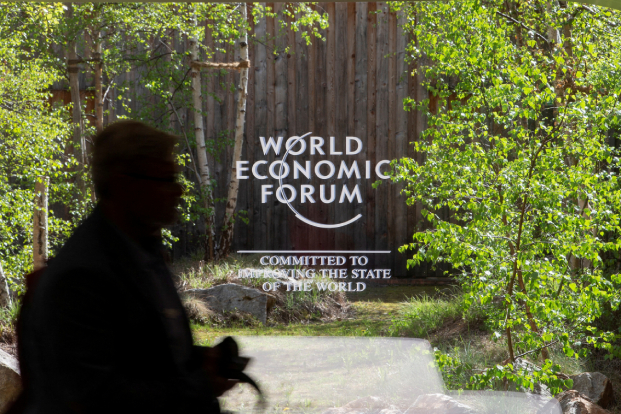
US President Donald Trump was once again thrust into the world’s spotlight on Wednesday after flying to Davos to address the World Economic Forum, where his desire to “gain” control of Greenland has drawn heightened attention.
Trump’s announcement that he would not use force to seize Arctic islands from Denmark attracted widespread attention. Global stock markets rebound rapidlyThe index had plummeted in previous days after he said Greenland was needed to ensure U.S. security.
“People expected me to use force, but I didn’t have to use force,” he told the World Economic Forum’s annual summit in Switzerland. “I don’t want to use force. I won’t use force.”
See also: Japan bond market hammered by high spending vows
Reuters stated that Trump “adopted a threatening tone, condemning the arrogance, disloyalty and policy mistakes of America’s European allies in areas such as wind power, environment, immigration and geopolitics”, and pointed out that his threats to Europe over Greenland – and the imposition of tariffs on eight countries – have led to tensions in transatlantic relations and worried Europeans.
Denmark called it “ungrateful” to reject the US takeover, which he called a “small request” for a “piece of ice” but insisted the move would not pose a threat to the NATO alliance or Denmark.
Yes, he “is seeking immediate negotiations to revisit the U.S. acquisition of Greenland.”
“So they have a choice,” he said. “You can say yes and we’ll appreciate it. Or you can say no and we’ll remember it.”
Reporters also noted that Trump repeatedly mistakenly referred to Greenland as Iceland during his more than hour-long speech.
Chinese media urges severing ties with U.S.
At the same time, China is doing its best to reassure the world that it has absolutely no intention of competing for control of Greenland.
Asked whether Beijing welcomed “chaos” in Greenland, Chinese Foreign Ministry spokesman Guo Jiakun told a regular news conference, “We have no intention and will never compete with any country for influence.”
Guo said they only engage in “friendly interactions” with all countries “on the basis of mutual respect and equality.” They are “committed to being a positive, stable and constructive force”.
The usual stuff. China’s state media, however, was much more forthright.
The Global Times stated that Europe is overly dependent on the United States and avoids cooperation with “partners” such as China and Russia.
China Daily stated in an editorial that Europe should enhance its strategic autonomy and diversify its partnerships.
“This situation highlights the need for Europe to reexamine the nature of the transatlantic relationship and reduce its reliance on the United States as the backbone of its security.
Cutting ties with the United States would help Europe “ensure that its future is determined not by the dictates of bullies but by its collective interests.”
Carney praised for realistic stance
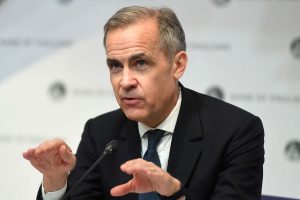
However, a speaker Canadian Prime Minister Mark Carney Tuesday’s speech appeared to resonate more strongly with business leaders gathered in Davos, earning a standing ovation.
Carney said “the old world order is not coming back” and there was no point mourning its end or hoping that multilateralism would continue. Instead, smaller countries need to band together to avoid being overwhelmed by larger powers.
Middle powers like his are not powerless, they just need to build a new world order based on new alliances and common interests. He certainly had the most notable quote of the day.
“The middle powers have to act together because if you’re not at the table, you’re on the menu.”
“This is not naive multilateralism,” Carney said. “Nor does it rely on weakened institutions. It is building coalitions that work on each issue with partners who have enough common ground to act together. In some cases, that will be the vast majority of countries.
“It is building a dense network of connections across trade, investment and culture that we can leverage to address future challenges and opportunities.”
In an era of great power competition, Canadians undoubtedly make money.
See also:
Markets shake as Trump threatens EU with tariffs over Greenland
Prabowo’s central bank’s move sends Indonesian rupiah to new lows
UNODC says cybercrime costs trillions of dollars in losses every year
Coal power use in China and India falls for first time in half a century
China posts record trade surplus of $1.2 trillion despite U.S. tariffs
Trump’s ‘tariffs on countries trading with Iran’ could kill China truce
Bets on snap election push Japanese stocks to record high
Iran unrest expands: Riots, city fires lead to internet shutdown
Trump’s attack on Venezuela ‘could strengthen China’s territorial claims’