The Tamesis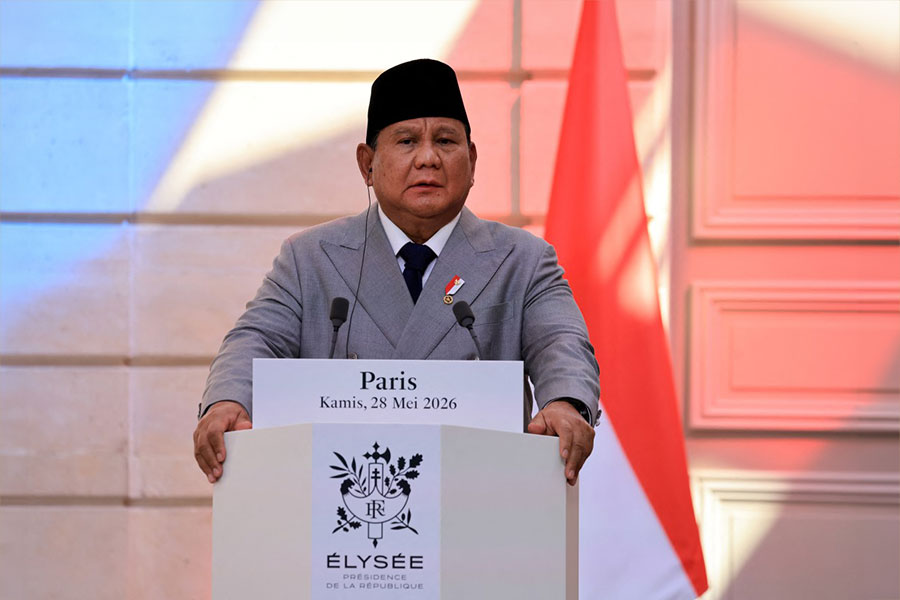
June 2, 2026
jakarta – President Prabowo Subianto’s increasingly dynamic diplomacy is coming under increasing scrutiny, with critics questioning the transparency, urgency and tangible benefits of his frequent overseas activities as Indonesia grapples with economic headwinds and a host of domestic challenges.
On the eve of the Eid al-Adha holiday last week, Prabowo went to Paris to hold talks with French President Macron on strengthening cooperation in defense, energy, education and other fields, and attended the Eid al-Adha celebrations with Indonesian expats.
The visit is Prabowo’s fourth to France since taking office in October 2024, and adds to his busy international schedule, which has seen him visit at least 29 countries in more than 50 overseas engagements.
The pace of these visits raises questions about the government’s priorities, especially as it grapples with a declining rupee against a backdrop of a stronger global dollar, regulatory uncertainty and other pressing domestic challenges.
The recent visits have also reignited criticism of the administration’s communications strategy, with opposition figures and foreign policy observers arguing that the goals and expected outcomes of many presidential visits are not clearly communicated to the public.
Andreas Hugo Parela of the quasi-opposition Indonesian Democratic Party of Struggle (PDI-P) said the government should provide a clearer explanation of the purpose and objectives of the president’s trip.
“Oddly enough, only after the president flew over [to the foreign country] Andreas, who also serves as vice chairman of House Committee 13, which oversees human rights, said Saturday that “the media should be notified in advance so that the public also knows because the president represents the country.”
Separately, DMK politician Mohamad Guntur Romli questioned the government’s description of the France trip as a diplomatic success, pointing to limited French media attention.
“French media such as Le Monde only briefly mentioned the visit, which shows that it has little significance,” Guntur posted on Instagram on Sunday. “Instead, the outlet published a critical article about Prabowo’s economic policies.”
Former deputy foreign minister Dino Patty Jalal also urged the president to reduce the frequency of foreign travel and said public concerns should not be completely ignored.
“Since taking office, the president has spent roughly one day out of every six days abroad. So it’s understandable that some people think this is unusual,” Dino posted on Instagram on Saturday.
Dino believes that a presidential trip requires the country to invest a lot of money in transportation, accommodation, logistics and security arrangements, and the cost of a single visit may reach hundreds or even hundreds of billions of rupees.
He recommended greater use of virtual diplomacy, improved long-term planning for overseas travel, clearer communication about the president’s agenda and giving Foreign Minister Sugiono a greater role in representing Indonesia at certain international events.
However, the government defended Prabowo’s proactive diplomatic engagement with the head of the Government Communications Agency (GCA) Mohammad Kudari, saying the recent visit to France was publicly announced in advance and helped achieve important strategic goals.
“Minister Sugino has announced this [trip] Beforehand,” Kodari said during a live news conference on Sunday.
He added that the trip to Paris follows Macron’s recent visit to Indonesia and viewed Prabowo’s personal rapport with foreign leaders, including those of major powers such as China, Russia and the United States, as a valuable diplomatic asset.
While acknowledging Prabowo’s experience in defense and international affairs, Teuku Rezasyah, a foreign policy analyst at Padjadjaran University, warned that the president’s hands-on diplomacy style should not marginalize Indonesia’s diplomatic corps, noting that ambassadors appeared largely absent from several high-profile meetings with foreign leaders.
“Ultimately, from an Indonesian perspective, the person who knows France best is the Indonesian ambassador to France, and that ambassador was nowhere to be seen during Prabowo’s latest visit,” Teku told The Jakarta Post on Monday, noting that the same thing happened when Prabowo visited Russian President Vladimir Putin.
He also noted that some foreign policy initiatives announced during overseas visits appeared ill-prepared, citing Prabowo’s call in France to expand the teaching of French in Indonesian schools.
The proposal drew criticism from educators and policymakers, as did his proposal to introduce Portuguese language courses last year following talks with Brazilian President Luiz Inacio Lula da Silva.