The Tamesis
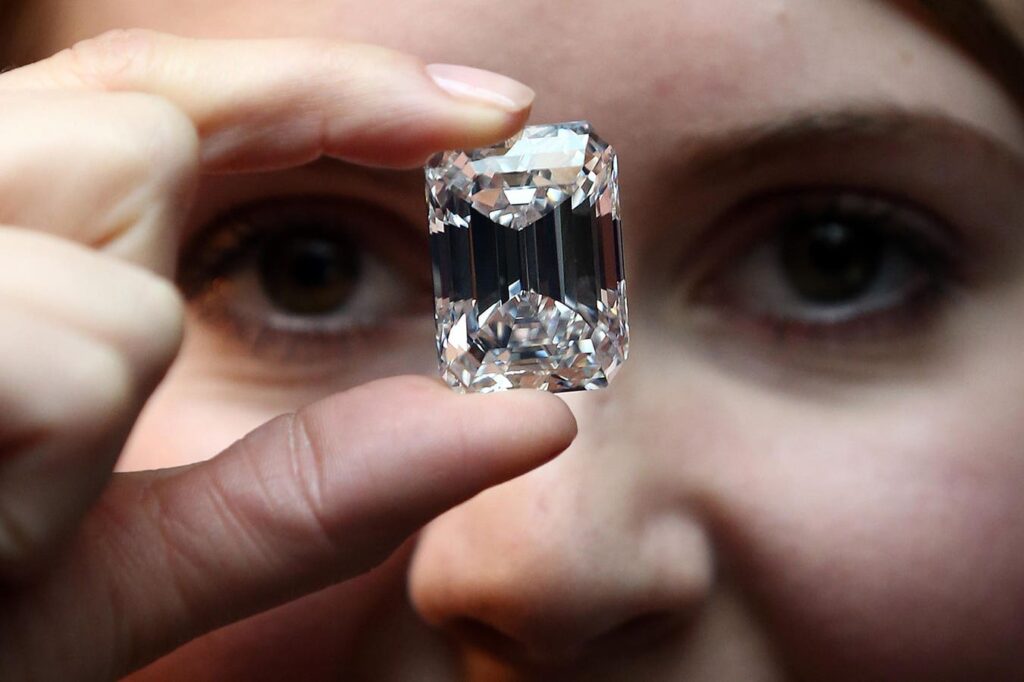
The shift toward luxury extends to jewelry and accessories. Jean Prounis, founder and designer of Prounis Jewelry, said her clients now wear high-carat diamonds casually instead of reserving the best diamonds for events. A client who had recently separated from her husband recently came to her with a seven-carat diamond engagement ring, which Pronis had re-set into a necklace. Another woman wears her “museum quality” Tahitian pearls every day. “That client is a very subtle jewelry wearer, but now it’s a big gold pearl strand necklace. She said, ‘I love wearing it just for coffee,'” Pronis said.
Personalized jewelry has seen a 42% rise in popularity among major influencers, according to Trendalytics, which Khan said shows “a return to bold rather than refined glamor.”
Clothes for the Divorced
Stylus content director Emily Gordon-Smith calls Gen X “the most profitable and reliable customer base growth opportunity available.” However, the population remains underserved. “Fashion brands are constantly chasing these consumers who are most cash-strapped,” she said.
Gordon-Smith believes the key to attracting such consumers is to emphasize “young at heart” in style. Remarkably, “Matthieu-mania” (the slogan of consumer craze for Matthieu Blazy’s Chanel) was driven in part by a passion for the pleasurable “lightness” of clothing. Gordon-Smith sees the rise of more than 50 nightclubs as another clear sign of youth popularity, with festivals filled with “old-school revelers who don’t want to hang up their dancing shoes”. For Gordon-Smith, a great example of this young-at-heart marketing campaign is Burberry’s Summer 2025 festival campaign, which features jungle music star Goldie, 59, as well as Liam Gallagher, 52, and his adult children.
“The biggest missed opportunity in retail right now,” says Corrigan, “is the failure to realize that mature customers are not just interested in ‘age-appropriate’ clothing.”
Brands might choose Sylvie Grateau, the fictional marketing boss on Netflix emily in parisas outfit inspiration for hot divorcees. Bernstein’s clients especially requested her style. Others on the list include: Elsa Peretti, Zoë Kravitz in flats and oversized diamonds, and pre-Kennedy Carolyn Bessette.
“Many of these consumers are going through divorce, menopause, late-life dating or identity changes after having children, and fashion is increasingly being used as a tool of celebration rather than correction,” Maggioni said. She added that self-gifting is a growing sign among this group, with people increasingly focusing on purchasing items that mark life transitions beyond a traditional wedding or engagement. “Alternative celebrations” (including divorce parties) fit naturally into a cultural landscape that includes aspiring middle-aged and over-50 fashion creators.
The “fashion is celebration” narrative is why the minimalism we now celebrate has a softer, comfort-led tone. For Maggioni, this aesthetic is inherently adaptable and body-confident—thinking fluidity and drape rather than restrictive tailoring, confident embellishment rather than a nihilistic “boom” aesthetic.
Embracing post-divorce life in a louder way aligns with the fashion industry’s call for older generations. Ramirez recalled a trends report portion of a recent industry panel in which “an older woman said, ‘Why don’t you talk about me? I have money. I’ll give you my money, but give me something.'”