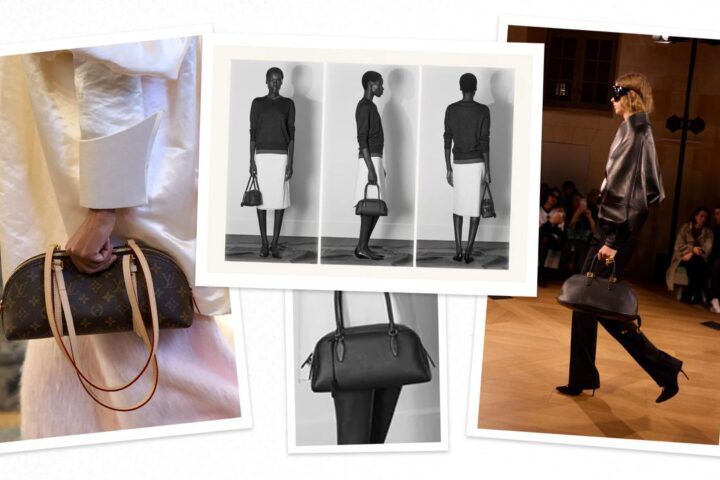
The Tamesis
Ten years ago, almost every luxury brand offered “affordable” handbags. These styles are typically smaller bags priced around $1,000, offering aspiring shoppers a touch of tradition and fashion with a capital F. But as brands raise prices in the name of boosting status, those who once aspired to own a designer bag find themselves increasingly priced out of the category and question the value of luxury goods. Where have all those consumers gone?
Many are turning to contemporary brands—DeMellier, Polène, Staud—or shifting their spend toward categories or experiences that are easier to justify. “Aspirational buyers have not lost their love for luxury goods, but they are becoming more value-conscious,” said Federica Levato, senior partner at Bain & Company. “They are turning to budget brands, redirecting spending towards ‘little luxuries’ such as beauty and eyewear, and embracing second-hand bags rather than paying incremental price increases that do not match the substance of the product.” This substance translates into characteristics such as quality, craftsmanship, design or creativity, all of which consumers are increasingly questioning.
Now, as the risks of relying on ultra-affluent shoppers rise, luxury brands are expanding the entry level of their pricing pyramids. “Modern luxury goods giants cannot rely solely on the super-rich, important as they may be,” said Luca Solca, a luxury goods analyst at Bernstein. “Millions of middle-class consumers remain the main driver of their sales.”
However, for these brands to welcome back the aspirational class, there needs to be a handbag that appeals to both their wallets and their tastes. But it’s not as simple as lowering prices. Lowering prices too obviously can damage perceptions of exclusivity while alienating those who pay higher prices for the same product. Instead, brands are introducing alternative fabrics, mini iterations or styles from entirely new bag collections to lower the bar.
At the same time, contemporary brands gaining market share in an era of rising luxury face their own challenges: maintaining appeal while scaling. These brands gained attention by providing consumers with a clear price-product equation, but as luxury brands retreat into entry-level territory, they must maintain momentum by maintaining their culturally resonant iconography.
“After years of ascent, the most interesting growth is now happening at the two extremes of the price pyramid: high-end luxury and accessible entry points,” Levato said. “Many players have recently injected real freshness into the category with prices below $1,700, establishing a more attractive price-value equation for aspirational customers.” Levato said consumers still want to buy handbags, they’re just becoming more discerning.
Now, as the race heats up on both sides of the market to create the next generation of entry-level It-bags, how can brands win?
Balance design and price
New creative directions from the largest luxury brands open up opportunities for category innovation. JP Morgan analyst Chiara Battistini said that at the beginning of this year, Dior, Gucci and Chanel launched products with prices below the median of their respective brands. “We also observe, at least among these launches to date, that there is more product enrichment at the lower end of the price pyramid, with more accessories and new ‘entry’ bag ranges,” Battistini wrote in a report in January.
Gucci’s new Lunetta collection includes a smaller crescent canvas style shoulder bag, priced under $1,150, and the Giglio tote in embroidered canvas, priced at approximately $1,850. Newer versions of the Jackie, such as the Jackie Slim, are smaller, more casual versions ranging in price from $2,000 to $3,200, crafted from supple grained leather and providing an additional entry point to the brand’s leather signature. Even at Chanel, where pricing is still particularly high, its new Mini Flap style starts at about $4,000, and there are makeup bags ($2,900) and clutches ($3,500) to help expand the range. The introduction of these products lowered Chanel’s median price from $6,500 to $5,300, according to analysts at JPMorgan Chase.