The Tamesis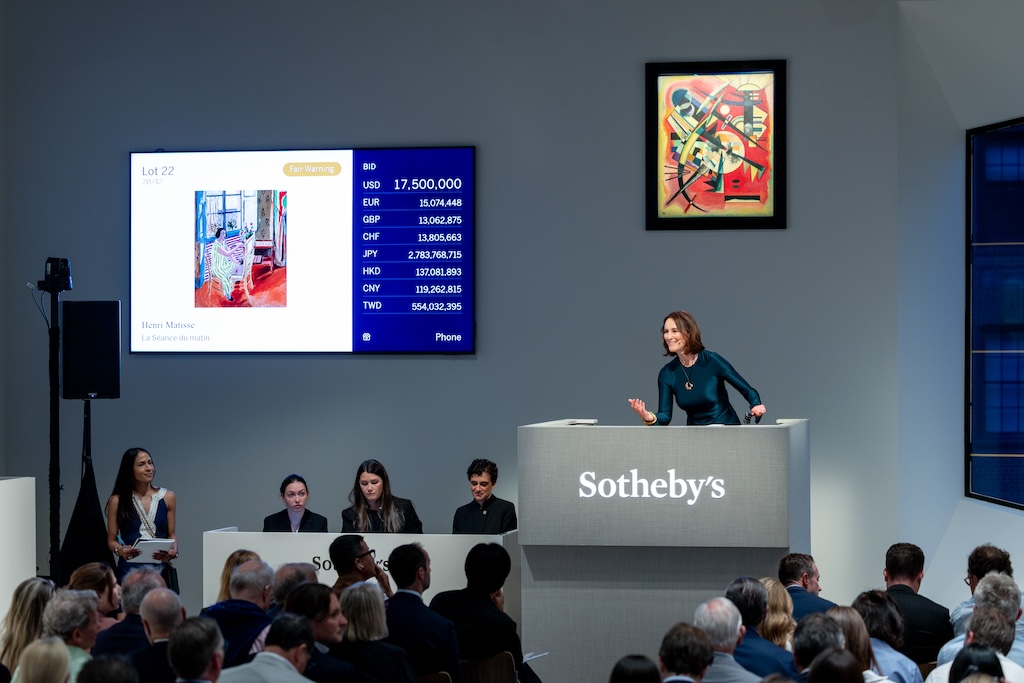
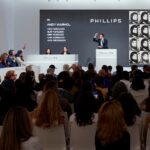
Minutes into Sotheby’s modern evening auction on Tuesday night, the pauses between bids began to tell their own story. Collectors still come in for museum-quality pieces, especially blue-chip works by Pablo Picasso, Henri Matisse, Alberto Giacometti and Vincent van Gogh, but the atmosphere inside the Breuer Building often feels one of caution rather than elation, as buyers carefully weigh valuations and bidding wars emerge only intermittently.
As of that night, Sotheby’s auction sales totaled US$303.9 million, of which 98% had found buyers. While the sale brought in 63% more than the same period last year (marked by the infamous Giacometti failure), the total was below the pre-sale high estimate of $320.2 million. Overall, the results of this sale reinforce a growing reality in the art market this season: demand for outstanding works remains strong, but belief remains conditional.
Related articles

An unnamed New York-based consultant texted me midway through the auction that the night was “financially sound, but also lackluster,” adding that “competition was fierce.”
(Unless otherwise stated, all prices include fees.)
Few auction items embody this spirit better than this 1909 portrait of Pablo Picasso Alekan (Buste). The painting, which has been in the collection of Adele and Enrico Donati for the past 70 years, is estimated to be worth more than $40 million and is positioned by Sotheby’s as the most important Cubist work to come to auction in many years. The auction house said the painting was central to Picasso’s transition to Cubism and highlighted that it was one of the few Picasso 1909 portraits still in private hands. But given the attention paid to the painting, bidding on Lot 11 that night was surprisingly limited. The two bidders finally set the hammer price of the work at $40 million ($42.6 million including fees), slightly above their estimated price.
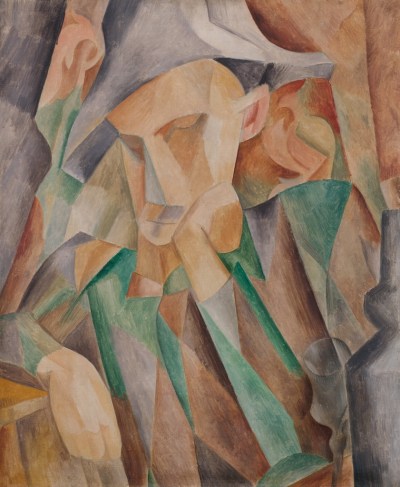
Pablo Picasso, Alekan (Buste)1909. Courtesy of Sotheby’s
Most of the items in Tuesday’s auction, such as the Picasso, come from a designated collection. In addition to Donatis, works come from the collections of David and Shoshana Wingate, Sybil Scheinwald, the Durand-Ruel family, the Barbier-Mueller family and the Ratner family. This concentration of provenance would be unusual for an evening sale, were it not for the fact that the market rewards fresh works with strong collector pedigree so heavily. Just look at the results of last week’s Robert Mnuchin sale at Sotheby’s, or the S.I. Newhouse Jr. sale at Christie’s, which, according to the auction house, drew more visitors than the Paul Allen sale, long considered the benchmark for such trophy spectacles.
New York consultant Jacob King told ARTnews after the auction that buyers are “still very sensitive to quality and price,” adding, “Unless it’s really the absolute best, the price is probably going to be a little bit higher than expected.”
Tuesday’s biggest fireworks take place at Lot 19, dedicated to Matisse Lorraine Lasches. The painting was estimated at $25 million and was sold for $48.4 million after a 10-minute bidding war, ultimately becoming the longest bid of the night.
The result marked the second-highest price ever achieved for a Matisse painting at auction and gave the sale its most palpable jolt of genuine competition, although this energy was also carefully expressed. Auctioneer and chair of Impressionist and Modern Art Helena Newman, elegant in a green Victoria Beckham dress, relied firmly on the experts while phone bidders were indecisive. At one point, as the bidding slowed, she snapped: “I have to ask you to hurry up. The people in the room have been very patient.” When the painting finally sold, there were gasps and then applause, but it was hard to tell whether everyone was celebrating the outcome or simply relieved that the ordeal was over.
Barbier-Mueller has been collecting for decades; Lorraine Lasches The work dates from 1919, one of the most important years of Matissenis’s period, and belongs to a small group of monumental interior design works whose sister works are now displayed in major museums.
Allegra Bettini, Sotheby’s head of modern evening sales art news Collectors responded to the painting because it deserved a closer look. “people [were] “We had a high quality of work and the ability to understand a work that was not the most obvious to the artist,” she said after the sale.
Another masterpiece of the evening is Matisse, morning séanceshowed up just two batches later. It tells a quieter story: The work was estimated at $20 million to $30 million, sold for exactly $20 million before commission, and ended up at $21.2 million with commission.
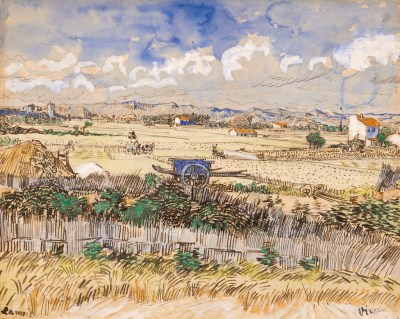
Vincent van Gogh, Lamoisson in Provence (1888). Courtesy of Sotheby’s.
Another big test came in the form of the work of Vincent van Gogh Lamoisson in ProvenceThis rare watercolor from the artist’s Arles period is estimated to be worth $25 million to $35 million. The bidding was more cautious than some experts expected, with only two bidders competing. The watercolor was eventually sold to a buyer from Asia for $29.4 million. Even so, the result ranks among the highest ever for a work on paper by the artist and the second-highest price ever for a Van Gogh watercolor. Oddly, the film broke the previous record for second place; in 1997, the piece sold for $14.6 million at Sotheby’s in London.
Elizabeth Gorayeb, former senior vice president of Impressionist and Modern art at Sotheby’s and current executive director of the Wildenstein Plattner Institute, described the work before the sale as a “collector’s painting,” adding that “it is not flashy” and “not for novice collectors.”
In the evening, Giacometti La Clairière (combination avec neuf figures) It’s one of the auction’s stronger tests of high-end bidding. After a five-minute bidding war between three bidders, the sculpture sold for $23.1 million against an estimate of $18 million to $25 million. It’s a relatively constant competition, and many pieces in a room sell much faster.
Sotheby’s emphasized throughout the preview that the work’s cast has not appeared at auction since 2018 and that the sculpture belongs to a small group of ambitious multi-figure works created by Giacometti around 1950. Unlike some of the evening’s more aggressively guaranteed trophies, the bidding here felt relatively organic, with the auction floor noticeably more concerned as prices climbed.
Works from the collection of Jean and Terry de Gunzburg performed particularly well, continuing the momentum of the couple’s high-profile Design Masters sale earlier this spring. Picasso’s Women’s bust sold for $5.4 million, while Paul Klee’s garden statue After continuous bidding, the final amount climbed to US$4.63 million.
At the same time, the Donati Group gave the sale a lot of intellectual and emotional texture. Except for Picasso’s Alekan (Buste)Wassily Kandinsky LottiefFirst appearance at auction, sold for $14.5 million. One of the quieter but more memorable pieces from Donati’s ensemble is that of Yves Tanguy Argus todayIt was reportedly a gift from the artist directly to the couple in the 1940s. The surrealist canvas was eventually sold to an Asian collector for $1.79 million.
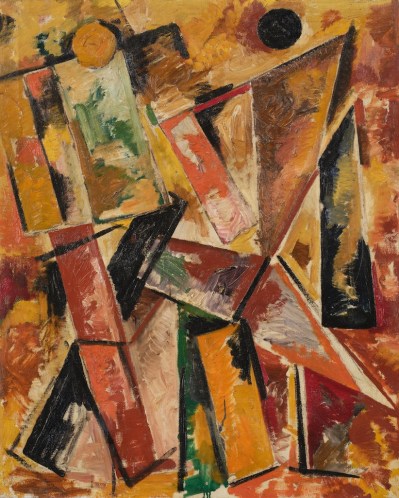
Varvara Stepanova, two numbers (1921). Courtesy of Sotheby’s.
Some of the evening’s more revealing results fell well short of the headlines, with collectors vying for historically significant works that also have the potential to reset the artist’s market. Varvara Stepanova two numbers A rare Constructivist oil painting still in private hands has sold for $2.3 million after three bidders competed for it. Sotheby’s positioned the work as a potential documentary contender for the Russian avant-garde artist, whose market deepens as museums and collectors continue to reexamine the history of Constructivism.
Elsewhere, Leonor Fini Portrait of Alida Vali II Sold for $1.15 million while Leonora Carrington’s Retorno, Mayor of Osa to $1.66 million. Neither work broke records, but both reinforced the continued interest in female Surrealists, a category that has quietly become one of the most reliable sources of momentum in the wider modern market.
Charles Shearer’s Windows It also attracted attention and sold for $2.05 million, one of the highest prices achieved by the artist at auction. Meanwhile, Georgia O’Keeffe pink camellia Reaching $2.56 million, it became the second-highest price ever paid for a work on paper by the artist.
By the end of the night, Sotheby’s seemed to have achieved exactly what the auction house increasingly values these days: stability. The sale may not have revived the speculative frenzy that once drove collectors to bid at all costs, but it showed that in a more discerning age, special materials carefully constructed and strategically secured can still produce strong results.