The Tamesis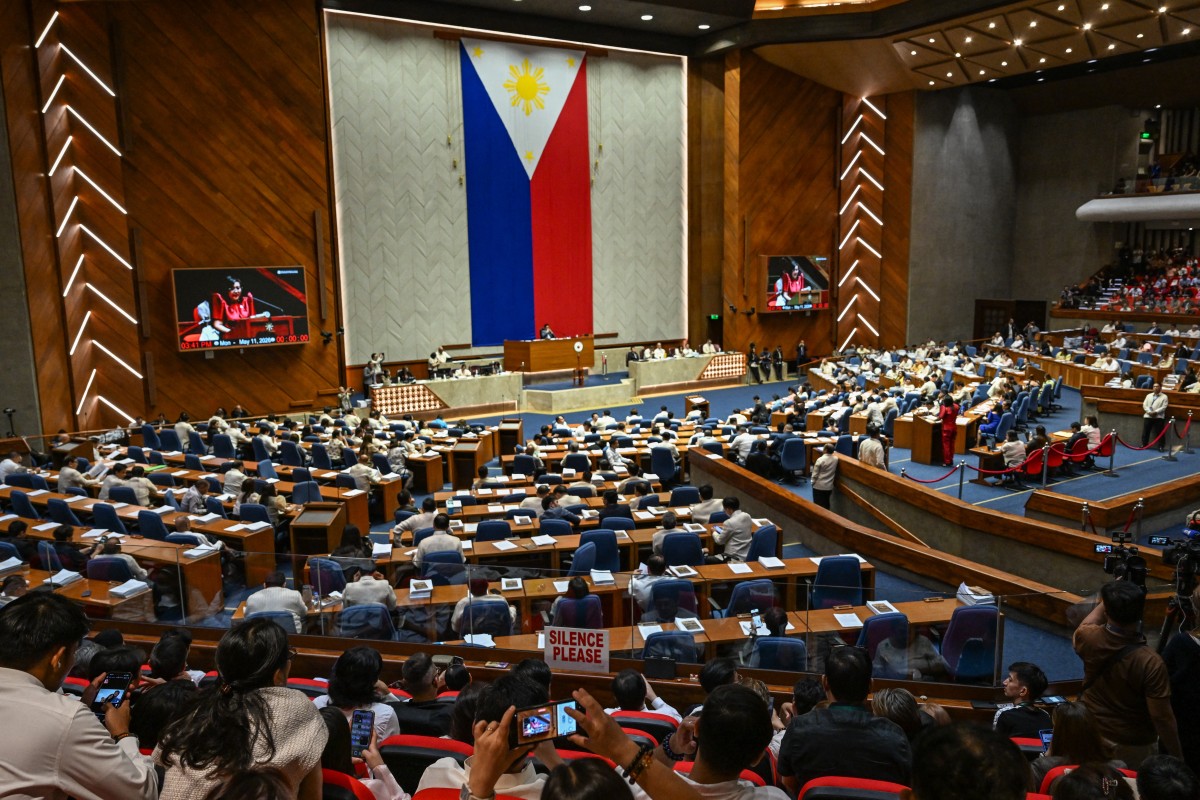
May 12, 2026
Manila ——On May 11, Philippine Vice President Sara Duterte was impeached again by the House of Representatives, becoming the first vice president in the country’s history. Impeached twice.
But her allies have moved quickly to tighten control of the Senate ahead of an upcoming trial that could define her 2028 presidential ambitions.
The move comes a year after an impeachment petition against Ms. Duterte was invalidated by the Supreme Court on constitutional grounds related to procedural technicalities. On May 11, lawmakers voted 257 to 25 to impeach Ms. Duterte, with nine abstentions.
But impeachment would not automatically remove her from office. The case will now move to the Senate, which will meet as an impeachment court and decide whether to convict or acquit her.
Conviction requires a two-thirds vote of senators, or 16 votes, while acquittal would require just nine votes, keeping Ms. Duterte in office and retaining her eligibility to run for president in 2028. She announced her candidacy for president in February.
In a dramatic political upheaval hours before the impeachment vote, senators aligned with Duterte’s camp ousted Senate President Vicente Sotto III and replaced him with Senator Alan Peter Cayetano, a former foreign secretary under former President Rodrigo Duterte, the vice president’s father.
The Senate reshuffle has fueled speculation that Duterte’s camp is moving aggressively to influence the outcome of the impeachment trial before it seriously threatens Ms Duterte’s presidential ambitions.
In his first speech as Senate president, Cayetano said the impeachment trial would take place but said the process must not be based on political affiliation.
“We have to be guided by facts, guided by evidence. The process is as important as the outcome,” he said. “We can’t just say we can’t rely on her as vice president anymore, so let’s impeach her. That’s not what happened. The Senate is here for trial, too.”
The impeachment centers on accusations that Duterte misused confidential funds worth more than 612.5 million pesos (S$12.7 million) from the Office of the Vice President and the Department of Education. She resigned in 2024 after her alliance with President Ferdinand Marcos Jr. collapsed.
The indictment also accuses her of amassing an unexplained wealth and threatening to kill Mr. Marcos, first lady Louise Araneta-Marcos and former House speaker Martin Romualz, a cousin of the president.
Ms. Duterte did not attend the House impeachment hearings, instead issuing public statements denying wrongdoing and saying the proceedings were politically motivated.
Ms. Duterte’s legal team said in a statement on May 11 that they were “fully prepared” to defend the vice president in the impeachment court.
Duterte’s camp is facing growing pressure on multiple fronts, including the former president’s ongoing proceedings at the International Criminal Court (ICC) over his bloody war on drugs and legal troubles involving alleged corruption among key allies.
But the Senate coup dramatically changed the political calculations surrounding the impeachment trial itself.
The upheaval in the Senate also appears to have emboldened Duterte’s allies.
Senator Ronald dela Rosa has been largely out of public view for months amid speculation that the International Criminal Court would soon issue an arrest warrant for him over his role as a former police chief in Mr Duterte’s war on drugs. Now he has reappeared in the Senate chamber and joined the push to oust Mr. Soto.
As the political drama unfolded, agents from the National Bureau of Investigation arrived at the Senate building to execute what sources said was an International Criminal Court warrant for de la Rosa’s arrest. At around 6pm on May 11, the new Senate leadership agreed to place Mr. de la Rosa under Senate protection to prevent an arrest warrant from being served, while the main building was placed on lockdown.
“(Sara Duterte’s) acquittal now seems a certainty,” Michael Yusingco, a lawyer and political analyst at the Ateneo de Manila School of Government, told The Straits Times. “The clear expectation is that the impeachment trial will be delayed. The new leadership will delay the impeachment trial as late as possible.”
Gene Encinas-Franco, a political science professor at the University of the Philippines-Diliman, was more blunt, saying the Senate reshuffle was aimed at preventing real support for the impeachment trial.
“The result is that they are undermining the Senate as an important accountability body. History will not be kind to them,” Dr Franco told The Straits Times.
Still, a possible acquittal does not necessarily mean the impeachment battle is risk-free for Ms. Duterte.
Mr Yucinco believes the greater political danger for Ms Duterte is failing to win over undecided voters in 2028, given the potential for damaging testimony during a televised Senate trial.
Another question is whether Ms. Duterte can resign before the Senate’s ruling, which could trigger a constitutional debate over whether the impeachment court still retains jurisdiction and whether she could still be barred from holding future public office.
Philippine law has not yet tested this scenario. The matter may be challenged in the Supreme Court.
But Yucinco said the impeachment trial should continue even if Duterte decides to resign as vice president before the ruling.
“Being impeached means there has been evidence that she is unfit for public office,” he said.
Despite mounting legal and political troubles facing Duterte’s camp, Ms. Duterte remains one of the top contenders for the Philippines’ 2028 presidency.
Surveys by local pollsters show her ahead or statistically tied with potential rivals such as Senator Raffy Tulfo and former Vice President and current Naga City Mayor Leni Robredo in a hypothetical presidential matchup.
Still, the Philippine presidential race remains notoriously fluid, with voter preferences often shifting dramatically in the final weeks before Election Day as coalitions realign and candidates gain or lose momentum.
The trial also holds great political significance for Marcos because the constitution stipulates that he can only serve one term as president. His alliance with the Duterte family collapsed less than three years after he and Ms. Duterte took power together in the 2022 election.
Dr Franco said the outcome could affect perceptions of whether Marcos still retains enough political influence to determine the country’s post-2028 political order.
“Whether Sarah is convicted will actually tell us whether the president is already a lame duck,” she said.