The Tamesis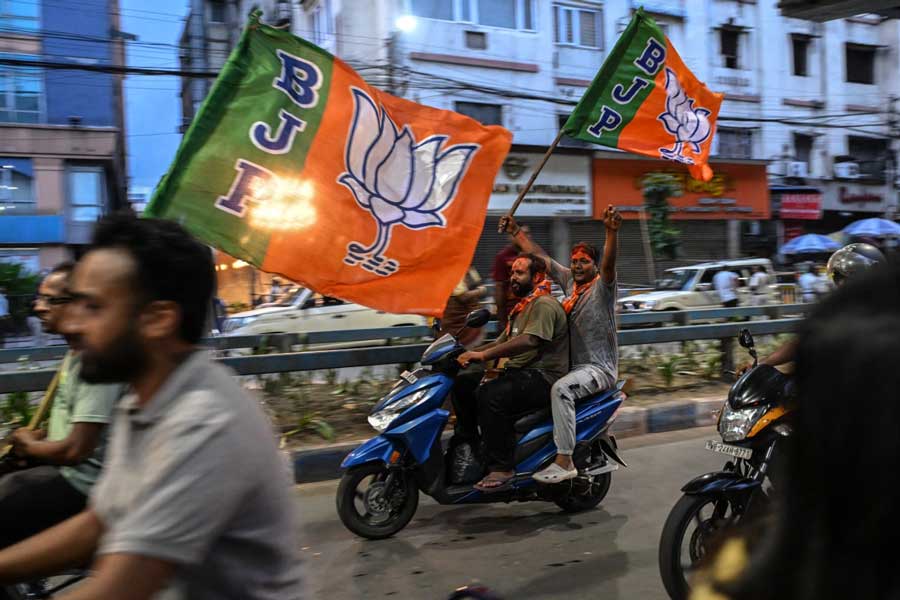
May 7, 2026
Dhaka – The rise of the Bharatiya Janata Party (BJP) in West Bengal is not just another election result. It represents a deeper structural shift on India’s eastern frontier, with major implications for Bangladesh. For years, West Bengal has quietly played a balancing role within India’s federal framework, sometimes slowing or reshaping New Delhi’s decision-making. This regulatory layer is now being eroded. With the BJP in control at the Center and Kolkata, India’s eastern policy will become more centralized, ideologically cohesive and administratively decision-making. For Dhaka, it marks a shift from dealing with a fragmented system to facing a more unified (albeit less inclusive) neighbor.
This shift creates a dual reality. Greater coordination within India could reduce the inconsistencies that once complicated bilateral engagements. But it also removes the informal buffer that Bangladesh often relies on: moments where resistance at the national level can delay, weaken or deflect central policy. What emerges is a more predictable yet rigorous framework for engagement.
The impact is particularly evident in water diplomacy, as the long-delayed Teesta water-sharing agreement continues to symbolize the limitations of past negotiations. In 2011, when then Indian Prime Minister Manmohan Singh visited Dhaka, the agreement was on the verge of being concluded, but was blocked by Mamata Banerjee. Now, with that obstacle removed, the chances of renegotiation may be slim.
However, political arithmetic within West Bengal complicates this optimism. The BJP’s strong support in the northern region, where the Teesta river flows, means any deal must take into account local electoral pressures. Beyond this, competing agricultural demands, India’s broader river management strategy, and the delta’s fragile ecology continue to tip the balance. While administrative consistency may speed negotiations, it does not ensure a fair outcome. Bangladesh needs to work harder to promote a basin-wide framework, reliable data sharing and enforceable safeguards.
At the border, changes can be rapid and dramatic. A more synchronized approach by India is expected to increase surveillance, improve fencing and improve coordination among agencies such as the Border Security Force (BSF). A shift from a loosely managed border to a more secure one could reduce illegal flows but also disrupt the informal economies that sustain millions of people on both sides.
Even more concerning is the potential human cost. Killings of civilians along the Bangladesh border have long been a source of tension and could increase if the law enforcement regime becomes stricter. Without meaningful accountability and restraint, tighter controls risk deepening rather than resolving grievances, making borders the site of recurring humanitarian crises.
Politically, striking similarities emerge across the border. In Bangladesh’s recent parliamentary elections in February, the Jamaat-e-Islami Party strengthened its position in border constituencies, while the Bharatiya Janata Party has now also consolidated its influence in neighboring areas on the Indian side. This convergence points to a broader shift: communities historically linked by language and culture are increasingly leaning toward politics driven by religious identity. As a result, boundaries once defined by interdependence now risk hardening into polarization.
Also worth noting here are the latest developments in Assam, another neighboring state of India, under the leadership of Himanta Biswa Sarma. Over the past year, he has not only stepped up his anti-Bangladesh rhetoric but also publicly described controversial border practices carried out outside formal diplomatic channels. In public remarks, he outlined so-called “pushback” operations in which individuals labeled as “illegal Bangladeshis” were detained and forced to cross the border without completing formal deportation proceedings. He also acknowledged a lack of coordination with Dhaka and said such operations could involve individuals brought in from other parts of India, saying strained bilateral ties make such practices easier to carry out. The scale is huge. According to Bangladeshi authorities, at least 2,436 people, including Indian nationals and Rohingya, were pushed into Bangladesh between May and December 2025.
While these practices have so far been primarily associated with Assam, the BJP’s control of West Bengal raises the possibility of their wider application. From now on, enforcement in West Bengal’s border areas is likely to become increasingly stringent and incidents of such “break-ins” will increase, extending what was once a region-specific approach to a broader pattern across India’s eastern borders.
Economic dynamics add another layer of complexity. A BJP-led West Bengal is likely to push for infrastructure development, industrial expansion and improved connectivity to northeast India. While Bangladesh may benefit from greater transport and energy cooperation, these gains need to be weighed. Formalization of economic flows threatens informal cross-border livelihoods, while a more competitive West Bengal could pose a challenge to Bangladeshi exports in sectors such as textiles and jute. Economic participation therefore needs to be carefully calibrated rather than automatically optimistic.
Cultural and political sensitivities will also intensify. India’s tougher stance on minority issues in Bangladesh, amplified through political and media channels, could further strain relations between the two countries, especially as Islamist-leaning forces gain traction within Bangladesh. In this environment, narratives and perceptions can be as important as the policy decisions themselves.
There is also a broader strategic dimension to consider. As India consolidates its eastern flank, it is likely to view Bangladesh’s foreign engagement, particularly with China, through a more security lens. That could reduce Dhaka’s room for maneuver even as it seeks to balance economic opportunities with geopolitical realities.
In this context, traditional diplomacy alone is not enough. Bangladesh must adapt to a more centralized and ideologically assertive India by strengthening technical negotiations, investing in data-driven decision-making, and diversifying strategic engagements. Fundamental challenges such as water security, border governance and economic resilience remain the same, but the context in which they must be addressed is likely to become more complex and political. Navigating this new frontier will require clarity, discipline and strategic determination from Dhaka.
In a region affected by climate pressures and changing geopolitical currents, cooperation remains crucial. However, it must be based on a clear defense of Bangladesh’s interests rather than assumptions inherited from a different political moment.
Jannatul Naym Pieal is a writer, researcher and journalist. He can be reached via: [email protected].
The views expressed in this article are solely those of the author.