The Tamesis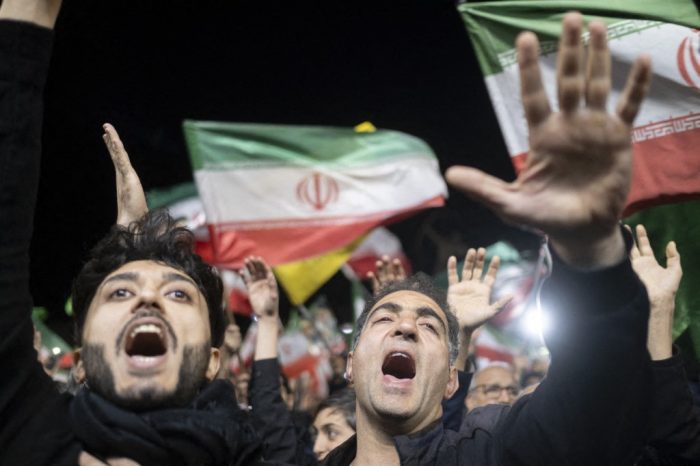
Oil prices rose further on Wednesday on concerns about a prolonged blockage in the Strait of Hormuz, while Wall Street mostly fell as investors awaited a Federal Reserve interest rate decision and a slew of tech company earnings.
Both major oil contracts rose nearly 6% after U.S. President Donald Trump warned Tehran on Wednesday that Iran should “get smart as soon as possible” and give in to Washington’s demands for tight control of its nuclear program as a U.S. naval blockade weighs on Iran’s economy.
Oil executives were told during a meeting with Trump that the United States may extend its naval blockade of Iran for several more months after media reports that he rejected Iran’s latest offer to reopen the Strait of Hormuz, an official said.
See also: China DeepSeek says new V4 AI model can run on Huawei chips
“Iran can’t get their act together… they better get smart soon,” Trump said in a post on his social media platform, which featured a mock-up photo of himself holding a rifle in front of the explosion that blew up the desert fortress, with the slogan: “No more Mr. Nice Guy!”
According to the administration official, who spoke on condition of anonymity, Trump discussed with oil executives “what steps we could take, if necessary, to extend the current blockade for several months and minimize the impact on American consumers.”
Analysts warned that the move would prompt Iran to maintain its blockade of the Strait of Hormuz, bringing this important oil shipping route to a virtual standstill.
News that peace talks remain deadlocked once again pushed up oil prices. Brent crude for June delivery rose 5.16% to $117 as of around 1335 GMT, its highest level since a fragile ceasefire between the United States and Iran took effect on April 8.
The Fed is widely expected to keep interest rates on hold later in the day, with markets closely watching its guidance on inflation as energy costs soar.
The U.S. dollar edged higher against major currencies, while Wall Street’s major indexes were mostly lower in early trading.
Asian stocks were mostly higher on Wednesday, led by weakness on Wall Street, with Hong Kong rising more than 1%.
“Markets are increasingly no longer expecting a quick and lasting peace or an immediate reopening of the Strait of Hormuz,” said Arne Lohmann Rasmussen, principal analyst at Global Risk Management.
Kathleen Brooks, director of research at trading platform
“30 million people could be pushed into poverty”
Meanwhile, the United Nations Development Program warned that the war could push more than 30 million people into poverty in 160 countries as energy and fertilizer prices soar. “This is a reverse development,” Alexandre De Croo, head of the United Nations Development Program, told AFP.
Iran’s blockade of the strait – a key passage for oil and gas shipments from the Gulf – has sent shockwaves through the global economy since the United States and Israel launched war two months ago. But its own economy has also been affected.
The Iranian rial fell to a record low against the dollar on Wednesday, while Tehran residents told AFP reporters in Paris they were despairing.
A 52-year-old architect, who asked not to be named, told AFP: “In recent years, every time there have been negotiations, the economic situation of the people has only gotten worse. Sanctions have either started or intensified.”
“They go to negotiations and come back with more sanctions and the issue is always nuclear. There is no talk of people, the economy or freedom. People have the right not to even want to hear the word ‘negotiations,'” he said.
Iran’s military says war is not over yet
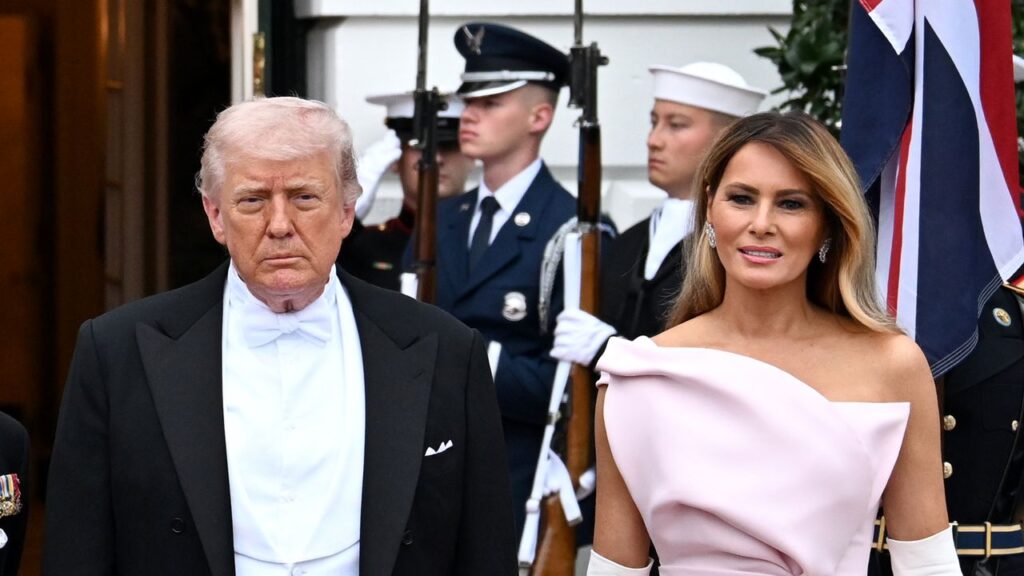
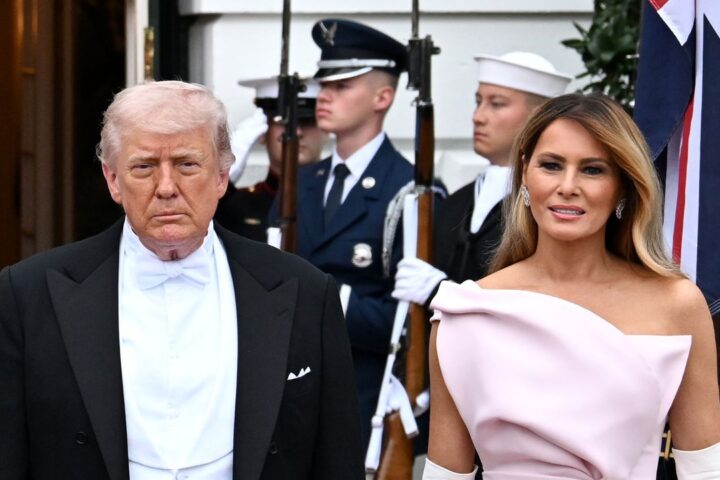
At a White House state dinner on Tuesday, Trump told Britain’s King Charles III and other guests that Iran had been “militarily defeated,” adding: “Charles agrees with me more than I do — we will never allow that adversary to have a nuclear weapon.”
But an Iranian military spokesman told state television on Tuesday that “we do not think the war is over” and said Tehran had “no trust in the United States.”
“We still have a lot of cards that we have not yet used… Based on the experience of the past two wars, we have new combat tools and methods that will definitely allow us to deal with the enemy more decisively” if fighting resumes, Amir Akraminya said in an interview.
Efforts to end the war have stalled in recent days. Iran’s latest proposal, adopted by Pakistan and studied by Trump administration officials at a meeting on Monday, draws red lines including the nuclear issue and the Strait of Hormuz, Iran’s Fars News Agency reported.
The plan would reportedly see Tehran ease its blockade of the strait and Washington lift a retaliatory blockade while wider negotiations continue, including over its nuclear programme.
Iranian Defense Ministry spokesman Reza Talenik said Washington “must give up its illegal and irrational demands.”
“The United States can no longer depend on independent countries to determine its policies,” he said, according to state television.
Qatar is a U.S. ally that has been hit by the Iranian attack despite its role as a mediator. Qatar has warned of the possibility of a “frozen conflict” if a final solution is not found.
“The attack cannot continue”
Despite the recent extension of the ceasefire between Israel and Hezbollah, violence continues on the Lebanese front lines. Hezbollah is an Iran-backed armed group that has drawn Lebanon into the war by firing rockets at Israel. Israel responded with attacks and ground invasions.
For the first time since the ceasefire began, the Lebanese army said an Israeli attack on its troops wounded two soldiers in the south. Another attack on Wednesday allegedly killed a Lebanese soldier.
“Israel must finally realize that the only way to achieve security is through negotiations, but a ceasefire must first be fully implemented before negotiations can continue,” Lebanese President Joseph Aoun said in a presidential statement.
“Israeli attacks cannot continue,” he said. “We are now waiting for the United States to set a date for the start of direct negotiations.”
Key figures at 1530 GMT
North Sea Brent crude oil: rose 5.9% to $117.81 a barrel.
West Texas Intermediate crude oil: rose 5.8% to $105.73 a barrel.
Hong Kong’s Hang Seng Index: rose 1.7% to 26,111.84 (closed).
Shanghai – Composite Index: up 0.7% to 4,107.51 (close).
TOKYO – Nikkei 225: Market closed due to holidays.
NEW YORK – Dow: down 0.6% to 48,861.75.
NEW YORK – S&P 500: Down less than 0.1% at 7,132.97.
NEW YORK – Nasdaq Composite: unchanged at 24,671.92.
LONDON – FTSE 100: down 1.2% to 10,213.11 (close).
USD/JPY: rose from 159.64 yen to 160.23 yen.
- AFP Additional editing and input by Jim Pollard
See also:
Chinese AI circuit board company raises US$2 billion, becomes Hong Kong listed company of the year
China’s top streaming site criticized for AI actor ‘database’
Bytedance’s viral video model shows China’s growing control over AI
New DeepSeek model delayed online to test China’s AI chip strength
Nexperia’s Chinese subsidiary’s chips “nearly fully localized”
China beats U.S. again in global patent battle, Huawei maintains lead
China now requires chipmakers to use at least 50% domestic equipment
Nvidia CEO says U.S. export restrictions on AI chips are ‘flawed’ policy
China’s big technological secret: Dutch chip-making machine replicated in laboratory
Chinese AI firms form alliance with chipmakers to ditch foreign technology