The Tamesis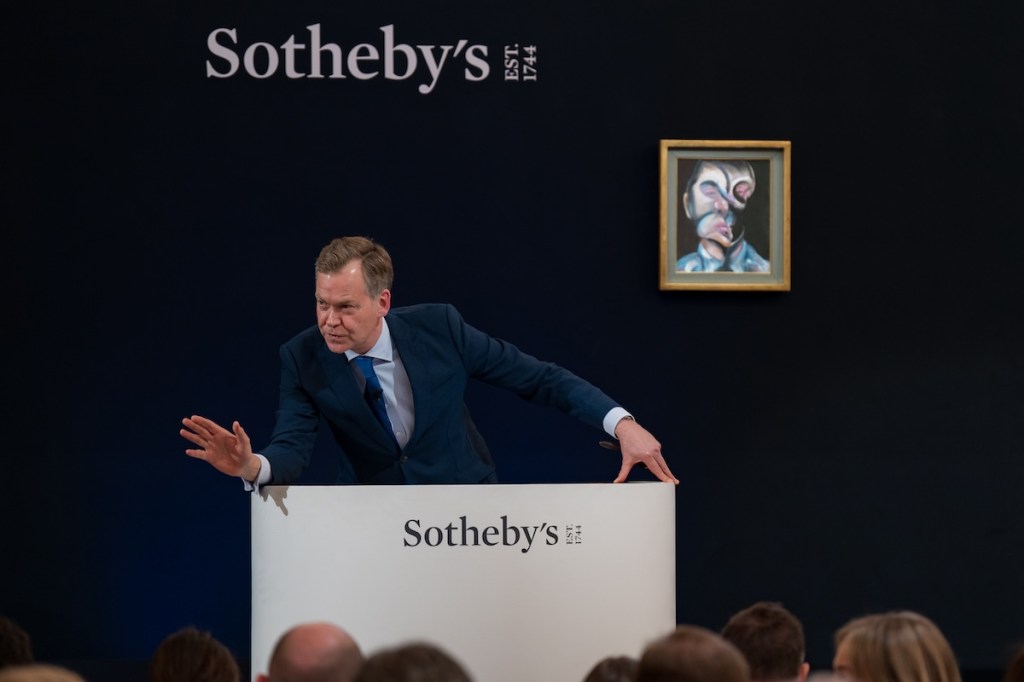
Which is more valuable, a painting by Picasso or a painting by a street artist no one has ever heard of? According to the AI model we built, the answer is the latter.
This surprising result comes from an experiment I conducted with a data scientist and artificial intelligence expert in Silicon Valley. Our goal is to see if AI can bring more transparency and perhaps greater fairness to the art market.
Time is running out. The art world has been in recession for 15 years, with galleries closing, young collectors retreating and artists trying to make it in major market centers living on the edge of poverty. The market is opaque and elitist. More than 50% of the contemporary art auction value comes from twenty artists. The attention garnered by blockbuster exhibitions and record prices is reserved for a handful of artists and galleries—with the excuse that their art is simply “better.” But is it really so?
Related articles

To find out, we built an artificial intelligence model to decode how the value of art is determined in the art market. We wanted to test whether visual quality could be assessed independently of context such as gender, origin, education, gallery representation, collector influence, pricing history or museum exhibitions.
At the heart of our project is a multimodal model (LMM) designed to analyze the visual characteristics and content of artworks, as well as metadata such as medium, format and date of creation.
Our starting point: a cleaned and normalized dataset containing millions of images, including price information. It features masterpieces from major museums—from the Mona Lisa to the latest works by Rashid Johnson and others—as well as the most expensive works sold at auction. Taking advantage of this, we trained an “Art Large Vision Model” (LVM) to predict auction prices based on what it can “see”. Market price becomes our pragmatic indicator—one of the few widely available, quantifiable indicators of value in the art world, even if it is heavily influenced by trends, channels, speculation, and power.
Early results are encouraging: in more than 50% of cases, the model’s predictions based purely on visual data are surprisingly close to actual prices. But it soon became apparent that more reliable predictions required additional metadata—such as the artist’s name, provenance, or gallery representation.
After months of training on millions of images, the conclusion is undeniable: our model cannot realistically estimate the price of art based on images alone. In one striking example, the AI valued a Picasso at less than $1,000 and gave a seven-figure price to an unknown street artist I photographed in New York and uploaded to the system.
This reveals two things. First, the AI judged the work of the street artist to be of higher visual quality than the work of Picasso—fundamentally challenging the logic of the market. Second, our model fails to produce market-viable results. Technically impressive, yes, but scientifically and commercially useless. Only when we added artist names and gallery affiliations did the model’s predictions align with real auction results.
After extensive testing and optimization, we were faced with a sobering fact: the problem wasn’t just AI. This is the training data itself – a reflection of a market distorted by social and economic biases. Unlike object detection or medical imaging, visual quality in art cannot be objectively quantified. Since our dataset consists primarily of works that are “validated” by the market, we end up reinforcing the circular pattern.
The results are enlightening but also frustrating. The market does not reward the art itself. It rewards the name. The gallery defines what matters.
What is the gain for the artist? This success depends less on the pen than on the Internet. I discovered this in a widely cited study published in Science a few years ago. Given this, it still amazes me that art schools rarely teach the business realities of being an artist—and that artists are often convinced that their art alone will make their careers.
As for artificial intelligence, artists probably shouldn’t be afraid of it. No machine can replace the emotional appeal of a studio visit, a real conversation, or interacting with a work of art in person. Art remains a human endeavor – built on trust, intimacy and emotion. For collectors, they should trust their instincts, even if that means buying art they stumble across in a small gallery or even on the street. Regardless, AI may agree with you.
Perhaps the real role of technology in the art market is not to price or rank art, but to reveal its value and help people discover what they like. In a well-supplied market, algorithms can learn your tastes, uncover artists you wouldn’t otherwise find, and break the shackles of trend cycles. In other words, AI isn’t replacing artists, it’s replacing gatekeepers. I imagine a world where your feed shows you art that moves you, not just what’s trending in Basel, Instagram, or Sotheby’s. It’s a world of price transparency, where artists without elite networks have a chance to be seen.
This is the promise of artificial intelligence in the arts. Not to replace human taste, but to empower it.