The Tamesis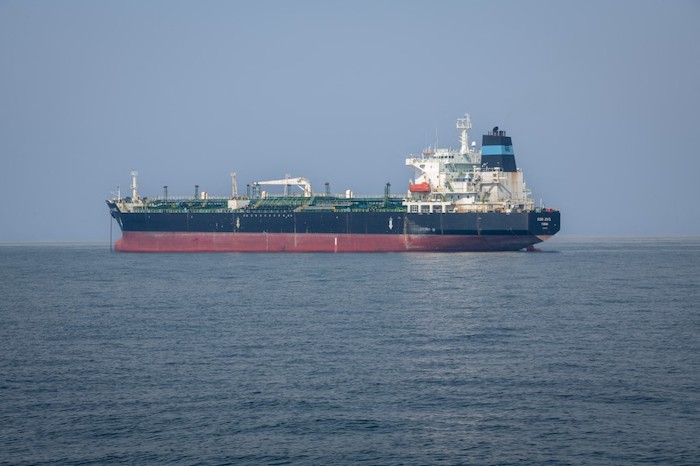
The Middle East appears to be descending into a bitter stalemate, with little progress on Thursday in peace talks to resolve the blockade of the Strait of Hormuz.
Oil prices edged further higher, with international benchmark Brent North Sea crude now back above $100 a barrel, threatening inflation in economies around the world.
Shares fell in all major Asian markets, before European and U.S. stocks opened lower as developments in the Gulf suggested a long-term end to the war in the Middle East.
See also: Young people in China tap into artificial intelligence, offering subsidies to start their own companies
The United States and Iran appear far from resuming peace talks despite extending a fragile ceasefire on Wednesday.
“Ships that lay mines will be destroyed”
U.S. President Donald Trump vowed on Thursday that the United States would destroy any ship that mines the Strait of Hormuz, while increasing pressure on Iran to reopen the vital sea lane.
“I have ordered the United States Navy to shoot and kill any vessel, no matter how small, that mines the waters of the Strait of Hormuz,” Trump posted.
“Without any hesitation. Additionally, our ‘minesweepers’ are now clearing the strait.”
Earlier, the U.S. Department of Defense said its forces had boarded a ship transporting oil from Iran in the Indian Ocean as the standoff with Iran continued to hammer the world economy.
The announcement came just hours after a senior Iranian official said the country, whose tolls on the waterway, which has become a focus of its confrontation with the United States, had deposited its first revenue into banks.
Iran has vowed to remain closed to all but a handful of approved vessels as long as the United States blocks its ports and ignores President Donald Trump’s demands to reopen the Strait of Hormuz and hand over enriched uranium.
The U.S. imposed a blockade on Iranian ports earlier this month, and on Thursday, the Pentagon announced on the
The post included footage of U.S. military personnel rappelling from a helicopter onto the deck of a large oil tanker.
The United States will “continue global maritime law enforcement to dismantle illicit networks and interdict vessels providing material support to Iran wherever they operate,” the statement said.
‘Blockade will force US to make concessions’
But Iranian parliament speaker Mohammad Bagher Ghalibaf, who led Tehran’s delegation to the first round of talks in Pakistan, said: “A comprehensive ceasefire only makes sense if the naval blockade does not violate the ceasefire agreement.
“It is impossible to reopen the Strait of Hormuz in a flagrant violation of the ceasefire agreement.”
His deputy, Hamidreza Hajibabaei, said Iran’s first revenue would come from tolls on ships passing through the Strait of Hormuz, a route that in peacetime accounts for a fifth of the world’s flow of oil and gas and other vital commodities.
Analysts say hardline leaders linked to the Islamic Revolutionary Guard Corps (IRGC) believe Iran’s blockade gives it enough economic leverage to force Washington to abandon its main demands in peace talks.
Danny Sitrinovich of the Institute for National Security Studies in Tel Aviv said Israel and the United States had misunderstood the Iranian government’s position.
“Tehran has always shown a willingness to endure economic pain while adhering to what it considers core national interests. There is no reason to believe this time will be different,” he said in a social media post.
“Instead of making concessions, Iran is preparing to escalate.”
A briefing note from the Soufan Center think tank said Iranian hardliners “believe that prolonged increases in global energy prices and increasing global shortages of certain commodities will increasingly pressure Trump to accept Iran’s position, end the war and ultimately withdraw troops from the region.”
“Trump and his team think exactly the opposite – that a U.S. blockade of seaborne trade for all Iranian oil exports will quickly cripple Iran’s economy and force Iran to accept U.S. demands.”
However, the President of the United States has a different view of the current situation, posting on social media:
“Iran is having a hard time figuring out who their leader is! They just don’t know! The infighting between the “hardliners” who are losing miserably on the battlefield and the “moderates” who are anything but moderate (but earn respect!) is crazy!
“We have full control of the Strait of Hormuz. No ships can enter or exit without US Navy approval. It is ‘strictly blocked’ until Iran can make a deal!!!”
Asian markets fall
Meanwhile, European countries are preparing to send naval ships and minesweepers to help ensure ships can pass through the strait as before.
Until then, the world will face rising energy prices and volatile stock markets. Recently, stocks have largely recovered from losses stemming from the U.S. and Israeli attacks on Iran in late February.
Solid first-quarter corporate earnings and rising enthusiasm for artificial intelligence have supported stocks this week, although analysts say a protracted conflict in the Middle East could quickly shake confidence.
Stocks fell on Thursday “as another damaging phase of this crisis fuels risk aversion,” said Joshua Mahony, chief market analyst at Scope Markets.
“While previous market movements were driven by conflict escalation and de-escalation, energy prices are now slowly moving higher as the prospect of a prolonged stalemate comes into play,” he said.
Analysts said the health of overall company performance and a resumption of bullish artificial intelligence trading helped support stocks despite uncertainty caused by the Iran war.
According to Bloomberg, nearly 80% of the companies in the S&P 500 Index that reported first-quarter profits exceeded analysts’ expectations.
Tesla on Wednesday reported first-quarter profit that beat expectations and the company confirmed plans to make huge investments in autonomous transportation, humanoid robots and artificial intelligence.
In Asia, Seoul also bucked the trend and hit a record high on a fresh rally in technology stocks, which have underpinned the KOSPI’s surge this year.
Euro zone business activity shrank in April for the first time in 16 months as war in the Middle East pushed up energy prices and disrupted global supply chains, a closely watched survey showed on Thursday.
The Eurozone Purchasing Managers Index (PMI) released by S&P Global, which measures the overall health of the economy, had a preview value of 48.6 in April, down from 50.7 in March.
Readings above 50 indicate growth, while readings below 50 indicate contraction.
Key figures at 1345 GMT
North Sea Brent crude oil: rose 0.8% to $102.69 a barrel.
West Texas Intermediate crude oil: rose 1.0% to $93.97 a barrel.
NEW YORK – Dow Jones: down 0.4% to 49,315.43.
NEW YORK – S&P 500: down 0.1% to 7,129.20.
NEW YORK – Nasdaq: down 0.2% to 24,598.06.
LONDON – FTSE 100: down 0.4% to 10,437.00.
PARIS – CAC 40: up 0.6% to 8,201.12.
FRANKFURT – DAX: fell 0.2% to 24,150.25.
TOKYO – Nikkei 225: down 0.8% to 59,140.23 (close).
HONG KONG – Hang Seng Index: down 1.0% to 25,915.20.
Shanghai – Composite Index: fell 0.3% to 4,093.25 (close).
USD/JPY: rose from 159.49 yen to 159.52 yen.
See also:
China’s top streaming site criticized for AI actor ‘database’
Bytedance’s viral video model shows China’s growing control over AI
New DeepSeek model delayed online to test China’s AI chip strength
Nexperia’s Chinese subsidiary’s chips “nearly fully localized”
China beats U.S. again in global patent battle, Huawei maintains lead
China now requires chipmakers to use at least 50% domestic equipment
Nvidia CEO says U.S. export restrictions on AI chips are ‘flawed’ policy
China’s big technological secret: Dutch chip-making machine replicated in laboratory
Chinese AI firms form alliance with chipmakers to ditch foreign technology
China’s “tech economy” trumps its bleak growth prospects
TSMC’s net profit jumps more than 58% as demand for artificial intelligence reaches new highs
Samsung Electronics expects profits to surge 755% due to AI boom