The Tamesis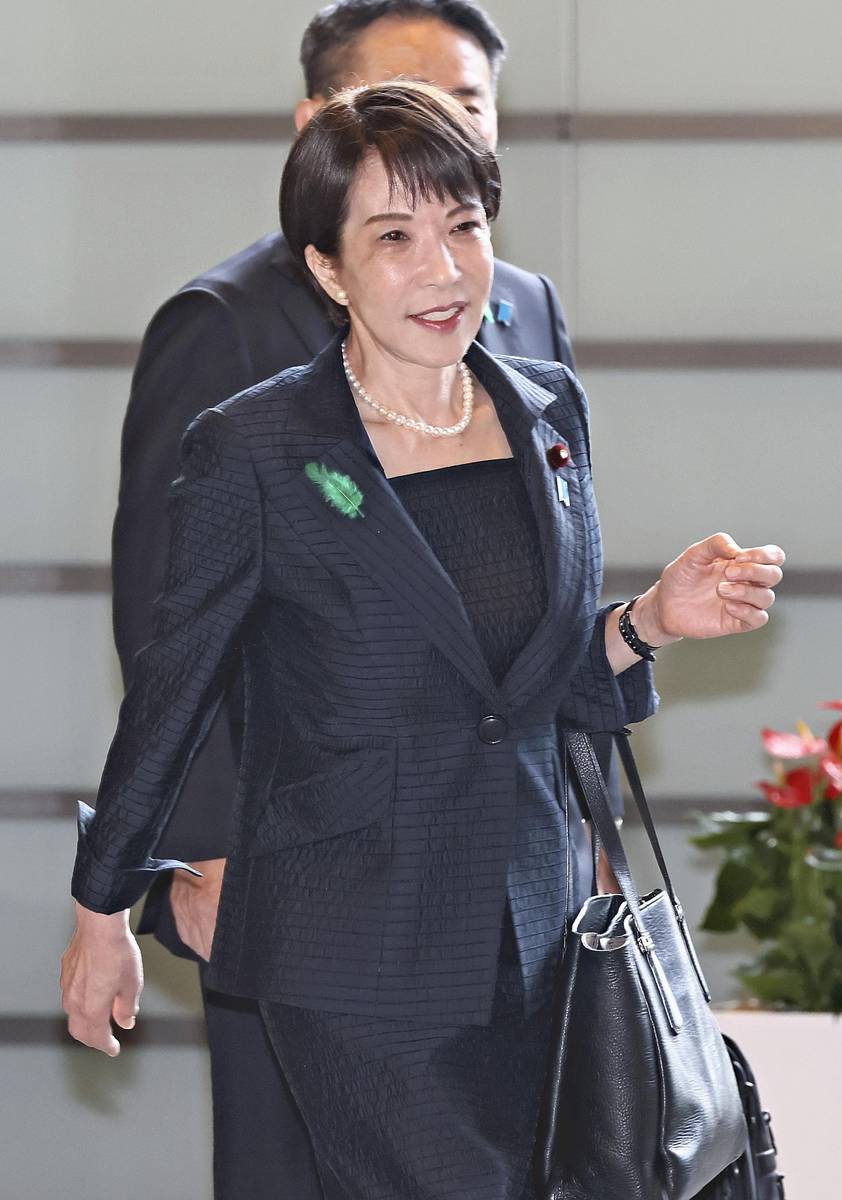
April 22, 2026
Tokyo – Tuesday marks the half-year anniversary of Japanese Prime Minister Sanae Takaichi taking office, and she has been working to shore up the foundation of her government by advocating for policies such as “responsible and proactive public finances.”
However, full implementation of her flagship policies – including enhanced intelligence collection and analysis – has yet to come. In addition, since the ruling coalition is in the minority in the Senate, her ability to govern will also be tested.
On Monday, Takaichi listened to a report on the government’s growth strategy by Minister in charge of Growth Strategy Minoru Kinuchi and other officials at the Prime Minister’s Office, and issued the instructions after reviewing the briefing materials. “We should shorten this part a little bit,” she said.
Since taking office, Gao Shi has advocated for “responsible and proactive public finance” and argued for a shift to policies that prioritize economic growth.
In November last year, Takaichi established the Japan Growth Strategy Headquarters and personally serves as the head of the headquarters. She has been working with Deputy Director Kiuchi to enrich the strategy.
Amid rising tensions in the Middle East, the Prime Minister’s Office has taken the lead on issues such as dealing with foreigners and measures to ensure the safety of crude oil and petroleum products.
The supplementary budget approved in December for the general account total of 18.3 trillion yen for the previous fiscal year is part of these efforts.
With the budget for this fiscal year, inherited from the previous administration, approved on April 7, the challenge ahead will be finding ways to implement her flagship policies, which are, in her words, “policies that will divide public opinion.”
opposition boycott
The first initiative, a bill to establish a National Intelligence Council to strengthen intelligence capabilities, is nearing the end of House consideration.
Opposition parties oppose separate planned counterintelligence legislation, arguing it would “increase government surveillance of the public”. Some opposition parties have expressed concern that the two pieces of legislation are inseparable.
Likewise, the opposition opposes plans to reduce the number of seats in the House of Representatives, a policy included in the agreement between the two parties in the ruling coalition.
Gao Yi believes that the government and the ruling and opposition parties are discussing the long-cherished wish to implement the food consumption tax reduction at the National Conference on Social Security established in February, but it is difficult to reach a consensus.
The ruling coalition remains in the minority in the upper house. However, the Liberal Democratic Party won an overwhelming victory in the House of Representatives election in February, gaining more than two-thirds of the seats. Even if the bill was rejected in the Senate, it is possible to pass it as long as it passes the House of Representatives again.
A senior ruling party lawmaker said the move had strong support and “we have the support of recent public sentiment” [via the election]so the bill was passed again [in the lower house] There will be no public backlash. “
When reviewing the fiscal year 2026 budget, the ruling party repeatedly invoked the powers of the Chairman of the House of Representatives to gain power through the management of Congress, which was strongly opposed by the opposition parties.
Likewise, if the ruling party plays the “re-pass” card, it may face criticism from the opposition parties for “ignoring the Senate,” which may hinder the consideration of future bills and force the ruling party to exercise restraint.
There is also a consistent view within the Liberal Democratic Party: “It is inevitable to show a certain degree of consideration for the opposition parties, including the content of the bill.” A senior lawmaker said.
proactive diplomacy
The government also faces challenges on the diplomatic front. Takahiro held two Japan-U.S. summits with U.S. President Donald Trump, one in October and another in March, which went well.
On the other hand, relations with China have cooled after her speech in Congress about possible emergencies in Taiwan, and the situation still shows no signs of improving.
Under this circumstance, in response to the current tensions in the Middle East, Gao Shi is actively talking on the phone with leaders of Middle Eastern and Asian countries to enhance Japan’s presence.
Takaichi also intends to link these efforts to promoting a revised vision of a “free and open Indo-Pacific” that will become her new foreign policy.
While Takaichi has been particularly reliant on the diplomatic legacy of former Prime Minister Shinzo Abe – whom she viewed as a political exemplar – since taking office, she has now shown her willingness to take an active diplomatic stance, including by announcing a new vision.
“[Takaichi] There seems to be a desire to show that she can also be independent in foreign policy,” a source close to her said.