The Tamesis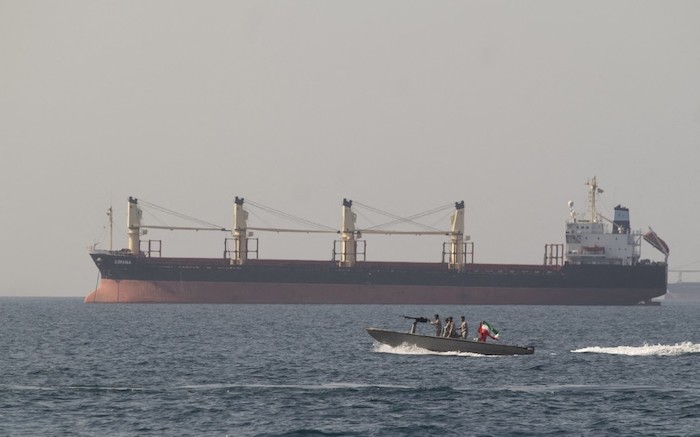
Oil prices rose about 8% to over $100 a barrel on Monday, with Asian markets falling after the United States said it would begin imposing a blockade of Iranian ports later today.
Analysts have expressed concern about plans to block ships in the Strait of Hormuz, saying it could deepen the unprecedented global energy shock that has rocked countries around the world since the war broke out on February 28.
Some commentators said the move was dangerous because it could Expand regional war If the war continues, it could plunge into a wider conflict, push oil prices to higher levels and trigger a global economic recession. But others said it was standard rhetoric from the president Known for withdrawing.
See also: Vance flies out after talks with Iran fail, Saudi Arabia resumes pipeline
US President Donald Trump announced the move on social media Peace talks between warring parties in Pakistan collapse — Trump blamed the outcome on the Islamic Republic’s refusal to give up its nuclear ambitions.
Trump’s latest threat stems from Tehran’s refusal to fully reopen the Strait of Hormuz after Vice President Vance left talks with an Iranian delegation in Islamabad on Sunday.
The collapse of talks dashed global hopes for a deal to permanently end a war that has killed thousands and roiled the global economy – Many Asian countries are in chaos Because it creates fuel shortages.
As negotiating teams flew out, Pakistani leaders said they would continue to promote dialogue and called on both sides to abide by the fragile two-week ceasefire agreed last week, which experts said any naval blockade could put at risk.
US says lockdown will begin at 1400 GMT
However, U.S. Central Command later issued a statement saying: “The blockade will be imposed impartially on vessels from all countries entering and leaving Iran’s ports and coastal areas, including all Iranian ports in the Arabian Gulf and Gulf of Oman,” adding that the blockade will begin at 1400 GMT on Monday.
The statement added that U.S. forces would not impede ships traveling to and from non-Iranian ports through the Strait of Hormuz.
Trump on his truth social platformConfirming the US military’s statement that the operation was more limited than envisaged in his previous posts, he claimed that all ships attempting to enter or exit the strait would be blocked.
Unlike much of the world, the United States has ample supplies of oil and natural gas, with production reaching more than 13.6 million barrels per day earlier this year.
The White House is well aware that a prolonged disruption in Iranian oil exports could be a test of China’s energy security, despite its large oil inventories and wide range of suppliers.
According to a report by the Iranian Oil Discount Company, China’s oil supply gap ranges from 1 to 1.4 million barrels per day. BruegelThe report noted that “a prolonged conflict over Iran could exacerbate domestic economic pressures and undermine China’s global goals.”
More threats
Meanwhile, Iran’s Revolutionary Guards warned ahead of the U.S. military’s announcement that they had taken complete control of traffic in Hormuz and would trap any challenger in a “deadly vortex.”
Trump said in a lengthy social media post on Sunday that his goal was to clear the strait of mines and reopen it to all shipping, but that Iran must not be allowed to profit from controlling the waterway.
“The United States Navy, the best in the world, will immediately begin blocking any ship trying to enter or leave the Strait of Hormuz,” Trump said. “Any Iranian who opens fire on us or on a peaceful ship will be bombed to hell!”
The financial impact of these statements is foreseeable. Oil prices, which plummeted following last week’s temporary ceasefire, have since surged 8-9%, with the key WTI and Brent crude contracts both topping $100 a barrel.
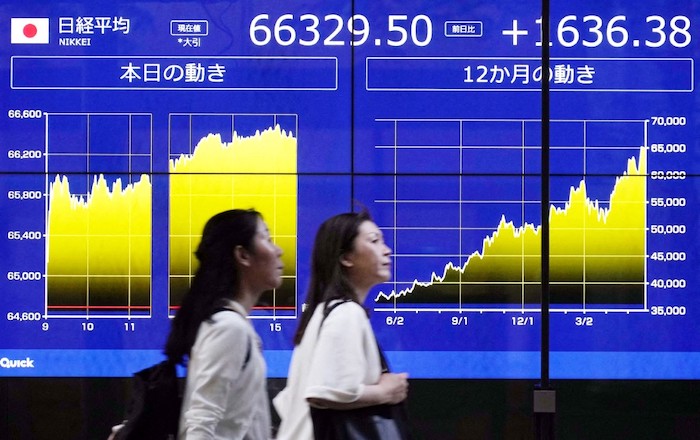
The impact on Asian markets was less serious, with Tokyo’s Nikkei falling 0.7%, Hong Kong’s Hang Seng falling 0.9%, and Mumbai’s BSE Sensex also falling 0.9%.
Iranian parliament speaker Mohammad Bagher Ghalibaf, who leads Tehran’s delegation to Pakistan, said Tehran “will not give in to any threats from Washington,” while Navy Chief Shahram Irani called Trump’s threat of a blockade “ridiculous.”
After the highest-level U.S.-Iran talks since the 1979 Islamic Revolution failed to reach a deal, Iranian Foreign Minister Abbas Araghchi blamed “extremism, changing goalposts and (a) blockade” for standing in the way of what he said was “just inches away from a deal.”
Trump told reporters on Sunday that he was ambivalent about the prospect of continuing talks with Iran.
“I don’t care if they come back. If they don’t come back, I’m fine,” he said.
“The war begins again”
Tehran has restricted traffic through the strait – a key route for global oil and gas shipments – while allowing some ships serving friendly countries such as China to pass.
Nicole Grajewski, an assistant professor at the Center for International Studies at Sciences Po in Paris, said the U.S. blockade was “not a slight signal of coercion” but could be seen as an effective restart of the war.
The U.S. military said on Saturday that two U.S. Navy warships had passed through the strait and began clearing mines, a claim Tehran denied.
Iran’s Fars news agency reported the next day that two Pakistani-flagged oil tankers bound for the strait had returned.
But the strait is far from the only point of friction in abandoning the global effort led by Pakistan to end the war. The war began when Israel and the United States launched attacks on Iran, which retaliated by attacking the Gulf and Israeli cities.
The U.S. delegation in Islamabad, led by Vance, special envoy Steve Witkoff and Trump’s son-in-law Jared Kushner, is frustrated by Iran’s refusal to give up its alleged rights to its nuclear program.
“I have said all along, from the beginning, and many years ago, that Iran will never have a nuclear weapon!” Trump later tweeted.
Vance told reporters in Islamabad that Washington had made its “ultimate and best offer” to Tehran, adding: “We will see whether the Iranians accept it.”
violence in lebanon
Even before the historic talks, concerns were high over whether the ceasefire would unravel due to continued Israeli attacks, allegedly targeting the Iranian-backed Hezbollah group in Beirut, with Iran and Pakistan insisting the ceasefire also applied to Beirut.
Lebanese Prime Minister Nawaf Salam said on Sunday he was working to stop the war and ensure the withdrawal of Israeli troops, even as Israeli Prime Minister Benjamin Netanyahu told troops in southern Lebanon that the fighting there was far from over.
Lebanese and Israeli officials are scheduled to hold talks in Washington on Tuesday.
Hezbollah said it fired rockets into northern Israeli towns overnight, continuing attacks that began in early March to avenge the death of Iran’s top leader in an attack by Israel and the United States that sparked a regional war.
Israeli attacks last week killed hundreds of people in Beirut and other parts of Lebanon after announcing a temporary ceasefire, according to Lebanese health authorities.
- Jim Pollard and AFP
See also:
Iran ceasefire has little impact on damaged Hormuz ships
Energy crisis triggered by Iran war fuels renewable energy boom, IEA says
Asian fuel importers eye Saudi ports amid uncertainty in Strait of Hormuz
Asia ‘worst hit by energy crisis’ due to Iran war
India’s demand for wood, coal poor as gas prices soar due to Iran war
War with Iran could hit some of Asia’s biggest economies hard
India races to secure supplies as new attacks threaten ‘energy war’
Iran war sends gas prices soaring, Asia ramps up coal power generation
Iran war trumps sanctions, Indian refiners snap up Russian oil
Iran threatens to ‘destroy world economy’ as more ships attacked