The Tamesis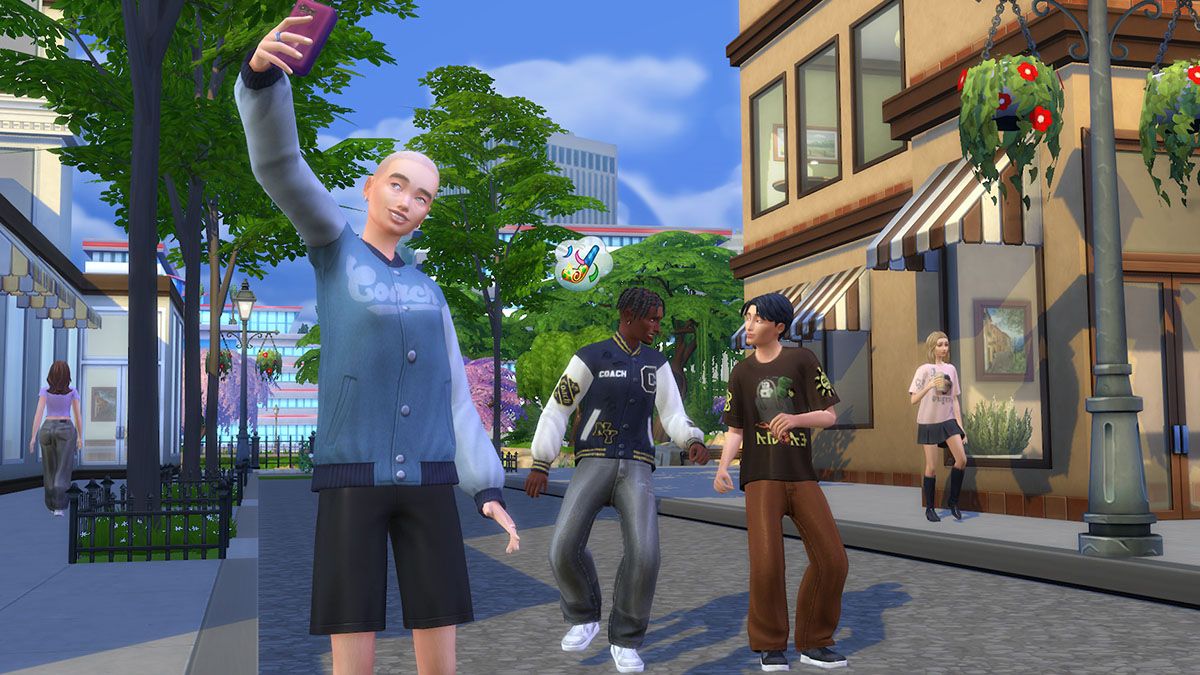
Giovanni Zaccariello, Coach’s senior vice president of global visual experience, said that for Coach, games are consistent with its core brand values. “This is how we emotionally connect with Gen Z online,” he said. “But we’re not just working with any game for the sake of getting into it. We’re really narrowing down the games that allow for self-expression.” Zaccariello said The Sims makes sense for Coach because users can build their own avatars and looks and living environments from scratch, which opens the door for Gen Z players to interact with their products when they can’t afford them in real life.
“You don’t want to enter a space that is so personalized without a clear perspective and opportunity to provide a better experience for customers,” adds Wallengren. “So I think in the fashion world, the game is changing from hype and one-off statements to a more fully integrated ecosystem that provides Gen Z with an intersecting reality with what they might experience in-store. It’s a bridge that gives them dual worlds of self-expression.”
Wallengren said the gaming collaborations her team has launched over the past 18 months are still in an “experimental stage.” But now that Coach has validated the community’s interest in the brand, it’s exploring “depth” with further experiences like full brand worlds, which come at a higher cost and require a deeper understanding of each game’s mechanics. “When you think about an overall brand campaign, launch or strategy, gaming should be there. It shouldn’t be an add-on or a PR thing. This should now be part of everything we do,” she said.
Likewise, Balenciaga CEO Gianfranco Gianangeli said Balenciaga is prioritizing the concept of self-expression in its late-2025 gaming campaign, which makes sense given the brand’s core values of “creativity and innovation.” “Through this cooperation [with PUBG] We blend the art of fashion with the cultural influence of interactive gaming entertainment to redefine style and self-expression in the virtual world. “Gianangeli said. fashion business Via email. Experts say the most thriving gaming communities are those where Gen Z is constantly creating new assets in games, so brands should be willing to give up some control in favor of user-driven content built on their visual code.
Think of games as marketing, not virtual worlds
Previous attempts in fashion have often been conflated with the industry’s virtual experiments, when some brands hired large innovation teams and poured thousands of dollars into high-profile virtual reality activations between 2019 and 2023. However, these experiments rarely translate into real revenue growth, making these innovative teams among the first to exit during subsequent economic slowdowns.
“When Metaverses were popular, gaming was a PR exercise led by an innovation team that could tick boxes in Metaverses,” Hambrough said. “But the reality is that it’s now a marketing-led initiative with completely different goals. It’s about raw engagement, user time, sales and impressions.” This renewed focus on commercial goals means brands should now treat gaming as a pure marketing distribution channel, he continued, adding that cost-per-impression in virtual worlds is much cheaper than traditional social media, in part because the dwell time in social online games like Roblox and Fortnite is significantly longer.