The Tamesis
January 2, 2026
Dhaka – People’s presence speaks for itself. Millions of people flocked to her namaz-e-janaza last Wednesday out of a love for her that cannot be measured by the usual standards applied to political leaders. They come here spontaneously, driven by an inner impulse to show respect to the person they believe represents them. The connection was more subconscious than political, and there was definitely no partisanship, as most of the people attending the rally were members of the general public. It’s unbelievable that she touched the hearts of so many ordinary people so magically.
Since the road in front of our office was closed to traffic, I was lucky enough to be part of the stream of people heading to Manikmea Avenue. As I walked, I felt a sadness that was much deeper than one usually sees on such occasions. People kept walking in solemn silence, each step revealing a deep sense of loss that they didn’t know how to fill. Obviously, there is no reliable estimate of how many people attended the rally, but my colleagues and I made a visual estimate of millions, as we headlined the next day. Despite the size of the gathering and the stress it must have caused, the overall discipline was astonishing. They came, they mourned, and they left, all with dignity and composure, representing the most important values that Khaleda Zia symbolized. There is a calmness about her personality that she seems to effectively convey to her supporters.
Considering that she was brutally vilified by Hasina’s regime since her ouster in 2006, spent seven years in jail and house arrest in her later years, and was brutally vilified by Hasina’s regime for most of the 15 years of Awami League rule, it is nothing short of a miracle that she is honored in Janaza. It seems that the more Hasina maligns her, the more people love Khaleda Zia. In our political culture, to be out of sight—that is, to lose power—is often to be out of mind. But in Khaleda Zia’s case, the oppression she endured only increased her popularity, and her public respect soared. This emotion was kept hidden until it could finally be expressed in her yanaza.
On August 7, 2024, less than two days after Hasina’s fall, Khaleda Zia spoke via Zoom in her first public meeting since her arrest in 2018. Her main message – apart from thanking the students’ movement and party workers for their support – was that we must build a “knowledge-based democratic Bangladesh” that is “free from exploitation” and “meritful and capable” by “strengthening the power of our youth”. The most important message, however, was her call for a politics of “a society without destruction, without vengeance, without revenge, but with love, peace and knowledge.” Speaking for a second time on Zoom from London, where she was undergoing advanced medical treatment, on February 27, 2025, she recalled the words of her husband Shahid, President Ziaur Rahman, that “the party is bigger than the individual and the country is bigger than the party.” She also reiterated her earlier message of eschewing the politics of revenge and replacing it with mutual love and friendship to build a new Bangladesh.
We mention these two speeches because Khaleda Zia insisted that we all – including her own party – should avoid the politics of revenge. This is perhaps the most important message the country needs right now: break away from the mob culture that seems to be engulfing our every sector. This is a testament to her wisdom, tolerance, maturity and democratic values. When we think about our political tradition, especially since 1991, it has been a competition that gradually became so intense that it turned the two warring political parties into mutually destructive enemies, prompting this economist Call the politics of Khaleda Zia and Sheikh Hasina “women in struggle”. Since neither party fully accepted the electoral verdicts of the caretaker/interim governments of 1991, 1996, 2001 and 2006, the electoral system and the freedom of voters to freely choose their representatives were gradually eroded. As we once pointed out in an article, their logic seems to be “an election is only free and fair if I win it…” With each election, mutual hostility becomes more instinctive, and politics degenerates into “revenge and revenge.”
Since this article is not an assessment of her entire political legacy, we will write about her successes and failures separately. Today, our purpose is to focus on the meaning of her final message before embarking on her eternal journey.
What is particularly valuable about her recent remarks is that this type of information is rare and, as mentioned, is urgently needed. We need to rebuild Bangladesh, and we need to start now, and holding free and fair elections will prove its urgency. Tariq Rahman also sent a similar message. He has every reason to feel bitterness and hatred towards Sheikh Hasina and her government. Exile, numerous cases and the personal humiliation he suffered – including a court order barring the media from publishing any of his statements – could have easily made him vindictive. Yet so far, in the many virtual speeches he has given in London and at a grand welcome party upon his return on December 25, his message has focused more on the future than the past. This is a sign of political maturity and a sign that we have moved away from the politics that have harmed us in so many ways.
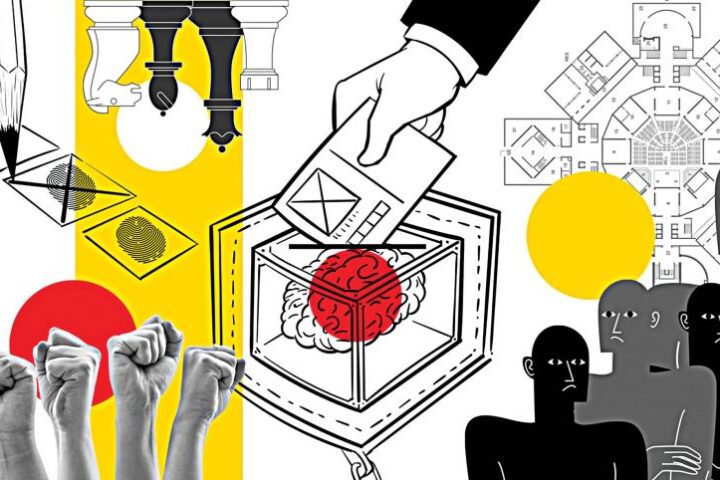
We believe the most meaningful way to remember Khaleda Zia is to take her final message seriously and embark on the path to rebuilding Bangladesh with love, compassion and understanding. The first and most important step is to unite behind democratic values and norms, the most critical of which is holding free, fair and inclusive elections. Any attempt to delay or derail this process should be revealed for what it is: an attempt to harm Bangladesh.
The interim government should hold elections earlier. To remedy this error of judgment, it should now not tolerate any attempts to disrupt our electoral process, and thankfully, it appears to be doing just that. The sooner we transition to democratically elected government, the sooner our development process can restart. The current law and order situation is at its worst, creating uncertainty and fear among the public. This is the first and most basic function of any government. Stability in governance requires the early restoration of democratically elected government. The practice of thugs causing terror by harming individuals and institutions must stop. Whatever grievances the public has, they should wait until a democratically elected government comes to power before resolving them.
This election may have many flaws. In third world countries they usually do this. The Awami League not being included will obviously be controversial. However, it should be remembered that the AL did not express any regret over the deaths of 1,400 ordinary people, including many students and children, in the last weeks of its rule (as the UN found). This further alienates the people.
It took us almost a year to agree on the reforms. There were many discussions about the July National Charter and its final ratification. We have now decided to hold a referendum. Unfortunately, this will complicate the process on Election Day. Most worryingly, the referendum on the July Charter remains largely incomprehensible to ordinary voters because of the language used.
What worries us even more is the lack of clarity in party manifestos. We’ve heard some general statements about post-election plans, but specific details remain elusive. Bangladesh’s economy relies on three pillars: agriculture, income from foreign workers and the ready-made garment industry. Most of our farmers do not get their due compensation, and their profits are misappropriated by middlemen. A portion of our foreign labor force still suffers from inhumane exploitation. We talk a lot about RMG, but real solutions to its fundamental problems remain ignored. These three sectors must receive due attention in the programs of political parties.
Even though Bangladesh is on the frontline, we hear almost nothing from any political party proposing to address the challenges related to the climate crisis. Why the government led by Professor Yunus did not pay enough attention to this existential problem remains a mystery. Another important area to highlight is job creation, especially for our youth. The relative inaction of this administration is again puzzling. Special efforts should be made on these issues to formulate recommendations for immediate implementation by elected governments.
Let us be clear: without adequate preparation to deal with the climate crisis, and without ensuring sustained economic growth, Bangladesh’s future will remain extremely fragile.
Mahfuz Anam is the editor and publisher of The Daily Star.