The Tamesis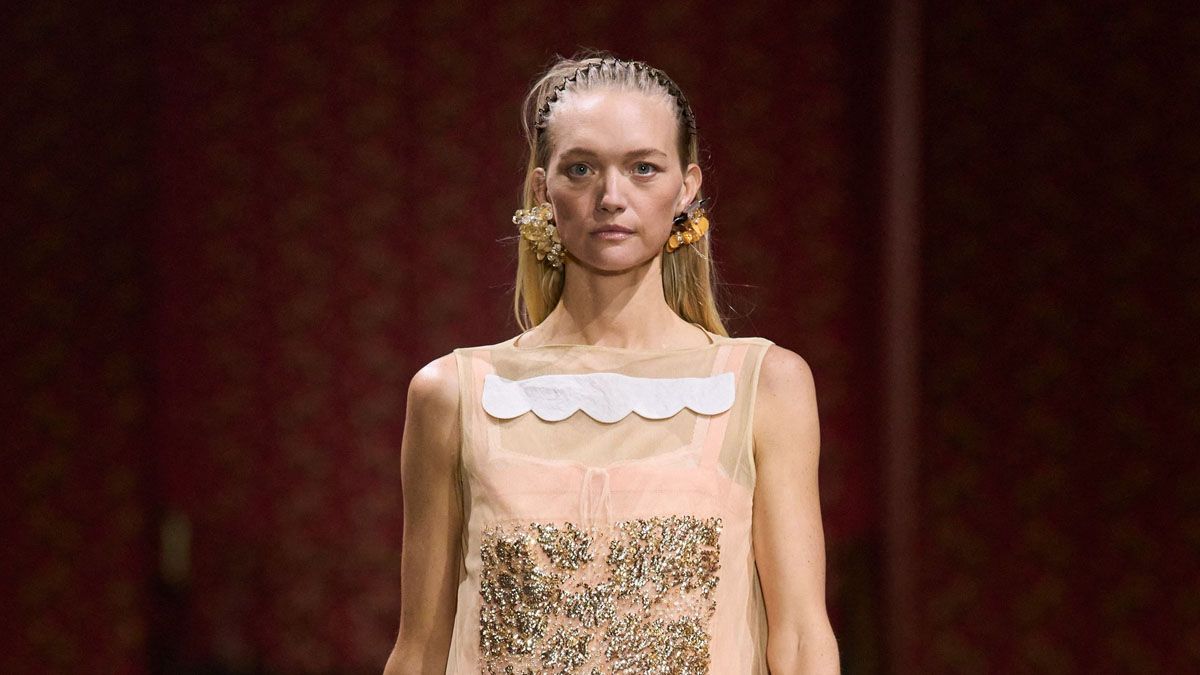
In the first quarter of 2026 as of March 31, Prada Group’s organic sales increased by 3% year-on-year to 1.43 billion euros. This does not include any contribution from the newly acquired Versace, which will be integrated into the group at the end of 2025. Including Versace, group revenue grew 14% at constant exchange rates.
“We are indeed going through a long, challenging and unique period for our business, the industry and the world,” Prada Group CEO Andrea Guerra said on Thursday’s earnings call. He reminded investors that the first quarter was the group’s toughest quarter in terms of comparables, with revenue in the first quarter of 2025 rising 13%. “Given the comparison and what’s going on in the world, I think it was a very challenging quarter.”
He stressed that the industry was “going through a phase of significant creative transformation among multiple brands” as rival brands such as Dior and Chanel enter the market with new creative directors, driven by “huge” marketing investments. While such creative updates make it harder for Prada and Miu Miu to stand out, Guerra said the group is maintaining its usual approach rather than reacting to competition.
Miu Miu’s growth trend is starting to normalize. Revenue grew 2.4% compared to a strict comparison of 60% a year ago, with growth balanced across product categories. “Over the past five years, our revenue has grown 20% in year one, 20% in year two, and then 58%, 93% and 35%, so the bar is very high,” Guerra said. “We are making progress on our plan to simplify our business model from multiple angles, particularly around sales channels and discounts. The trajectory so far is in line with our expectations.”
The organization highlighted the downsides of war in the Middle East, which had a particular impact on Miu Miu due to the region’s high exposure. The brand’s sales in Europe are also weak, partly due to fewer tourists from the Middle East. At the same time, sales in the Americas region increased significantly and sales in the Asia-Pacific region remained stable.
Sales of the Prada brand increased by 0.4%, with sales in the Americas, mainland China, Hong Kong and Macau increasing. Strong performance in full-price sales was partially offset by planned reductions in outlet store exposure. Prada had a slow start to the year, with weak demand in the first two weeks of January, but Guerra said performance had caught up, led by leather goods, ready-to-wear and footwear.
Versace said its performance was in line with expectations, with net income rising to 143 million euros (specific growth figures were not disclosed). The brand has benefited from a repositioning towards higher quality sales at full price and a deeper product offering. The company’s focus has been on retail execution and customer service, as well as integrating brands into the group.
For the Prada Group as a whole, sales in the Asia-Pacific region increased by 5% on an organic constant basis. In Europe, sales fell 6%; in the Americas, they grew 15%, driven by strong local demand; in Japan, sales fell 2%. In the Middle East, sales fell 22% due to weak domestic and tourism spending due to ongoing conflict.
The group’s retail sales increased by 1%, wholesale sales increased by 17% and royalties increased by 15%.
“We are firmly on our strategic path,” Guerra told investors. “The rules of the game in this new world are very clear to us: constant differentiation of high-end products and entry-price products to attract new consumers to our brands; strengthening of organization; hotel standards; and new store infrastructure. Whatever the world offers us, whatever the industry offers us, we are committed to achieving the Group’s ambitious goals and working hard to start a new phase of sustained growth.”