The Tamesis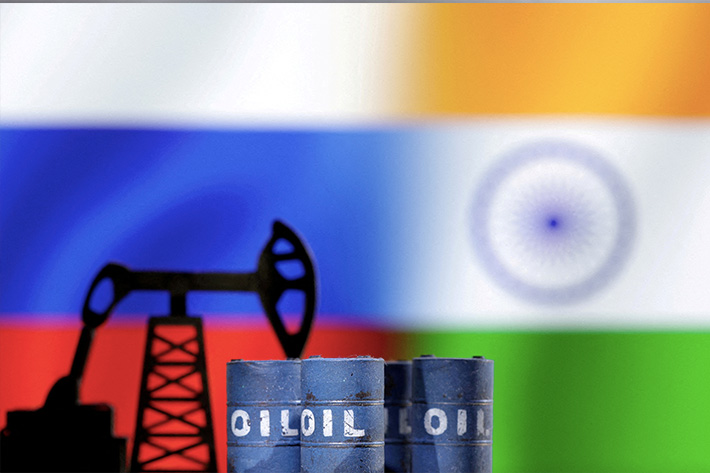
The Indian government’s efforts to push for a trade deal with the United States are under pressure, with U.S. President Donald Trump warning that he may further increase tariffs if New Delhi does not meet his calls to limit purchases of Russian oil.
Negotiations between the two countries remain inconclusive. “(Prime Minister Narendra) Modi is a good man. He knows I’m unhappy and it’s important to make me happy,” Trump told reporters aboard Air Force One on Sunday.
“They trade and we can raise tariffs on them very quickly,” Trump said in response to a question about India’s purchases of Russian oil.
See also: Sustained AI demand pushes Asian stocks to five-year high
India’s commerce ministry did not immediately respond to a request for comment.
Trump’s comments came after months of trade talks with the United States. Import tariffs on Indian goods doubled to 50% last year as punishment for its massive purchases of Russian oil.
Concerns about trade deal delays
Indian markets reacted on Monday, with the information technology index falling about 2.5% to its lowest in more than a month as investors worried that tense trade relations could further delay a U.S.-India trade deal.
The benchmark BSE Sensex fell 0.38% to 85,439.62 points, while the broader NSE Nifty 50 index fell 0.3% to 26,250.3 points, weighed down by IT stocks and worries about additional US tariffs, while a positive business update boosted expectations for improved quarterly earnings, limiting some losses.
Republican Senator Lindsey Graham, a close Trump ally, said U.S. sanctions on Russian oil companies and higher tariffs on India would help curb Indian oil imports.
Graham supports legislation that would impose tariffs of up to 500% on countries such as India that continue to buy Russian oil.
“If you buy cheap Russian oil, (you) can keep Putin’s war machine going,” he said, adding, “We are trying to keep the president [the] The ability to pass tariffs makes this a difficult choice. “
Graham said Trump’s actions were the main reason India was now “significantly reducing its purchases of Russian oil.”
However, trade experts warn that New Delhi’s cautious approach could weaken its position.
Ajay Srivastava, founder of Trade Think Tank Global Trade Research ProgramIt said that Indian exports have faced 50% tariffs from the United States, 25% of which are related to the purchase of Russian crude oil.
“Strategic gray area”
He said that although Indian refiners have cut imports in the wake of sanctions, buying has not stopped completely, leaving India in a “strategic gray area”.
Srivastava said “ambiguity no longer works” and urged India to make its stance on Russian oil clear. He warned that even a complete stop might not end U.S. pressure, which could be diverted to other trade demands, and that higher tariffs could lead to greater export losses.
Separately, India took a cautious diplomatic stance after the United States captured Venezuelan President Nicolas Maduro on Saturday, urging dialogue without explicitly naming Washington.
Despite excessive tariffs, India Exports to U.S. surge in Novemberdespite shipments falling by more than 20% between May and November 2025.
As New Delhi seeks a trade deal with Washington, the government has Refiners required to disclose Russian and U.S. oil purchases weekly to address U.S. concerns.
Modi has spoken to Trump at least three times since the tariffs were imposed. India’s commerce minister met with U.S. trade officials last month, but talks remain unresolved.
- Reuters Additional editing by Jim Pollard
See also:
Japan’s Sumitomo Real Estate bets on Mumbai’s booming real estate
EU to reject India’s request for exemption from carbon tax – FT
India’s green transition in trouble
Asia’s multi-billion dollar carbon boom?
India’s ambitious plan to decarbonize industry struggles
India plans to provide nationwide climate insurance to combat $180 billion in losses
European push could help India fill carbon reduction gap
New tax cuts will accelerate India’s shift to solar and wind energy
India’s renewable power generation surges in first half, coal use falls
Trump imposes 50% tariff on Indian imports, affecting jobs and bilateral relations