The Tamesis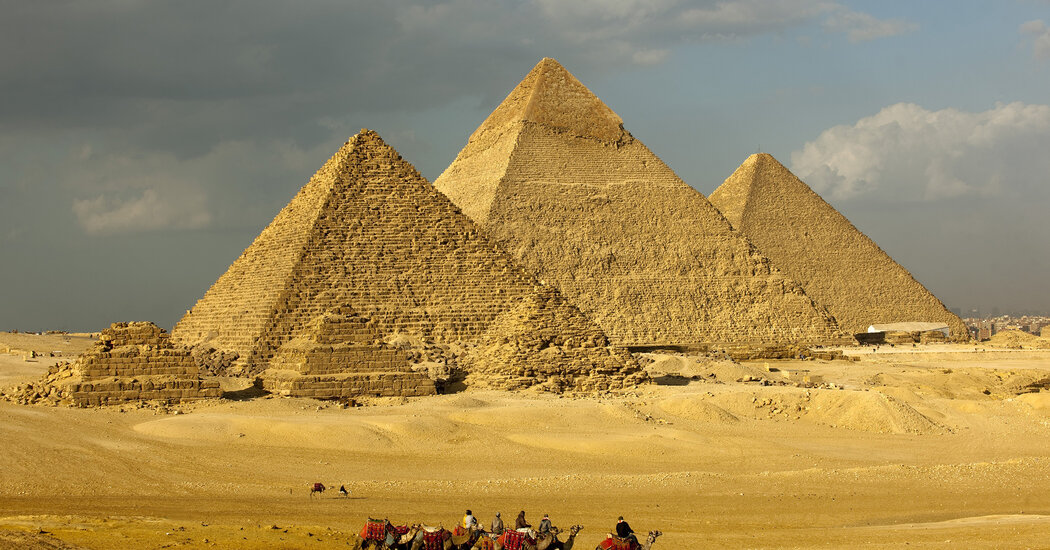
Architecture and Design
[–>
Earth
“Pounding earth or making mud bricks out of earth [as opposed to firing clay bricks] “It’s one of the most ubiquitous and ancient building techniques,” said Aric Chen, 51, director of the Zaha Hadid Foundation in London. “It keeps a space cool when it’s hot and warm when it’s cold, and it draws on indigenous knowledge and traditions.”
2100-500 B.C.
Ziggurats throughout ancient Mesopotamia (most of modern-day Iraq, northeast Syria and southeast Turkey)
“The use of mud brick goes back to our earliest constructions,” Chen says.
221-206 B.C.
The Great Wall of China outside Beijing
“Most people don’t realize that the sections [of the Great Wall] Built in the Qin Dynasty, they were all made of adobe bricks. “
2013
Wa Shan Guesthouse in Hangzhou, China, by Wang Shu
“Within mainstream contemporary architecture, there’s been a lot of attention given to revisiting these sustainable, beautiful and poetic [approaches to working with earth]”.
Brick
“I’m drawn to brick for its enduring versatility and its ability to create both monumental and humble architecture,” says the architect Lyndon Neri, 61, a founding partner of the Shanghai-based Neri&Hu Design and Research Office. “In brick, I find a material that’s both rooted and resonant, tying architecture to earth, craft and time.”
circa 2100 B.C.
The Ziggurat of Ur near Nasiriyah, Iraq
“A stepped pyramid constructed from sun-dried mud bricks with a fired-brick exterior, it’s one of the world’s earliest and biggest brick structures,” Neri says.
fourth century
Jetavanaramaya in Anuradhapura, Sri Lanka
“Said to be made of over 90 million bricks, it’s one of the largest brick structures ever built, and the tallest stupa in the ancient world.”
1962-74
Indian Institute of Management in Ahmedabad by Louis I. Kahn
“A monumental architectural masterpiece, the structures are defined by exposed load-bearing brick walls and dramatic geometric perforations, creating a profound sense of light, shadow and mass.”
Stone
“Stone architecture is historically essential as the most permanent physical record of civilization, offering an authoritative testament to technological skill, social organization and cultural values,” Neri says. “From ancient pyramids on, it’s been harnessed to express power, sacred belief and civic identity while driving key innovations such as the Roman arch and the Gothic vault.”
2575-2465 B.C.
The Pyramids of Giza in Egypt
“Built mostly in limestone, they’re the ultimate symbols of monumental stone construction that exude permanence.”
circa 128
The Pantheon in Rome
“Made of Roman concrete, travertine, marble and brick, it’s famous for its massive unreinforced concrete dome and stone portico,” Neri says.
12th century
Angkor Wat in Siem Reap, Cambodia
“A powerful manifestation of an architecture that represents a culture, with carved drawings and writings on the stone.”
Wood
“Wood represents a core architectural truth,” Neri says. “It serves as the temporary scaffold for building our world, and as the finished material that creates a sense of domestic warmth.”
circa 491
The Hanging Temple in Hunyuan, China
“This wooden monastery clings to a cliff via crossbeam frameworks inserted into the rock,” Neri says. “It’s a breathtaking example of adaptive, risk-defying timber construction.”
1056
The Wooden Pagoda of Yingxian near Shuozhou, China
“The world’s oldest and tallest multistory wooden pagoda, it’s a nine-level marvel built entirely without nails.”
circa 1181
Borgund Stave Church in Norway
“This medieval Christian church has a unique resemblance to Viking shipbuilding that, with its Christian iconography, creates a distinct Northern European wooden architectural form.”
Plaster
“It’s a material you see every day,” says Edwin Chan, 59, the founder of EC3, a Los Angeles-based architecture and design studio. “But people don’t think about it; it’s a blank canvas for the light.”
1305
Scrovegni Chapel in Padua, Italy, by Giotto
“This building has amazing blue plaster,” says Chan, “with south-facing windows that shine light on Giotto’s frescoes.”
1955
Chapelle Notre-Dame du Haut in Ronchamp, France, by Le Corbusier
“The combination of lime and marble dust here has a rough texture — the opposite of Venetian plaster. But the texture brings the walls to life.”
Glass
“Architecture is about sculpting with light,” says Chan. “Glass is a tool to manipulate the light and make it come alive.”
1248
Sainte-Chapelle in Paris
“You feel the materiality of the glass and the light in the stained-glass windows and Gothic architecture,” Chan says.
1949
The Glass House in New Canaan, Conn., by Philip Johnson
“In midcentury architecture, the glass wall is there to make the building disappear.”
2014
Fondation Louis Vuitton in Paris by Frank Gehry
While working at Gehry Partners, Chan helped design the museum. “It’s a glass building, but we didn’t use glass for transparency — it’s used to its full sculptural effect, playing between being transparent and translucent, reflecting and refracting the environment.”
Steel
“During the Industrial Revolution, steel allowed us to build higher, bigger and more open spaces,” Chen says. “Because it’s so strong, you don’t need as many columns close together.” Today, however, Chen points out, “steel’s carbon intensity is a major concern.”
1885
Home Insurance Building in Chicago by William Le Baron Jenney
“While it mostly features iron,” says Chen, “its incorporation of steel — an iron alloy — helped pioneer the era of steel-frame skyscrapers.”
1951
860-880 Lake Shore Drive in Chicago by Ludwig Mies van der Rohe
“If you look at it from the bottom, the vertical fins on the facades are all steel I-beams, celebrating the aesthetics of the industrial material.”
1977
The Pompidou Center in Paris by Renzo Piano and Richard Rogers
The architects were “main figures in the high-tech architecture movement of the 1980s and ’90s, which was about considering a building as a machine. The Pompidou is about expressing the infrastructure on the exterior, and that’s all steel.”
These interviews have been edited and condensed.
More in Architecture and Design
[-1–>[0–>See the rest of the issue