The Tamesis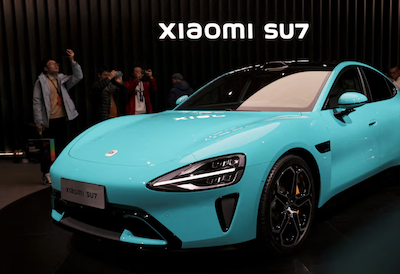
Chinese electric car maker Xiaomi plans to set up a safety advisory board after facing criticism over two fatal crashes last year.
In October, a Xiaomi SU7 sedan collided with another vehicle, causing a power outage that prevented the driver from operating the doors. The driver was trapped in the car and burned to death, local media outlet Caixin reported this week, citing forensic reports.
This prompted another Chinese news outlet, China Business News, to comment, urging Xiaomi to recall the first-generation SU7 to “completely eliminate the door handle hazard.”
See also: Hong Kong exchange tops global list of listed companies, profits hit record high
The company actually has a large safety team of more than 3,500 people, including an internal investigation center that reviews incidents.
But it and government officials appear to have recognized the need to review its design and other issues as other serious accidents have occurred.
Earlier, an SU7 crashed while driving in driver assistance mode, killing three people. The incident remains under investigation.
Meanwhile, the company released a software update for more than 115,000 SU7 vehicles in September targeting assisted driving issues.
The company plans to launch an updated version of its popular SU7 in April with backup power for the doors. The SU7 is extremely popular, with sales of nearly 38,000 units in January, according to the China Passenger Car Association.
Electric cars must have a way to open the door from the inside: Government
Chinese officials have now banned hidden door handles in electric cars, a feature of Tesla’s electric cars that now appears to be viewed as potentially dangerous.
The Ministry of Industry and Information Technology said earlier this month that cars sold in China must be equipped with mechanical release devices both inside and outside electric vehicles.
have Two accidents occurred in Xiaomi electric vehicles last year A power outage means people can’t open their doors to escape or be rescued. U.S. and European authorities are also apparently concerned about cars with “hidden door handle” features.
Another concern for Xiaomi and other automakers is that the change could be costly to implement.
About 60 percent of popular electric or new energy vehicles are said to be equipped with hidden handles, China Daily said. Tesla is said to have agreed to make the required changes when the ruling takes effect early next year (January 1, 2027).
Meanwhile, Xiaomi now plans to hold regular meetings with car owners, media and experts to listen to their suggestions on car safety, according to a person familiar with the matter. Reuters reports. Hou Jinglei, head of Xiaomi’s electric vehicle safety department, said in a live broadcast from the company’s electric vehicle factory in Beijing that the first meeting will be held in the first half of this year.
Another potentially big news for Xiaomi and the United States is that it is in talks with Ford to form a joint venture to produce electric vehicles in the United States, according to the Financial Times.
Ford denied the report, sparking concerns in Washington that it could open the door to a slew of Chinese auto and battery manufacturers.
The chairman of a U.S. House of Representatives committee sent a letter to Ford CEO Jim Farley asking about the automaker’s plans to form a joint venture with top Chinese automaker BYD and warning of potential risks.
“In recent months, China has demonstrated that it will weaponize its automotive supply chain. This is a serious vulnerability that will only get worse if Ford enters into a new partnership with BYD,” Republican John Moolenaar said in the letter sent in late January.
Mullenar also expressed concern about the automaker’s plan to build a $3 billion data center to produce batteries using technology from China’s Contemporary Amperex Technology Co., Ltd., Reuters reported.
See also:
German Merz lands in Beijing seeking closer ties with China
Panama hands over canal port terminal to Maersk, MSC – CNBC
Tariff ruling casts huge doubt on U.S. trade deal
Report: China exploits Trump’s ‘uncertainty’ to dominate global trade
China supplies a large number of gasoline cars to the world, far more than electric cars
EU wants commitment to lowest prices if Chinese EVs avoid tariffs
BYD struggles at home, but record overseas sales help it beat Tesla
As exports boom and priorities shift, China’s EV subsidy era may be over
Chinese companies may soon need to transfer technology to invest in Europe
Overseas investment by Chinese electric vehicle companies exceeds domestic investment for the first time