The Tamesis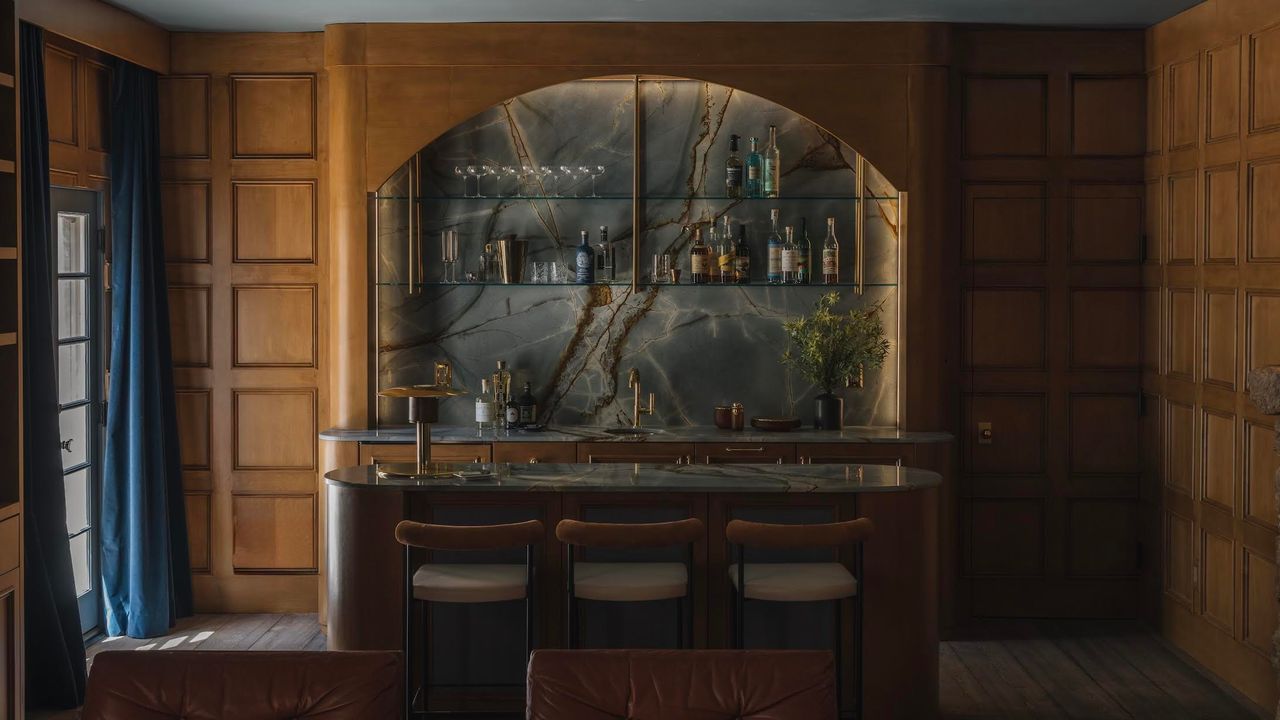
It’s been a bold few years for interior decorating. The rooms have returned to a sense of layering and texture, a departure from the Scandinavian minimalism that dominated the past decade. But the shift isn’t just evident in expanses of forest green paint or pattern-filled bedrooms, but also in architectural details and structural elements within the house, signaling a new interest in permanence in spaces rich with character. So it makes sense that wood-panelled walls would be the next resurgence.
Once synonymous with ’70s interiors—think warm wood basements or entertainment centers—it’s often torn down and replaced with brighter, more modern wall treatments. Now, designers say it’s making a comeback, with many of them seeing an increase in requests to reincorporate wood paneling into homes or preserve spaces that feature it.
“We’re seeing a broader cultural appeal toward interiors that are down to earth and long-lasting,” shares Leann Conquer of San Francisco design firm Chroma. “Paneling brings architecture and narrative back in a time when people crave material things,” she added. It’s about nostalgia and a return to days gone by, but it’s also a reaction to micro-trends and the fast-changing, algorithm-driven interior design cycle. “I think people are consciously moving away from the disposable trend,” said Tiffany Howell of Night Palm in Los Angeles.
Madelynn Hudson of MH Interiors agrees, “I think we are seeing a return to architectural detailing. After a decade of minimalist white box spaces, people are craving warmth, craftsmanship and character. Wood paneling provides all of that. It instantly adds a sense of timelessness and history, even in newer buildings.”
Whether through slabs, raised or traditional profiles, beadboard or tongue and groove, there are countless ways to introduce the dimension and warmth that paneled walls provide. But it all comes down to physicality. “The wood brings an immediate depth—a rich palette of tones, textures and shadows that feel premium,” says Howell. “What’s timeless about it is its innate integrity. The wood ages gracefully and never feels tied to a specific moment.”
Proportion is also key, Conquer adds. “When the details are quiet and the geometry is correct, the paneling becomes architectural rather than decorative. When the details become more intricate, it is intentional and decorative but thoughtful,” she adds. In addition to being a fixed space, they are “very comfortable,” Hudson noted.
So how do you bring a legendary architectural detail into 2026 without it feeling like a direct flashback to the past? “When the profiles are clean and the wood is treated to a natural tone, the paneling feels classic,” says Hudson. “It becomes a backdrop rather than a stage set. Rooms that feel dated are often rooms where paneling is overused or overly stylized.”
“The wood itself is also important – honest materials, visible grains and durable finishes tend to transcend any one decade,” Konkel adds. “Paneling naturally references history, and that’s the point. It’s interpreted, it evolves, and it becomes a sign of its era, ready to be re-referenced in the future.” Howell agrees, adding that nuance is everything. “Color, finish and scale determine the emotional temperature of a paneled wall. Darker stains create a moodier, more inclusive environment; they make a room feel richer and more contemplative. When tones lean more towards light oak, bleached or soft cream, the paneling behaves more like a sculptural surface than a mood-setter.”
Another element is to reinterpret it today through new methods. “We are seeing paneling becoming looser. Rather than accepting strict historical references, clients are open to abstraction – playing with unexpected proportions, asymmetry, or extending paneling beyond its traditional height,” adds Conquer.