The Tamesis
The restaurant, on the hotel’s lowest floor, has low ceilings, stone walls and views of the surrounding forest, and is helmed by Italian chef Davide Degiovanni, who built his resume at London’s Four Seasons in Mayfair and served as head chef at Gordon Ramsay’s Union Street Café. The menu combines rugged Swiss Alpine pantry with techniques and flavors he absorbed while growing up in Piedmont, northern Italy. His signature dishes include pillowy gnocchi made with local potatoes swimming in a silky pool of cream and black truffle, and crispy croquettes filled with trout sourced from the surrounding glacier-fed streams and flavored with spicy horseradish. Degiovanni’s insistence on local ingredients has established a network of suppliers in nearby Val Fex, a tightly protected valley reached by winding forest roads above the hotel. Although construction was banned here decades ago, a handful of family-run farms still operate, including Crasta, an organic dairy farm set in an idyllic alpine meadow, where cattle are raised to provide the milk, fresh cheese and beef for Chesa Marchetta.

Photo: Courtesy of Artfarm
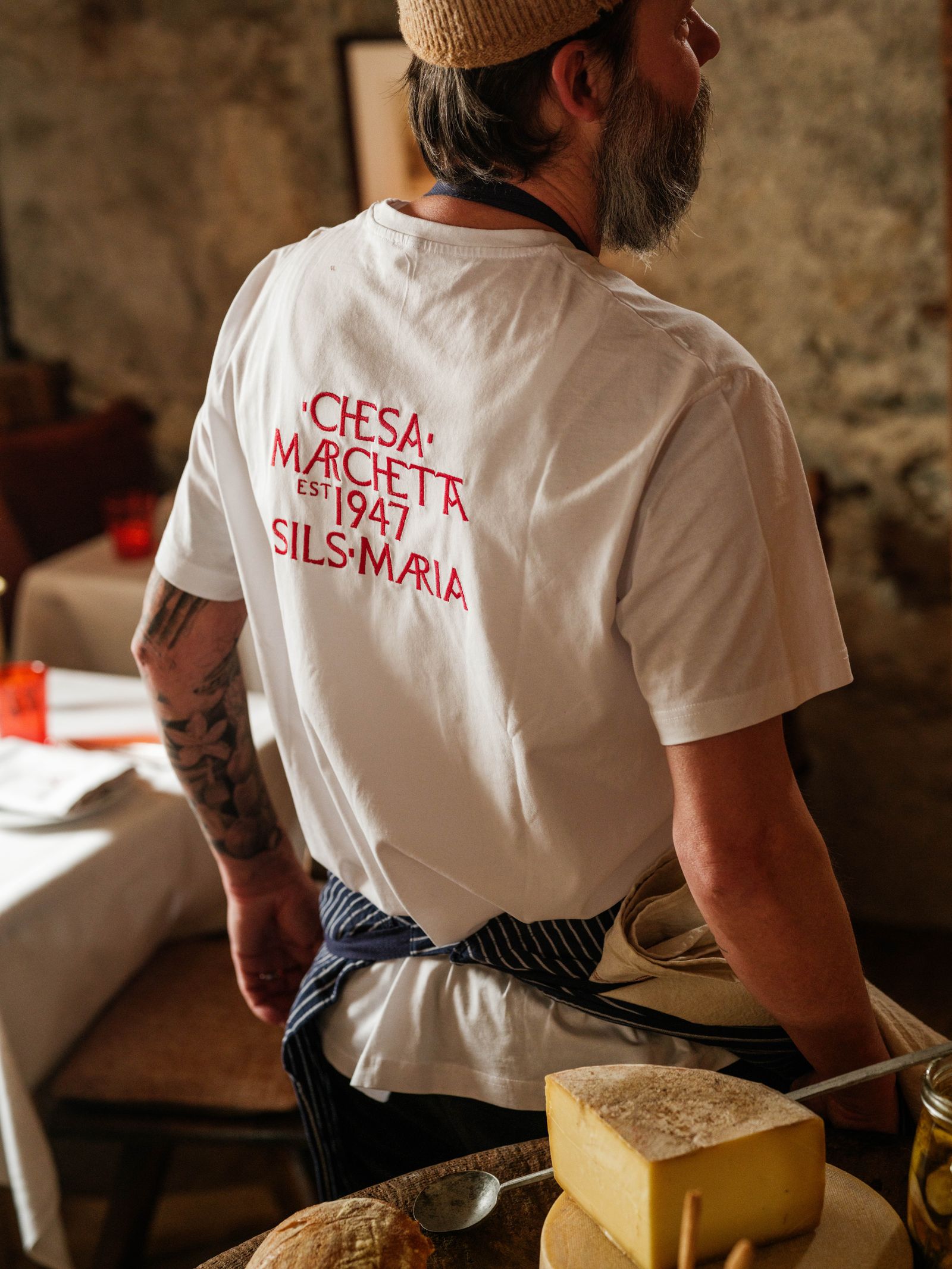
Photo: Courtesy of Artfarm
But the Voss family’s cultural influence extends beyond the hotel. In fact, Chesa Marchetta is the third property they have developed in the Engadine Valley. Their local portfolio also includes the Hotel Castell near Zuoz and the Hauser & Wirth outpost in St. Moritz. On the occasion of the opening of the Chesa Marchetta, Hauser & Wirth presents an exhibition dedicated to the region’s artistic heritage – a retrospective of the little-known early works of Alberto Giacometti, entitled faces and landscapes of home. The Swiss artist, best known for his slender bronze statues, was born below the valley and spent much of his life here. The exhibition includes portraits of family members, a bust depicting the head of his brother Diego, and photographs taken by his close friend Ernst Scheidegger in his cabin studio in Stampa. Also included in the book is a rare painting of Lake Sils, which can still be seen today a short walk from the Chesa Marchetta and which, more than a century later, still retains the soft tones and peaceful sense of remoteness that define this rare Alpine landscape.