The Tamesis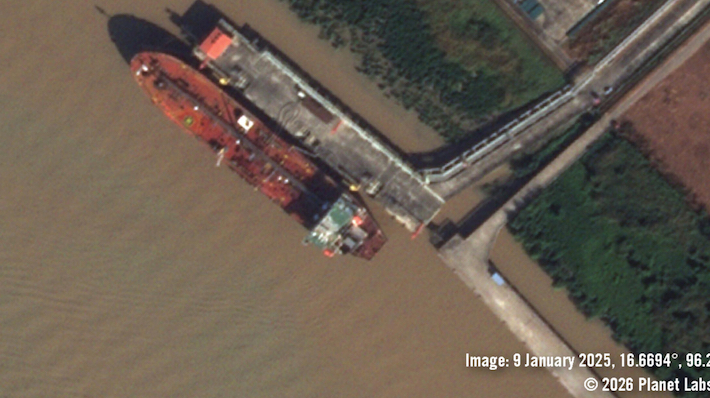
Iran has been secretly shipping aviation fuel to Myanmar, helping the military regime ramp up bombings of civilian targets ahead of a “sham” election.
An investigative report released this week amnesty international Reveals how Iran became the junta’s main supplier of aviation fuel and urea despite international sanctions.
Tehran has been using tankers that spoof their true positions, sending false position signals to “fool” automatic identification systems that monitor shipping, as Reuters Also reported.
SEE ALSO: Notorious Myanmar Scam Mafia Member Executed in China
Amnesty International says aviation fuel continues to arrive in Yangon through a murky supply chain that has been “out of control” for five years since the military junta blocked Aung San Suu Kyi’s National League for Democracy from returning to power in February 2021.
The rights group said analysis of trade, shipping, satellite and port authority data showed tankers supplying Myanmar’s military were using similar tactics to “ghost ships” transporting oil to Russia, Iran and North Korea, which regularly turned off location tracking systems to avoid detection.
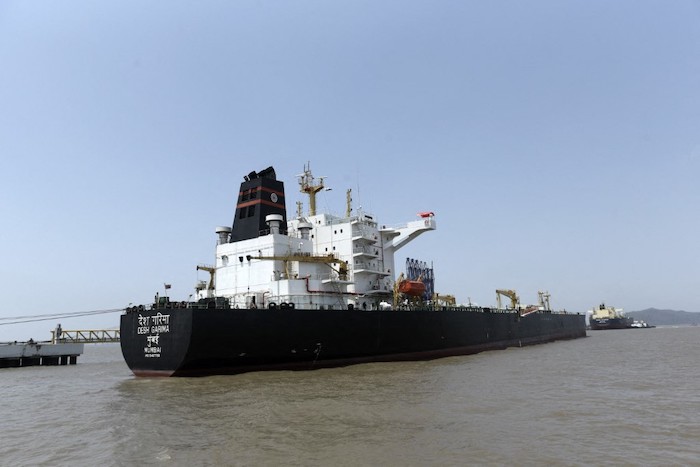
The report said that between mid-2024 and the end of 2025, four ships transported at least nine shipments of aviation fuel to Myanmar. The ships “frequently changed names, flags, or ownership, and conducted ship-to-ship fuel transfers at sea, making the source of the fuel difficult to trace.”
Aviation fuel has become a hotly contested commodity in Myanmar’s civil war as regular reports link the Myanmar air force to war crimes – regularly bombing hospitals, schools, churches, monasteries and homes near conflict scenes.
“Illegal shipments of jet fuel from Iran have fueled massive bombing campaign Myanmar’s military junta has attacked more than 1,000 civilian sites in 15 months,” Reuters reported this week on its latest investigation.
Iran also transported urea, a key ingredient in the junta’s munitions “including bombs dropped by drones and paragliders,” the report said.
According to the report, “Iran’s supply of weapons to Myanmar’s military has helped change the dynamics of a five-year civil war that has pitted the junta against a series of rebel groups, none of which has a conventional air force or a ready supply of weapons as powerful as bombs and missiles launched by fighter jets.”
Amnesty International, meanwhile, has been tracking Myanmar’s military junta’s supply lines almost since the war began five years ago.
At the end of 2022, it released a report called deadly cargo and Justice for Myanmar The group revealed that multinational companies based in Singapore and Thailand are part of the supply chain that supplies Jet A-1 aviation fuel to Myanmar.
This led to sanctions being imposed on the aviation fuel supply chain, but Amnesty International January 2024 Analysis and July 2024 Survey Results A major shift in discovery methods. Direct sales declined and Myanmar’s military junta worked harder to conceal the origins of its supplies.
New Tactics: Iran’s “Shadow Fleet”
The fuel was purchased and resold multiple times to conceal its origin. The report said at least nine shipments arrived in Myanmar in 2023 and early 2024, many of which passed through a warehousing facility in Vietnam, exposing a deliberate strategy to evade sanctions.
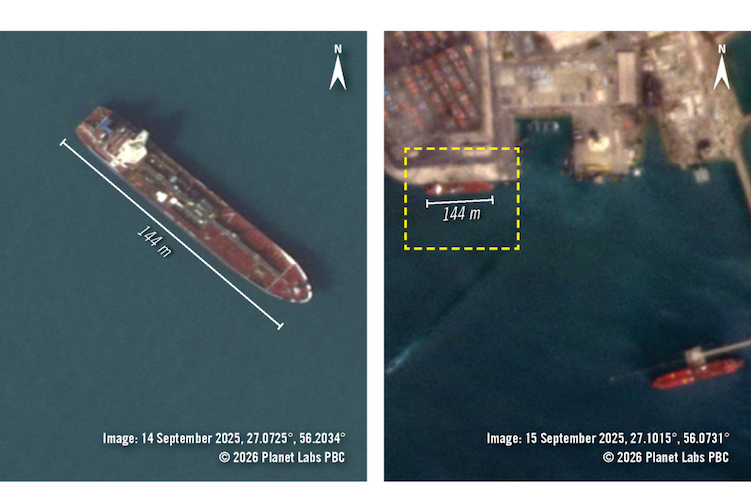
Amnesty International said in its latest report that since July 2024, it has tracked multiple shipments of aviation fuel to Myanmar, including two US-sanctioned ships (commonly known as “Noble” and “Reef”) with a history of exporting fuel from Iran.
“All cargo on the two ships is believed to have originated from Iran, according to data from commodity intelligence platform Kpler, which tracks global flows of fuel and other commodities, while satellite imagery reviewed by Amnesty International suggests possible links to Iran,” the report said.
“Notably, data from the Myanmar Port Authority shows that at least 109,604 metric tons of aviation fuel were imported into Myanmar in 2025, a 69% increase from 2024 and the highest import volume since the coup – despite sanctions imposed to prevent the fuel from entering the country.”
Iran delivered about 175,000 tons of aviation fuel to the junta in nine batches from October 2024 to December 2025, starting from the Reef and a larger sister ship, the Noble, according to shipping documents reviewed by Reuters and satellite images and analysis by U.S. firm SynMax Intelligence.
“Fostering mass atrocities”
“This fuel shipment from Iran is actually fueling mass atrocities,” UN rapporteur on Myanmar Tom Andrews told Reuters. “Attacks on civilian targets continue to escalate. This is horrific and unacceptable. It is important to name those who enable this.”
The fuel helped the junta regain momentum after rebel groups seized key bases in the country’s north in late 2023 and 2024.
Since the increase in fuel supplies, the junta’s 100 or so warplanes, which include Chinese and Russian aircraft, have carried out more attacks.
Myanmar’s ethnic rebel groups have struggled to hold on to the territory they captured not only because of airstrikes from these aircraft, but also because of the junta’s increasingly adept use of thousands of drones supplied by China, as well as Paragliding and other simple aircraft.
In a press release on Monday, strengthen rights An increasing number of civilians were noted to be injured by bombs dropped by paramotors and gyroplanes.
Increased jet fuel transportation allows the military to expand its military capabilities Attacks on resistance groups and civilians in the run-up to the electionsmust be held in three stages.
But the civil war is expected to continue as it enters its sixth year on Sunday. Analysts say resistance needs to master coordinated attackand their own use of Chinese drones to have any chance of defeating an army of tens of thousands of young men forcibly recruited.
Note: The title of this report was revised on January 30, 2026.
See also:
Thais to curb gold’s impact on baht amid fears of ‘grey money’
“Fraud billionaire” Chen Zhi arrested in Cambodia and flown to China
U.S. spends huge sums of money to arrest Southeast Asian fraud leader
US targets multi-billion dollar fraud network in Myanmar and Cambodia
The devastation of Myanmar’s disastrous civil war spreads to Thailand
Wa Army takes control of new rare earth mine in northeastern Myanmar
Thailand plans to build dams to clean up toxic runoff from Myanmar gold mines
U.S. sanctions Cambodian Karen warlord’s money laundering ring
Chinese rare earth mines ‘poisoning’ northern Myanmar – report
Aung San Suu Kyi’s adviser calls for sanctions on Myanmar’s central bank
UN rapporteur calls on Thai banks to stop aiding Myanmar military junta