The Tamesis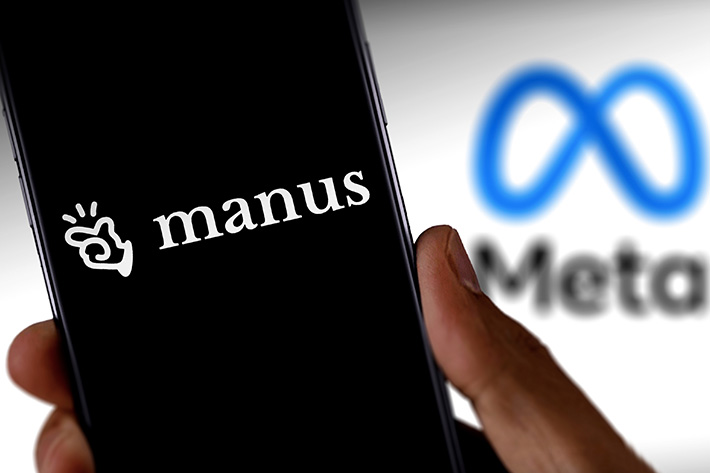
Beijing officials are currently reviewing Facebook parent company Meta’s $2 billion acquisition of Beijing-founded artificial intelligence startup Manus to determine whether the deal violates technology export controls, the Financial Times reported, citing people familiar with the matter.
Chinese commerce ministry officials began assessing whether the move of Manus’ employees and technology to Singapore and subsequent sale to Meta would require an export license under Chinese law, The report stated.
The report added that while the review is in its preliminary stages and may not lead to a formal investigation, the need for a license could provide Beijing with a way to influence the deal, including in extreme cases trying to force the parties to abandon the deal.
AF also reports: Japan calls China’s dual-use export ban ‘unacceptable’
The report noted that Beijing used “similar mechanisms” to block U.S. President Donald Trump’s attempts to force the sale of TikTok during his first term.
Meta acquires Manus last month It said at the time that the startup would cut ties with China after the acquisition.
The deal raised concerns in Beijing that such acquisitions could pave the way for Chinese startups to set up offices abroad to bypass domestic regulations, the Financial Times reported.
Reuters could not immediately verify the report. Meta and Manus did not immediately respond to requests for comment.
“Singapore Washing”
A growing number of Chinese companies have been looking to set up offices in Singapore, arguing that moving to the trade-centric city-state would reduce the risk of their businesses being disrupted by geopolitical tensions between the United States and China.
The trend, dubbed the “Singapore Purge” by some analysts, began to gain traction toward the end of Trump’s first term as president and has since accelerated, spreading to everything from critical minerals to technology and biotech.
There is no official data on how many Chinese companies are currently registered in Singapore, but one industry expert told Reuters Last month, interest from Chinese companies was “very strong,” with inquiries up about 15-20% year-on-year.
Singapore offers an attractive base for companies looking to circumvent U.S. tariffs and maintain access to key U.S. technologies whose sales in China are restricted. Washington imposes just a 10% tariff on goods from Singapore.
“The Singaporean brand is trusted around the world. Singapore is valued for its international flavour, neutrality and is culturally easy for Chinese businesses and their expats to adapt to,” Erica Tay, China economist at Maybank, told Reuters.
Relocation is not enough
Companies turning to Singapore – like Manus AI – include data center operator DayOne, a spinoff from GDS Holdings; ChemLex, an AI-driven chemical synthesis company; and optical products maker Terahop, backed by China’s Zhongji InnoLight.
But while relocation theoretically provides companies with greater flexibility in managing tariffs, export controls and other protective trade policies, such moves do not guarantee companies immunity from political or regulatory pressure.
Fast fashion company Shein and short video platform TikTok were among the first companies to enter Singapore, but their businesses have apparently not been immune to Western scrutiny.
Both companies have also had to succumb to regulatory scrutiny from Beijing. Shein is currently seeking Chinese approval for a Hong Kong stock market debut and is reportedly considering moving back to China.
Meanwhile, Beijing has blocked talks to sell TikTok’s U.S. operations for months. Citing Chinese laws and regulations It happened again last month, just days after the short-form video platform signed a deal with a U.S. buyer.
It remains to be seen whether Beijing will allow the deal to be completed as scheduled on January 22.
However, the Financial Times reported, citing sources, that China may not have much urgency to intervene with Manus AI because its product—artificial intelligence assistant—is not considered a core technology for China’s interests.
Earlier this year, Manus quickly became popular on X after launching what it claims is the world’s first general artificial intelligence agent, capable of making decisions and performing tasks autonomously with far fewer prompts than artificial intelligence chatbots such as ChatGPT and DeepSeek.
However, a Chinese expert noted that China’s review may focus on whether Manus developed export control technology before leaving China in 2022.
“Legal liability may arise if unauthorized export of restricted technology is proven…[including]Criminal liability,” he wrote.
- Reuters, with additional editing and input by Vishakha Saxena
Also read:
Chinese artificial intelligence chip maker Biren Technology’s share price rises 76% in latest Hong Kong IPO
China hopes to solve problems of addiction and self-harm caused by artificial intelligence imitating humans
Study finds artificial intelligence majors fail security tests, with Chinese companies worst performing
Meta tolerates billions in Chinese scams and fraudulent ad revenue
The idea of AI superintelligence is a ‘fantasy’
The ‘Big Short’ is betting $1 billion that the ‘AI bubble’ will burst
DeepSeek researchers are pessimistic about AI’s impact on humanity
DeepSeek shares user data with Chinese military, intelligence agencies: U.S.
Apple joins hands with Alibaba to introduce artificial intelligence to Chinese iPhones
Senior analyst warns that artificial intelligence is ‘virtually useless’
Power and water use by big tech companies in AI wave takes center stage
Indian stocks emerge as unexpected hedge amid fears of AI bubble