The Tamesis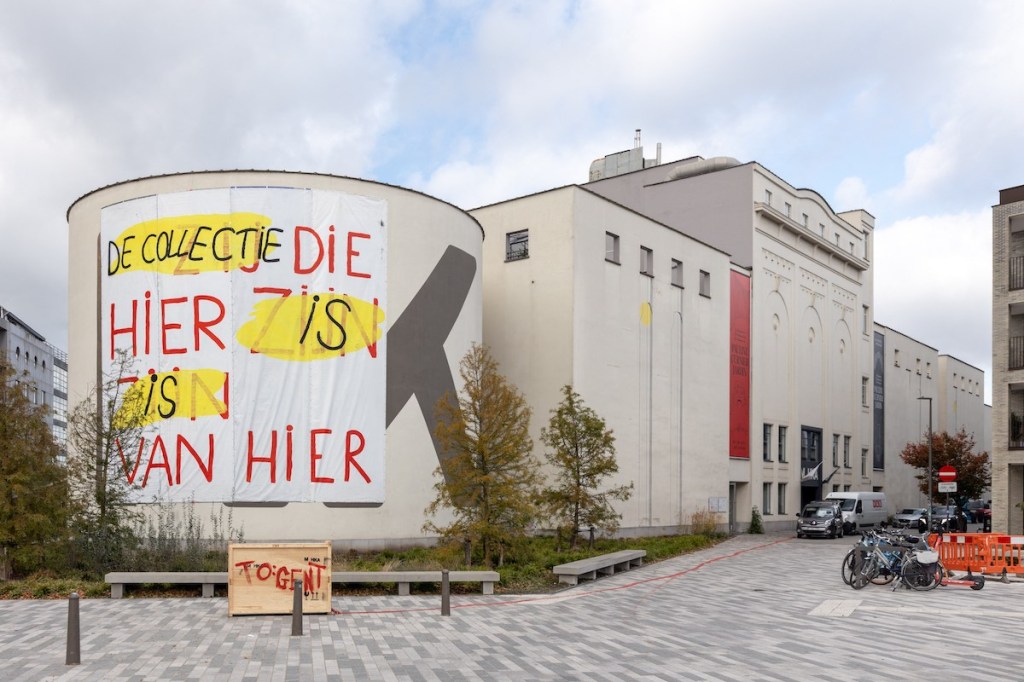
The Flemish government’s plans to dissolve Antwerp’s much-loved contemporary art institution M HKA have come under further criticism, with a legal review launched by the museum now claiming the move is illegal.
VRT NewsBelgian media reported that M HKA has worked with several artists to have lawyers review the plans. The results of the review were released to the media on Tuesday, with high-profile artists such as Luc Tuymans and Otobong Nkanga in attendance.
Related articles

M HKA said in a press release that the government’s plans contained “blatant violations”. Plans announced last October would see the M HKA essentially close, with its collections sent to Ghent and its programs transferred to the Flanders Museum of Contemporary Art (a rebranded version of the SMAK Museum) in 2028. The current M HKA building will then be turned into an arts center hosting artists and exhibitions.
The regional government positioned the move as a moment of reform for the Flemish arts scene. According to M HKA, although the plan is still in the proposal stage, it is being reviewed as if it had been signed off for implementation. The Flemish government is expected to make a formal decision later this week.
“When non-binding documents are treated as established policy, the legal certainty of public bodies is compromised,” Dieter Vankeirsbilck, acting director of M HKA, said in a statement. “That is exactly what this legal opinion today reveals.”
in a statement VRT NewsFlanders Culture Minister Caroline Gennez said she was aware of the “difficulties and concerns” of the M HKA transition, but appeared to support the proposal. “The two-year reform transition process is about to begin,” she said. “In this process, every participant will be able to participate in the decision-making process and its implementation as planned.”
Museum organizations around the world have issued harsh denunciations of the Flemish government, although M HKA museum directors released on Tuesday also issued a never-before-seen rebuke.
“At a time when public interest in contemporary art continues to grow and the number of international museums continues to grow, the closure of a museum like M HKA will represent an irreparable loss – not just for Antwerp, but for the entire cultural sector,” a dozen European museum directors wrote in an email to Gennez in October. Signatories include Maria Balshaw, outgoing director of the Tate Modern in London; Laurent Le Bon of the Center Pompidou in Paris; and Taco Dibbets of the Rijksmuseum in Amsterdam.
The release also included a November email from artist Anish Kapoor that had not previously been made public. In an email to Gennes, Kapoor requested that his artwork be removed from the websites of M HKA and all other Flemish museums. “This issue is not only about protecting my artistic heritage but also about preserving the integrity of the institutions charged with protecting cultural heritage,” Kapoor wrote.
Kapoor doesn’t seem to be the only artist making such demands. in an op-ed The Art Newspaper Today, curator Charles Esche reports that the estates of Emilia Kabakov and Christian Boltanski have sought to have their works removed from the M HKA website. Kabakov confirms she has asked for her work to be removed art news. The Boltanski estate did not immediately respond to a request for comment, but a previous statement from a group called Artists at Risk noted that protests against the plan were “supported” by the estate of Boltanski’s widow, artist Annette Messager. )
Antwerp artist Otobong Nkanga, who is hosting her first exhibition in Belgium, also expressed her opposition to the change in a video statement released through M HKA. She called plans to relocate the workplace from Antwerp “unacceptable”.
“I think, and I believe, M HKA should continue to be a museum,” she said. “It is very important that we fight for this because this is our museum, it is our city and it is open to many other people. Families come, artists come. We look at the works, we learn a lot and we share. This is a very important place for different communities in Antwerp, the region, Belgium and abroad.”
In his column, Escher warned that the repercussions of M HKA’s breakup could extend beyond Antwerp. Escher writes that while European countries have allowed “cultural institutions and collections to resonate over time” starting in the 1960s, their principles are now “disintegrating into populist, neoliberal and politically clueless fragments. It is therefore unlikely that the case of disappearing museums is limited to Antwerp.”