The Tamesis
“Let me show you a house built five centuries before Christ.” I chuckled at the tour guide’s callous instructions. Five centuries! Before Christ! But this is Menorca, where you can rendezvous with the ancient world after enjoying a pintxo picnic under wild olive trees. Another thing you can do in Menorca: drink the local wine, which is exactly why I traveled to the Balearic Islands this April. Unlike other Mediterranean destinations lauded for their wine scene (Catalonia, Sicily, Provence), Menorca has stayed out of the spotlight. But I bet that’s about to change.
To understand the background of wine in Menorcan culture, you have to look back (thousands of years ago, more or less). “When we talk about wine in Menorca, we’re not just talking about the drink,” Gonzalo Lopez, owner of Menorca Discovery Tours, told me. Trade, agriculture, tourism and celebrations are all part of the island’s wine history. He gave an example involving the Balearic slingers. These “slingers” were mercenaries from the Carthaginian and later Roman armies who threw stones at speeds in excess of 100 miles per hour. “There are historical sources that suggest these warriors were paid in coins, but they spent their earnings on alcohol,” Lopez said. Over time, the story evolved that they gave up the coins and chose to pay in wine. “Whether taken literally or as a reflection of ancient custom, it speaks volumes about the importance of wine in Mediterranean life.”
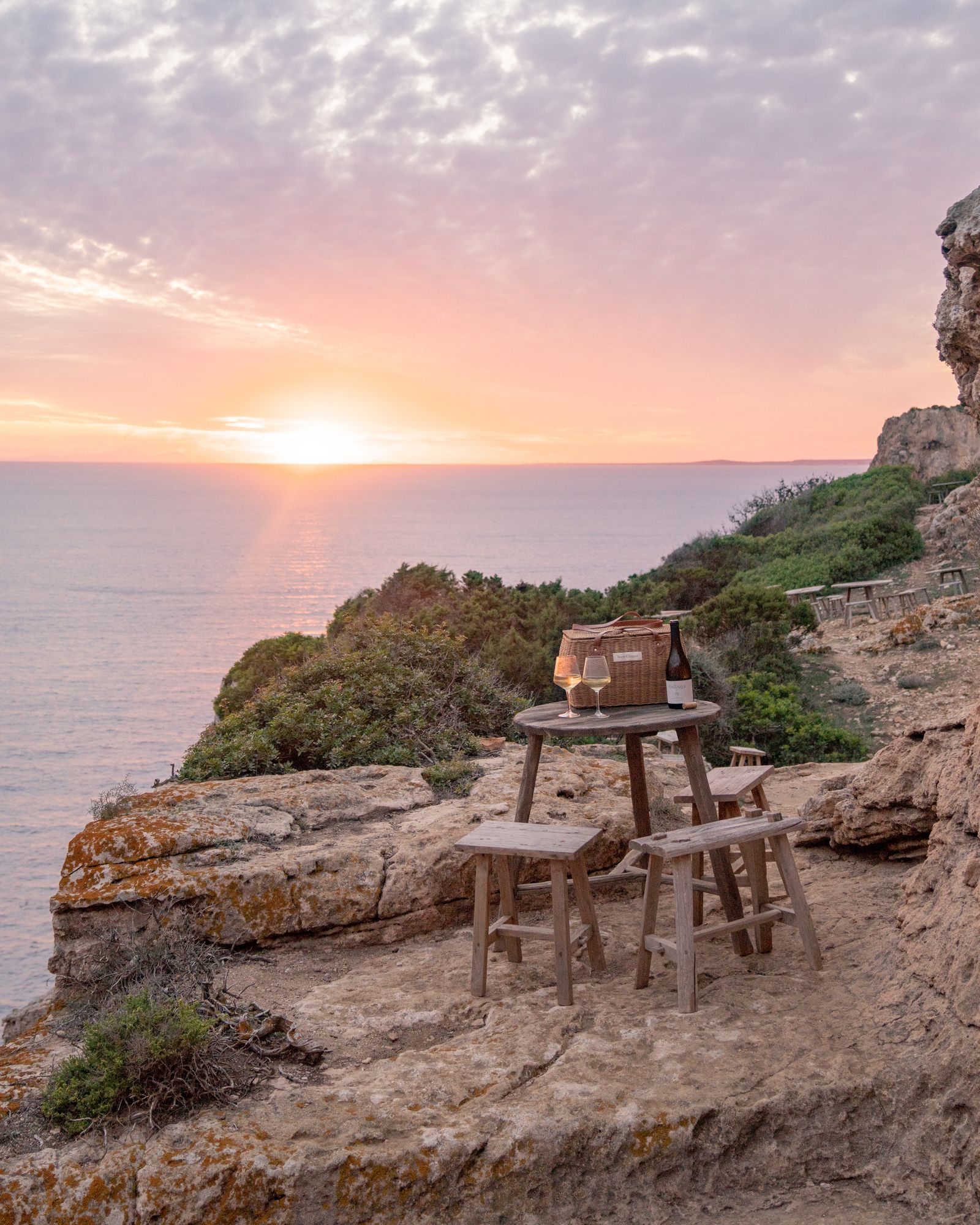
Photo: Andrew Lin
Archeology also reveals the story of the island’s wine, Lopez continued. “Amphorae fragments found in prehistoric and Roman ruins, as well as amphorae recovered from shipwrecks, show Menorca’s connections to ancient wine trade routes.” Wine came from Campania, Catalonia and throughout the Western Mediterranean. Over time, it became more ingrained in local life. “For centuries, many families have owned small vineyards, and wine has formed part of the island’s rural landscape,” Lopez said. That all came to an abrupt end with the arrival of phylloxera. Phylloxera is a tiny pest that wiped out about two-thirds of the world’s vineyards between the 1860s and 1890s (by sighNorth America).
Menorca’s recovery from phylloxera has been slow but steady, with significant progress made in recent decades. “Today, wine is once again part of the island’s cuisine, along with cheese, olive oil and other local products,” explains Lopez. Production is much smaller than in other Mediterranean wine regions, but Lopez says it is moving in a more specialized and quality-focused direction. “Menorca cannot compete in terms of numbers with the big wine regions, nor should it try to,” he said. “The strength of Menorcan wine lies precisely in its limited production, its character and its connection to a specific landscape.”
The unique landscape Lopez mentioned is designated a biosphere reserve. I was told that this was made possible by an unlikely source: the Franco dictatorship. Menorca was one of the last republican holdouts in the Spanish Civil War, and as punishment, Franco imposed strict military control on the island, leaving it lacking the development projects that would eventually transform its neighbor into a mass tourism destination. What was the end result in Menorca? A spectacular unspoiled habitat. Thankfully, Menorca’s new generation of wine producers are determined to keep it that way.