The Tamesis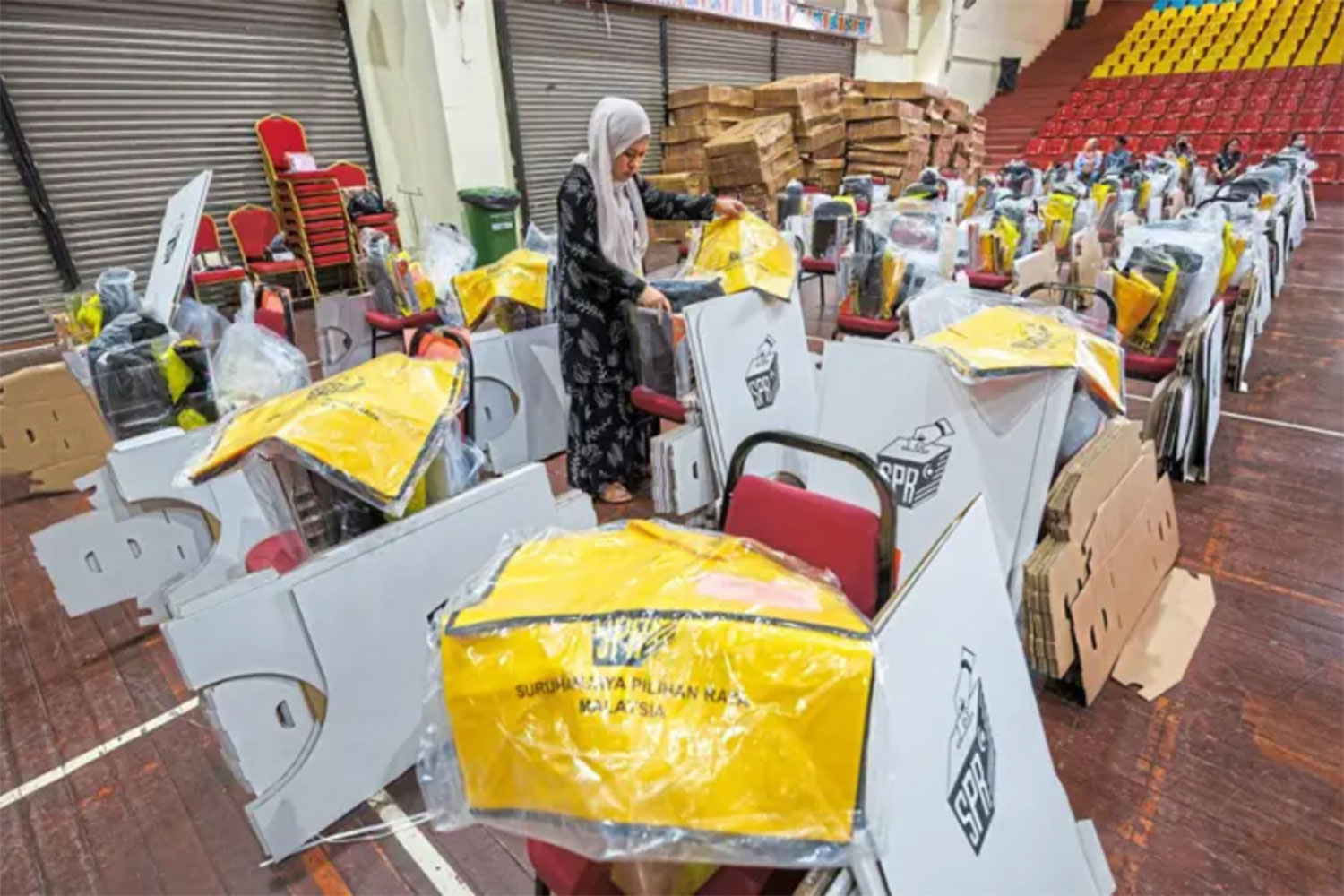
Kuala Lumpur – In Malaysian politics, the only thing more certain than change is the rumor of an upcoming election. My political bubble is filled with questions like: When will GE16 (16th General Election) be held?
Communications Minister Datuk Fahmi Fakih recently tried to refute the fervent gossip. Fahmy told the media that there is unlikely to be any move to hold the 16th general election this year. As Communications Director of Pakatan Harapan, he emphasized that Prime Minister Datuk Seri Anwar did not indicate that he would hold polls in advance and that the government’s focus must be firmly on solving the people’s economic plight.
However, Fahmy added an important warning: the prime minister has reminded Pakatan Harapan leaders and MPs to always be prepared for any eventuality, including upcoming state elections like Johor’s, although he hinted that might not come too soon.
However, Fahmy’s statement is unlikely to stop the speculation game. The timing of the 16th general election remains a hot topic among politicians, political analysts, businessmen, diplomats and people. Everyone seems to have a source. Some insiders are adamant that early polls could take place as early as October this year. Others, by contrast, believe Anwar is determined to ride out the storm and ensure his government serves out its term, which naturally expires in February 2028.
The mainstream view is that the 16th general election will be held shortly after the 2027 budget is submitted. The rationale for calling for elections months before the automatic dissolution of Parliament is simple but based on financial realities. The government needs new, strong authority to implement deeply unpopular but economically vital RON95 petrol subsidy cuts.
The financial data paints a dire picture. While the initial fiscal strategy hoped to rein in spending, the escalating conflict in the Middle East, triggered by the United States and Israel’s confrontation with Iran and the subsequent closure of the Strait of Hormuz, has caused crude oil prices to surge to $150 a barrel. As a result, Malaysia’s monthly fuel subsidy bill jumped from a manageable RM700 million to a staggering RM4 billion.
The Prime Minister himself has warned that if this external crisis continues, the petrol subsidy bill alone could reach RM24 billion by the end of 2026. No government wants to cut fuel subsidies before facing voters; a new five-year term provides the necessary political security.
Furthermore, political sources indicate that despite Fahmy’s public dismissal, PKR’s electoral machinery is quietly preparing for a potential battle this year. The opposition is also on high alert.
In politics, timing is not just everything; This is the difference between political survival and oblivion. Former Prime Minister Datuk Seri Najib Razak learned this the hard way before the historic 14th general election in 2018.
At the time, Najib’s advisers were deeply divided. One faction urged him to call for snap elections in late 2017 to catch the newly formed opposition alliance off guard before Tun Dr Mahathir Mohamad and Anwar fully solidified the opposition deal. Another faction, however, recommends waiting. Najib chose to push the clock to the limit, dissolving parliament in April 2018 – just two months before it automatically expired in June.
As far as I know, the then Barisan Nasional president and Umno president insisted on getting the elusive two-thirds majority. This delay gave the opposition a critical window needed to mobilize the masses. We all know how this story ends: Barisan Nasional lost power for the first time in Malaysian history for 60 years. It can be said that if Najib had announced the election in advance, today’s political landscape might be completely different.
As federal leaders ponder ambitious timelines, the local political landscape is already beginning to fracture. Three major states are rapidly approaching the end of their legal lifespan: Malacca’s parliament will be automatically dissolved in December 2026, followed by Sarawak in February 2027 and Johor in April 2027.
This timeline has been exacerbated by the high-stakes drama that has engulfed the Negeri Sembilan state government. 14 Umno MPs in Negeri Sembilan have withdrawn their support for Pakatan Harapan Menteri Besar Datuk Seri Aminuddin Harun.
While Aminuddin continues to clarify his majority support, he openly acknowledges this vulnerability. The deputy chairman of PKR hinted that snap elections may be held in the state. Experts see the contest as a crucial beta test for the 16th general election and a litmus test for the post-Madani political landscape in 2022.
There is news that the Johor state assembly may be dissolved soon. Johor recently held a special state assembly meeting to pass an amendment allowing the appointment of five members. Analysts believe this is a protective backup mechanism for the current government.
Umno-led Barisan Nasional plans to go it alone in the southern states, the party’s birthplace. Unlike the electoral agreement reached between Pakatan Harapan and Barisan Nasional during the 2025 Sabah election, the two federal allies are very likely to face off in Johor to test the stability of the alliance.
In Borneo, rumors insist that the Sarawak state polls will be held soon after the Gawai celebrations on June 1 and 2. However, the Partisan Sarawak government is currently playing a strategic waiting game. The Sarawak State Assembly previously passed a bill to expand the number of state seats from 82 to 99 constituencies.
In order for these new boundaries to come into effect at the next state election, the expansion must be formally tabled and approved by Parliament, which is expected to happen during the upcoming July parliamentary session. Whether it happens before July or after, one thing is for sure: Sarawakians are likely to head to the ballot box before the end of the year.
Whether the national polls are triggered by the explosive multi-billion ringgit fuel subsidy crisis or accelerated by cascading collapses at the state level, political alliances continue to form. The political machines of some political parties across the country are already clamoring for battle. Others are caught off guard and can only pray that the 16th general election remains out of reach.
But in the volatile arena of Malaysian politics, prayer rarely delays the inevitable. Whether driven by a multi-billion ringgit fiscal crisis or accelerated by a series of national collapses, the countdown has begun. History cruelly proves that time waits for no one.