The Tamesis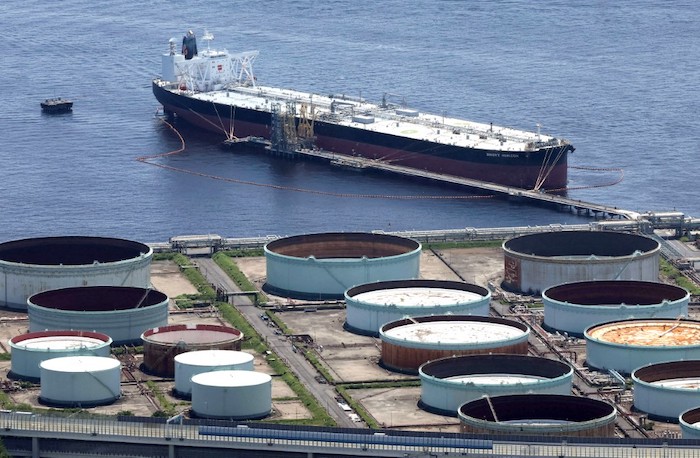
Oil prices rose a further 3% on Tuesday and stocks fell as investors faced the prospect of heightened volatility in the Middle East.
Negotiations between Iran and the United States to end the war and reopen the Strait of Hormuz to oil tanker and cargo ship traffic have collapsed.
Analysts say Iran’s new leaders are betting they can outlast U.S. President Donald Trump, although taking a tougher stance could lead to a new round of confrontation and domestic fallout.
See also: Oil prices rise, markets in trouble as US-Iran peace talks collapse
Iran’s top negotiator said on Tuesday that Washington must accept Tehran’s latest peace plan or face failure, after Trump warned that their truce was “on life support.”
‘Be prepared for more conflict’
But analysts say that even after longtime supreme leader Ali Khamenei was killed on the first day of the war, Iran’s leadership remains deeply ideological and committed to preserving the Islamic republic established in the 1979 revolution that overthrew the king.
“They do think they can outlast Trump. This war is crucial for them,” Sanan Wakil, director of the Middle East and North Africa program at Chatham House in London, told AFP.
Iran understands that by blocking the Strait of Hormuz – the first time it has restricted shipping traffic at a key bottleneck for trade and energy supplies after years of threats – it has significant strategic leverage.
Trump, meanwhile, is under pressure to find exits from a conflict that has proven unpopular at home and pushed up oil prices ahead of midterm elections.
Iran “is committed to negotiations, but they don’t want to surrender. They want concessions because their means have improved,” Vakil said.
“They are prepared for another round of conflict and prepared to gamble on it, which is a risk because the cost to Iran will be huge.”
“The war is vital to the Guard’s survival”
Analysts say it is unclear who is running Iran and Mojtaba Khamenei, the son and successor of the slain supreme leader, may be involved in decision-making but is not the only player dominated by the ideologically driven Revolutionary Guards.
Mohammad Bagher Ghalibaf, the parliamentary speaker and a Guards veteran who emerged as Iran’s face in the negotiations, said on Tuesday there was “no alternative” to the plan Iran presented to Trump.
“It’s critical for leadership to negotiate the best possible terms for their survival,” said Thomas Juneau, a professor at the University of Ottawa.
“So they’re totally willing to take a lot of economic pain if it means waiting for Trump to be out of office.”
“The Hormuz lever is critical to Iran,” Junod said, adding that leadership expects Trump to lose patience with the ensuing rise in oil prices as the U.S. midterm elections approach.
But he warned that the leadership was taking a gamble in the face of “extreme popular dissatisfaction” following January’s protests, a struggling economy and major damage to civilian and military infrastructure following US and Israeli attacks.
“The Islamic Republic has overreached in the past and is absolutely at risk of doing so again,” he said.

Tehran’s official position is summed up by a giant new billboard that went up this week in the capital’s Wallias Square, depicting Trump’s mouth bound with a Hormuz-shaped gag, alongside the slogan “On the verge of collapse.”
Arash Aziz, a lecturer at Yale University, said Iran’s leadership believed it had a “magic bullet” to control Hormuz and wanted to “force” Trump for better terms.
“It seems a bit delusional. It could backfire and cause Trump or Israel to resume war,” he said.
But journalist and political analyst Maziar Khosravi told AFP in Tehran that Trump and Israel could no longer use the threat of military action to pressure the leadership.
Military action may not be feasible
“Trump may try the military option again in hopes of removing another layer of leadership from the Islamic Republic,” he said.
“But that doesn’t seem like a viable option to me because each new generation of leaders that comes to power is more recalcitrant than the last.”
Vakil said neither side wanted to see a full-scale resumption of hostilities, but noted that it was not impossible and that the Trump administration appeared to fundamentally misunderstand the rigid mindset of Iran’s leadership.
“The military path is unlikely to force Iran to submit. The Trump administration lacks a real appreciation for the Islamic Republic’s ideological stance. It views everything from a military perspective.”
U.S. inflation surges
Meanwhile, the latest U.S. Consumer Price Index (CPI) data confirmed that high energy prices are causing inflation, with the index recording its largest annual increase in nearly three years in April.
The U.S. Bureau of Labor Statistics said the CPI rose 3.8% year-on-year, up from 3.3% in March.
“Even excluding volatile food and energy costs, the core consumer price index (CPI) was higher than expected at 2.8%, reinforcing the view that inflation remains stubborn beneath the surface,” said Bret Kenwell, US investment analyst at eToro.
Briefing.com’s Patrick O’Hare called the inflation data “a signal not to expect a rate cut anytime soon.”
Stocks opened lower on Wall Street, with both the S&P 500 and Nasdaq Composite falling from record closing highs set on Monday.
O’Hare called the decline in semiconductors and large-cap stocks a “tired trade” that has driven the stock market to record highs in recent months.
In the oil market, international benchmark Brent North Sea crude oil and the main U.S. contract West Texas Intermediate crude oil both rose by more than 3%.
Major European stock markets posted losses in afternoon trading after some major Asian indexes fell.
South Korea to tax artificial intelligence profits
South Korea’s call for a social tax on artificial intelligence profits largely dragged down the tech-heavy Kospi index down 5%.
South Korea’s chip boom has delivered huge profits for tech giants Samsung and SK Hynix, with the Kospi hitting record highs in recent weeks.
Traders are now setting their sights on Beijing, where Trump is due to arrive this week to meet President Xi Jinping, the first visit by a U.S. president since 2017.
Taiwan, tariffs, rare earths and a war with Iran will be top of the agenda, with China being a major buyer of Iranian crude.
Executives including Tesla boss Elon Musk and Apple Inc’s Tim Cook will fly in to support Trump’s push for greater trade with Beijing.
Key data around 1330 GMT
North Sea Brent crude oil: rose 3.3% to $107.62 a barrel.
West Texas Intermediate crude oil: rose 3.3% to $101.31 a barrel.
TOKYO – Nikkei 225: up 0.5% to 62,742.57 (close).
Hong Kong – Hang Seng Index: down 0.2% to 26,347.91 (close).
Shanghai – Composite Index: fell 0.3% to 4,214.49 (closed).
NEW YORK – Dow: Down less than 0.1% to 49,659.60.
NEW YORK – S&P 500: down 0.4% to 7,385.98.
NEW YORK – Nasdaq Composite: down 0.7% to 26,082.31.
LONDON – FTSE 100: down 0.4% to 10,228.35.
PARIS – CAC 40: down 0.7% to 7,996.75.
FRANKFURT – DAX 30: down 1.2% to 24,059.92.
USD/JPY: rose from 157.23 yen to 158.58.
See also:
China DeepSeek says new V4 AI model can run on Huawei chips
Chinese AI circuit board company raises US$2 billion, becomes Hong Kong listed company of the year
China’s top streaming site criticized for AI actor ‘database’
Bytedance’s viral video model shows China’s growing control over AI
New DeepSeek model delayed online to test China’s AI chip strength
Nexperia’s Chinese subsidiary’s chips “nearly fully localized”
China beats U.S. again in global patent battle, Huawei maintains lead
China now requires chipmakers to use at least 50% domestic equipment
China’s big technological secret: Dutch chip-making machine replicated in laboratory
Chinese AI firms form alliance with chipmakers to ditch foreign technology