The Tamesis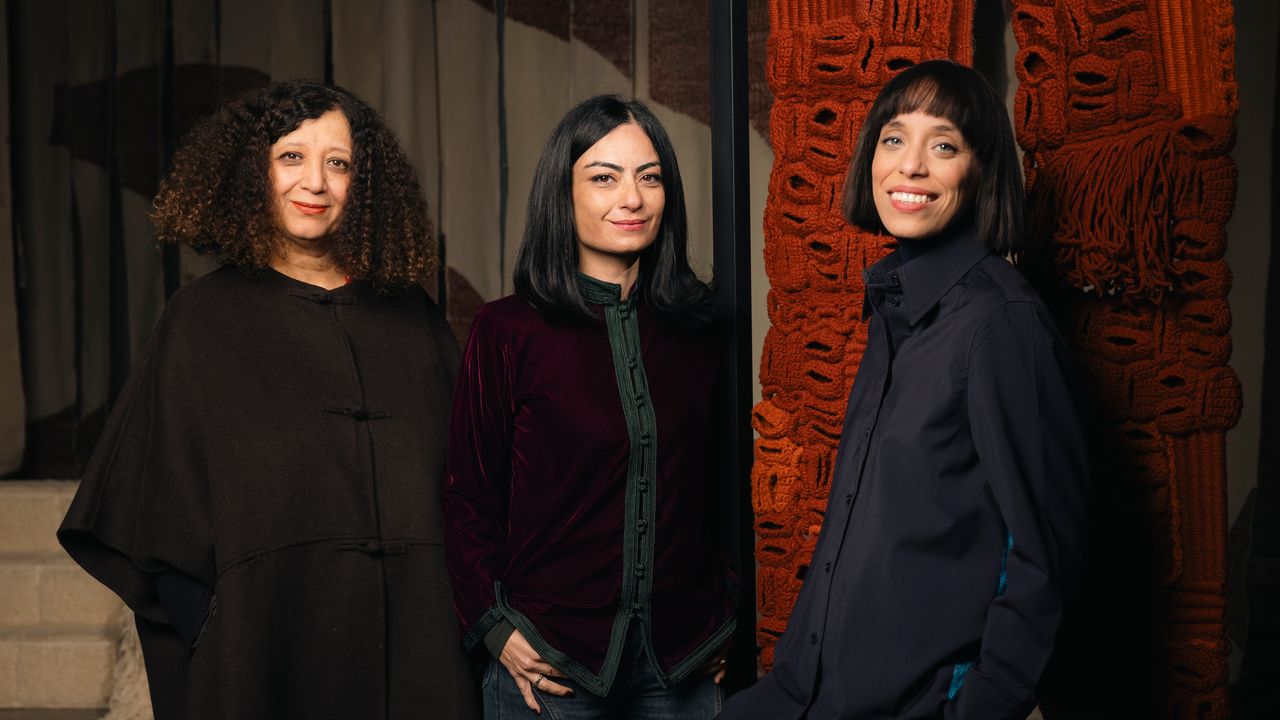
Agznay may no longer work in architecture, but she still adheres to fundamental principles of materiality and scale. As she describes it, the 300-square-meter space in Venice will be filled primarily with more than 200 straps suspended from the ceiling (eight feet long, two wide, and up to nearly a foot), all woven from naturally dyed wool from the Tifflet region. Some of the straps will have tactile inserts, much like bas-relief friezes; other areas of the pavilion will be filled with small beaded creatures—scorpions, lizards, lions—that are closely associated with Venice (the winged lion in Piazza San Marco is an enduring symbol of the city).
There will be a designated area to sit and reflect, but Aquiznay realizes some visitors may just wander in — though hopefully they won’t walk by before noticing the gold within the walls. When she moved back to Morocco from New York in 1997 to be closer to her family, she began making jewelry that will be incorporated throughout the pavilion. “At some point the piece leaves the body and enters the space,” she said, adding, “All [my] Work has a talismanic or protective effect. “
Nods to divine femininity are also recurring in the work, from panels with henna patterns resembling womb shapes, to extraordinary pieces made by lead craftsman Malika Benmoumen and other women that appear to be filled with mini cocoons – shapes created by crocheting rocks and stones collected by Ageznay and then removing them. “This is the memory of Pebbles,” she said.
At one point, she lifts a traditional veil covered in bright orange embroidery and shows us a smaller, scarf-like iteration that artisans can take with them to find new markets. “I’m very aware of my influence in the field. I never impose a certain technique or way of working. It has to come from them,” she explains. “I’m not going to ask them to change their technology. Who am I to do that? Their craftsmanship has to be respected.”
According to Mohammed Benyaacoub, the museum’s commissioner, Morocco’s decision to participate in the Biennale (an initiative fully funded by the Minister of Culture and whose budget will almost double between 2019 and 2026) goes back two years. “Public policymakers finally understand that culture is an important asset that was more or less ignored before,” he told me. “We realize now that we have an incredibly rich, very ancient and highly diverse culture. There is real creativity there, and today’s artists are deeply engaged in it.”
Berrada, 40, who lives in Marrakech, dresses with confidence, wearing a summer suit one day and a vibrant sky blue and chartreuse tunic the next. She is the Artistic Director of MACAAL (Museum of Contemporary African Art in Almaden), a must-see institution in Marrakech showcasing the private collection of the Lazraq family. The permanent exhibition features two works by Agueznay and one by her mother.
In fact, the red raffia embroidery “Guardian of the Threshold”, an interpretation of the female symbol tiles created by Malika Agznay, Agznay’s mother and a respected painter of the post-independence generation, will also be included in the pavilion. “The concept of strata has always been present in Amina’s life and practice, so she incorporated it into the strata to reveal what architecture might have looked like in past lives,” explains Berada, adding that her role was to bring structure to Agueznay’s vision. She also joked that despite all the decorative and tactile elements, the result wouldn’t look like a giant bazaar.