The Tamesis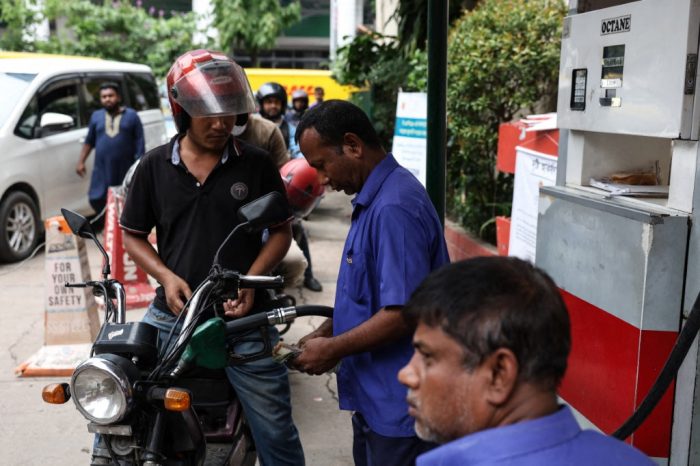
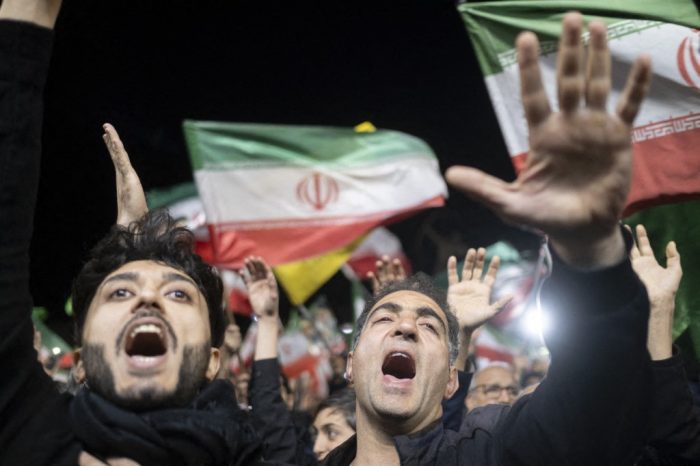
Oil prices hit a four-year high on Thursday amid concerns about renewed hostilities in the Middle East. Before that, Iran’s Supreme Leader Ayatollah Ali Khamenei issued a statement claiming that the United States had suffered a shameful defeat.
Asian markets fell, while international benchmark Brent crude rose more than 7% to $126 a barrel before retreating.
U.S. and European stocks were mostly higher as investors turned to central bank decisions and corporate earnings.
See also: Oil prices near $120 as Trump warns Iran blockade could last months
Markets shaken after President Donald Trump warns US blockade of Iranian ports likely to last for monthsand there is a report that he will be briefed on potential new military strikes.
“With no sign of any peace talks and growing concerns about escalation, oil prices continue to rise,” Deutsche Bank managing director Jim Reed said before oil prices peaked.
He added that “investors are pricing in a more protracted conflict” as the two sides spar over Iran’s nuclear program.
Asian stocks were mostly lower, with Tokyo and Hong Kong both down 1% and Mumbai’s BSE Sensex down 0.75%. Shanghai rose.
Meanwhile, the yen rose more than 2% against the dollar after Japan’s Finance Minister strongly hinted that Tokyo was about to intervene in the market to support the yen after it fell to its lowest level against the dollar since mid-2024.
Trump to receive military briefing
Trump is expected to receive a briefing on new plans for potential military action against Iran from Adm. Brad Cooper, commander of U.S. Central Command, two sources with knowledge of the plans told news platform Axios.
With negotiations stalled, the Islamic Republic has retained control of the strategic Strait of Hormuz, through which a fifth of the world’s oil normally passes.
Mojtaba Khamenei issued a written statement, read out on state television, declaring that Iran was now in the driver’s seat in the crisis.
“Today, a new chapter is unfolding in the Persian Gulf and the Strait of Hormuz, two months after the world’s bully carried out the largest military deployment and aggression in the region and the United States suffered a shameful failure in its plans,” he said, praising Iran’s control of shipping in the strait.
“Killing the world economy”
U.N. Secretary-General Antonio Guterres said the closure of the Strait of Hormuz was “strangling the global economy,” and International Energy Agency chief Fatih Birol told a meeting at its Paris headquarters: “The world is facing the largest energy crisis in history.”
Central banks remained in focus on Thursday as the Federal Reserve kept interest rates unchanged as the United States faced rising war-induced inflation.
The European Central Bank and the Bank of England also kept interest rates steady.
But the ECB warned that risks to the euro zone’s growth and inflation outlook were “heightened” due to war in the Middle East and its impact on global energy supplies.
At the same time, the Bank of England lowered its UK economic growth forecast.
Data released on Thursday showed that euro zone economic growth fell to 0.1% in the first quarter. In the United States, annual growth was weaker than expected at 2% as consumer spending cooled and the fallout from war in the Middle East began to ripple through the global economy.
Meanwhile, the Fed’s preferred inflation gauge jumped 3.5% in March as energy costs soared due to the war.
Still, Briefing.com analyst Patrick O’Hare said the U.S. data “gave another boost to confidence, suggesting economic activity remains resilient despite rising prices.”
Wall Street’s main stock indexes opened higher, also boosted by corporate earnings.
Shares of Google parent Alphabet rose more than 5% as investors praised the company’s success in its shift to artificial intelligence and solid revenue from its key divisions.
But Meta’s shares fell more than 9% amid concerns about its huge AI spending.
O’Hare said that overall, “earnings results were supportive, which is understandable given the number of big earnings forecast beats.”
He noted that the latest results pushed expected average earnings to 26% from 15%.
“That’s a huge number and it’s this trajectory that gives stocks a sense of confidence in the face of turmoil in the Middle East and rising oil prices,” O’Hare said.
In Europe, stocks rose in London and Frankfurt, while shares fell in Paris.
Key figures at 1330 GMT
North Sea Brent crude oil: fell 3.7% to $113.72 a barrel.
West Texas Intermediate crude oil: fell 2.5% to $104.23 a barrel.
TOKYO – Nikkei 225: down 1.1% to 59,284.92 (close).
Hong Kong – Hang Seng Index: down 1.3% to 25,776.53 (close).
Shanghai – Composite Index: up 0.1% to 4,112.16 (close).
NEW YORK – Dow: up 0.5% to 49,108.93.
NEW YORK – S&P 500: up 0.4% to 7,167.28.
NEW YORK – Nasdaq Composite: up 0.6% to 24,829.53.
LONDON – FTSE 100: up 1.4% to 10,355.47.
USD/JPY: fell to 156.69 yen from 160.23 yen.
- AFP Additional editing and input by Jim Pollard
See also:
Chinese AI circuit board company raises US$2 billion, becomes Hong Kong listed company of the year
China’s top streaming site criticized for AI actor ‘database’
Bytedance’s viral video model shows China’s growing control over AI
New DeepSeek model delayed online to test China’s AI chip strength
Nexperia’s Chinese subsidiary’s chips “nearly fully localized”
China beats U.S. again in global patent battle, Huawei maintains lead
China now requires chipmakers to use at least 50% domestic equipment
Nvidia CEO says U.S. export restrictions on AI chips are ‘flawed’ policy
China’s big technological secret: Dutch chip-making machine replicated in laboratory
Chinese AI firms form alliance with chipmakers to ditch foreign technology