The Tamesis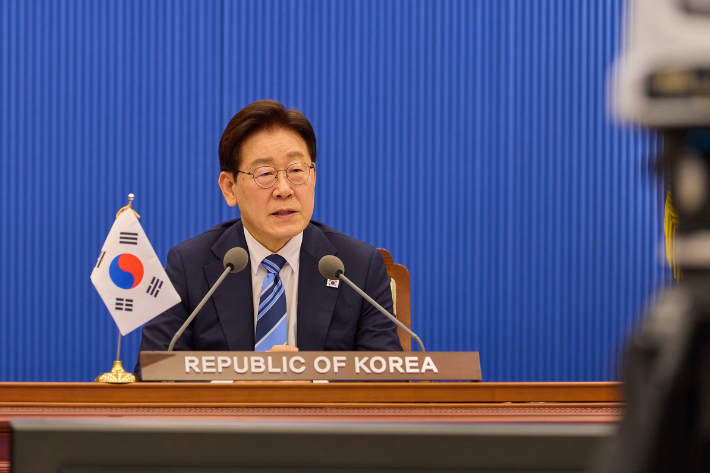
Seoul’s Ocean Ministry said on Friday that a South Korean oil tanker had crossed the Red Sea for the first time since the Strait of Hormuz was effectively closed.
Import-reliant South Korea has taken steps to mitigate risks to its energy supplies since U.S. and Israeli attacks on Iran in late February prompted Tehran to close access to the strait.
Seoul has been looking for new sources of oil and this month said it would send five South Korean-flagged ships to the Saudi Arabian Red Sea port of Yanbu to establish alternative routes.
ALSO WATCH AF: Iran war is killing trade with Middle East importers too
The ministry announced on Friday that “the first shipment of crude oil has entered the country via the Red Sea bypass since the blockade of the Strait of Hormuz”.
President Lee Jae-myung called it “a valuable result achieved by the concerted efforts of relevant departments.”
“I would like to express my gratitude to everyone, especially the sailors, who are working hard day and night under difficult conditions,” he said on x.
“The government is concentrating all its efforts to overcome the crisis caused by the war in the Middle East,” he said.
South Korea has secured more than 270 million barrels of crude oil supplies by the end of the year through routes unaffected by the Hormuz crisis, presidential chief of staff Kang Hoon-sik said on Wednesday.
Kang said the figure is equivalent to more than three months of South Korea’s oil demand, based on last year’s data.
The official recently returned from visits to Kazakhstan, Oman, Saudi Arabia and Qatar to secure alternative fuel sources.
Ensure Hormuz is stable
News of the South Korean vessel passing through the Red Sea follows a statement from Iranian officials: Channel now ‘fully open’ to merchant ships.
U.S. President Donald Trump said Iran had agreed not to shut down the critical waterway “never again.” However, concerns remain about how long this opening will last.
French and British leaders on Friday Welcoming Iran’s statement But it said freedom of navigation in the strait must be permanently restored. The statement came after the two leaders hosted a virtual summit earlier in the day to address the issue.
The summit was attended by about 40 countries, including major Asian countries affected by the closure of the Strait of Hormuz such as South Korea, Japan and India.
Japanese Prime Minister Sanae Takaichi said: “The Strait of Hormuz is a strategic artery for global logistics and international public goods. It is crucial to restore stability in the Strait of Hormuz as soon as possible and ensure the freedom and safety of navigation for ships from all countries.” in a statement Prepare for the summit.
South Korea’s Lee Jae-yong expressed similar concerns after the summit, noting that about 70% of South Korea’s crude oil imports rely on the Strait of Hormuz.
“We plan to actively explore ways to strengthen diplomatic and military cooperation to prepare for any changes in the situation in the future,” Lee said in the statement. Posted on X.
- AFP, with additional editing and input by Vishakha Saxena
Also read:
Japan vows to provide $10 billion to help Southeast Asia procure oil amid war with Iran
Electric car sales surge in Asia as Iran war raises fuel costs
China slams port blockade, calls for intensified US-Iran talks
Energy crisis triggered by Iran war fuels renewable energy boom, IEA says
Asia ‘worst hit by energy crisis’ due to Iran war
Two more LPG tankers transit Strait of Hormuz bound for India
India’s demand for wood, coal poor as gas prices soar due to Iran war
War with Iran could hit some of Asia’s biggest economies hard
India races to secure supplies as new attacks threaten ‘energy war’
Iran war sends gas prices soaring, Asia ramps up coal power generation
Iran war trumps sanctions, Indian refiners snap up Russian oil
Iran threatens to ‘destroy world economy’ as more ships attacked
Iran says three ships attacked, ready for $200 a barrel
Oil crisis: US allows Iranian tankers to pass through Strait of Hormuz
Oil prices top $100 a barrel as Asian leaders rush to limit impact of war
Iran mocks Trump for backing down on crackdown on its oil, power plants