The Tamesis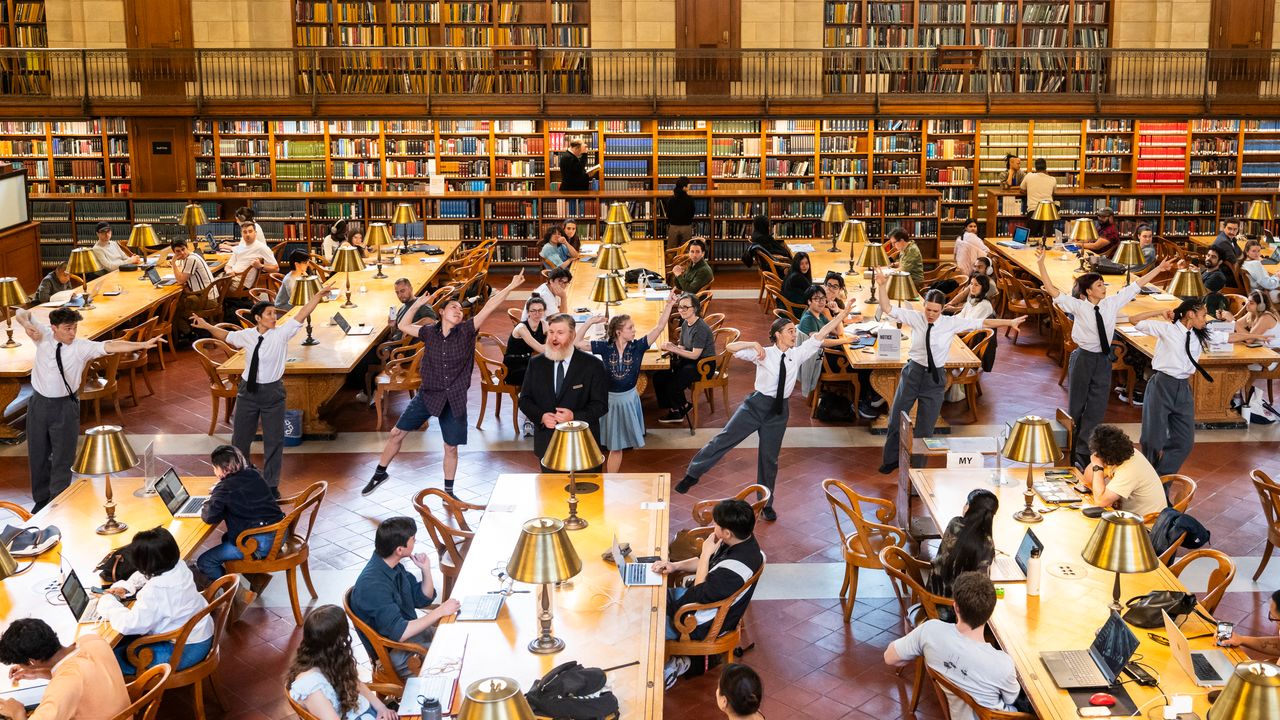
Here’s how it works: About 15 of us follow the lithe, smiling, silent Barnes — who plays library pages and provides materials to researchers around the library — wearing wireless headphones that let us hear the narrator and the music. (Imagine a silent disco, but all the dancing is done by someone else.) The narrator is a dapper Saenz de Viteri, who tells the story and gives instructions while pushing a rolling cart with a small console with knobs and buttons. We’re all hiding from actual library visitors, including many tourists (who seem more confused than anyone, understandably). Signs in each room promptly alert patrons to potential distractions at specific performance times, and staff ensure that foot traffic doesn’t impede the show—but once people see the dancing, they quickly move away and start watching themselves.
These performances contemplate love, joy, sorrow, grief and disappointment, revealing the deep longings underlying the often very isolating act of research. Because, the show asks, where else in New York can you find so many people quietly searching for something in a building? As the narrator says, “People come to the library because they have questions.”
In the map room we meet Nell, hunched over a 1961 map of Greenwich Village. She traces the streets with her fingers; we are told how they come alive in her memory. Here, she can still walk past the businesses she grew up with, even though they are long gone and a disease has left her without control of her legs. “Raise your hand if you know what it’s like to have your life cut in half,” the narrator says.
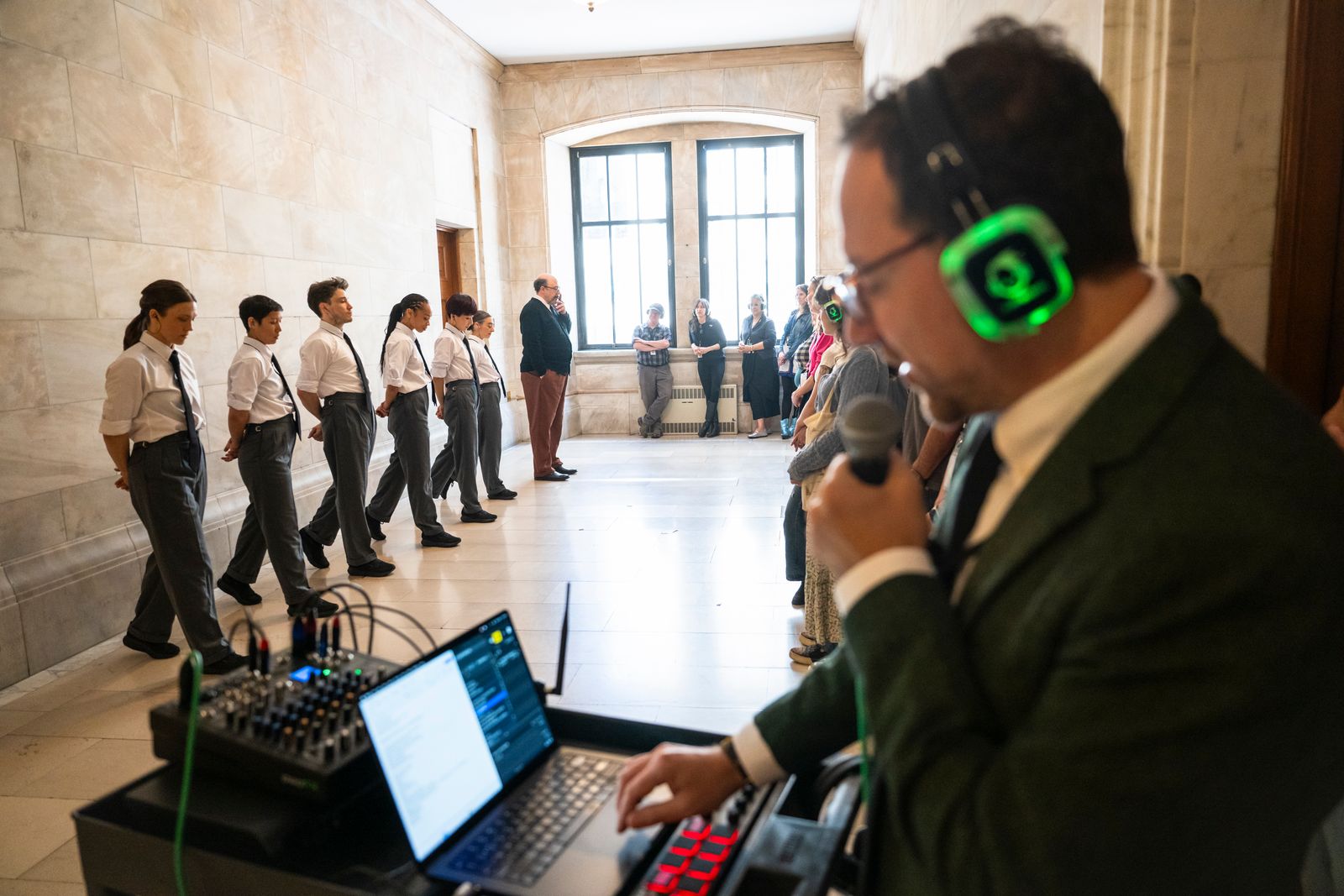
Photo: Paula Lobo. Courtesy of the New York Public Library.
With sly and nimble movements—part librarian efficiency, part vaudeville wink—Barnes glides between tables, flicking his wrists so that brisk little steps suddenly turn into full-body movements. The dancers in her company reflect this playful yet strict style, often bursting into rather small spaces. Alongside the wry, poignant narrative, seemingly mundane gestures become gently devastating moments in the drama.
The audience also becomes part of the performance. At one point, we strode briskly along a main thoroughfare on the ground floor with our hands in the air, drawing strange looks from passers-by: this small group of people wearing headphones darted along the corridors of the New York Public Library, their faces filled with excitement and joy. (Full disclosure: Ten years ago, I worked part-time at the library as a marketing copywriter; during the show, you may have glanced at the informational signs I created for each collection room.)