The Tamesis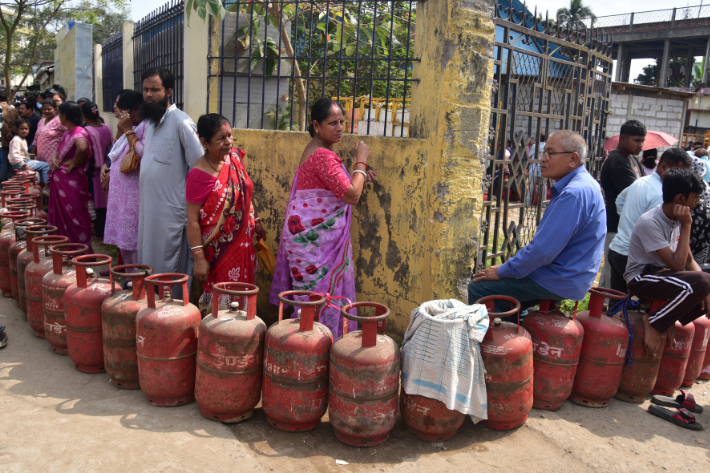
India on Thursday sounded the alarm over Iranian attacks on energy facilities in the Gulf, saying it would worsen global energy flows and put pressure on India’s own natural gas supplies, which it is racing to secure.
“The recent attacks on energy facilities at various locations in the region… are deeply disturbing and will only further destabilize the already uncertain energy situation around the world,” India’s Ministry of External Affairs said in a statement.
India’s statement came after Iran on Thursday attacked the world’s largest liquefied natural gas (LNG) facility in Qatar. Iran said the attack was in retaliation for an Israeli attack on its South Pars gas field.
Also on AF: Japan may join forces with U.S. to develop recently discovered deep-sea rare earths
New Delhi said the attacks were “unacceptable and need to stop” and reiterated calls to avoid targeting energy infrastructure. India relies on Qatar for more than 40% of its LNG supplies, which are critical for power generation, industry, fertilizer production and home cooking.
With natural gas shipments already reduced, New Delhi worries about a new supply crunch and rising costs and deeper economic pressure on an industry that relies on steady imports.
Qatar is one of the world’s largest producers of LNG, along with the United States, Australia and Russia.
Global energy prices have risen sharply since tanker traffic in the Strait of Hormuz came to a near standstill due to the threat of an Iranian attack. The Strait of Hormuz normally carries about a fifth of the world’s oil and liquefied natural gas.
As many as 22 Indian ships and more than 600 crew members are stuck in the Gulf as this vital energy corridor remains disrupted.
Indian foreign ministry spokesman Randhir Jaiswal said the country’s energy supplies have been affected by the closure of the strait.
“Now, with the recent attacks, our LNG supplies will be affected,” he told reporters at a news conference in New Delhi on Thursday.
“We’re in touch with all the stakeholders out there to see how we can best meet our energy needs and keep our goods moving smoothly.”
Worried about “energy wars”
The attack on Qatar’s Ras Laffan nuclear facility, the world’s largest, has sparked wider concerns about fuel outages.
Experts say they fear the conflict could turn into an energy war, with damage and destruction of infrastructure leading to a longer supply crisis that would cause greater damage to the global economy.
State-run Qatar Energy said two waves of attacks by Iran caused “massive fires and further severe damage” to multiple liquefied natural gas facilities. Saudi Arabia’s Red Sea refinery, at the end of a pipeline that bypasses the Strait of Hormuz, and two Kuwaiti refineries were also hit.
“The war has now clearly reached a stage where energy infrastructure is directly targeted,” Arne Lohmann Rasmussen, chief analyst at Global Risk Management, told AFP.
“This marks a new escalation and suggests further upward pressure on energy prices in the coming days,” he added.
The attacks triggered “a shift toward an all-out energy war,” said John Plassard, head of investment strategy at Cité Gestion Private Bank.
Uncertainty about return to normal
Thursday’s attack Global energy markets were quick to feel the. Brent crude rose more than 10% to over $119 a barrel before recovering.
“The market expects a brief disruption, with supplies returning to pre-conflict levels by mid-2026,” said Kristy Kramer, head of LNG strategy and market development at research firm Wood Mackenzie.
“That prospect now looks increasingly unlikely,” she added.
Analysts also pointed out that the market hopes that Qatar’s LNG production will return to pre-war levels later this year. But Energy Flux LNG analyst Seb Kennedy told AFP the idea was “fast becoming a fantasy”.
Meanwhile, analysts at Rystad Energy noted that Iran was targeting sites that account for 20% of global seaborne LNG trade.
“A successful strike would not only disrupt condensate refining but also threaten the operational continuity of LNG trains supplied under long-term contracts to Europe, Japan, South Korea and China,” they warned.
“The breadth of risks to fuels, chemicals, liquefied natural gas and fertilizer inputs makes this moment qualitatively different from previous Gulf tensions,” they added.
- Vishakha Saxena Additional Editor AFP
Also read:
Asian shares fall after oil prices surge 5% and energy worries mount
War with Iran could hit some of Asia’s biggest economies hard
Iran war sends gas prices soaring, Asia ramps up coal power generation
Iran war trumps sanctions, Indian refiners snap up Russian oil
Iran threatens to ‘destroy world economy’ as more ships attacked
Iran says three ships attacked, ready for $200 a barrel price
Oil crisis: US allows Iranian tankers to pass through Strait of Hormuz
Oil prices top $100 a barrel as Asian leaders rush to limit impact of war