The Tamesis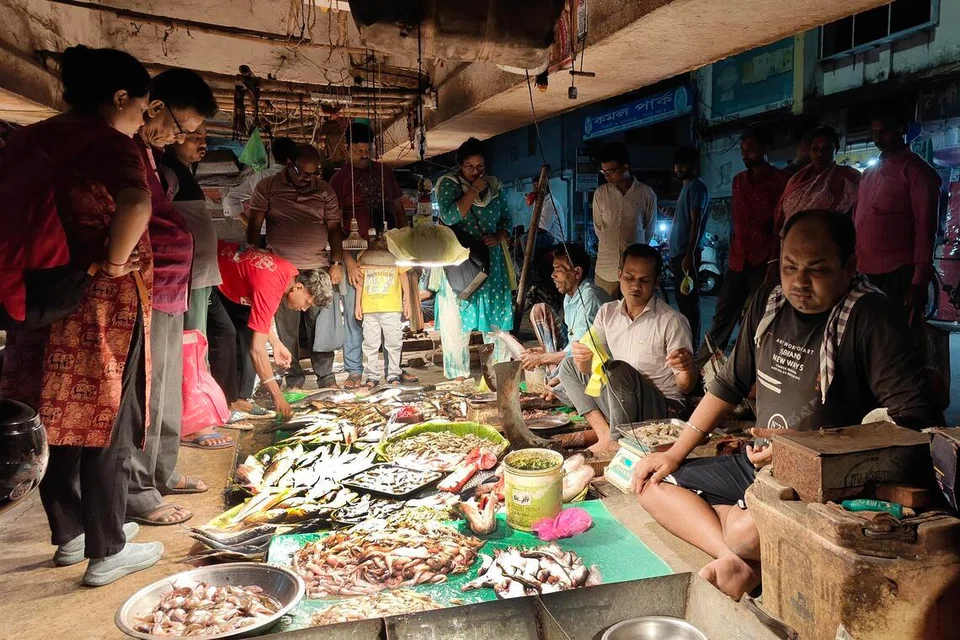
March 18, 2026
Kolkata – There is a lovely Bengali proverb that captures Bengal’s cultural cornucopia: “baro mashe tero parbon”. It literally means “13 festivals in 12 months” and refers to the region’s busy annual celebrations.
These include the Bengali New Year and the iconic Durga Puja, which celebrates the victory of goddess Durga over the demon Mahishasura. Apart from this, the West Bengal government organizes numerous other festivals throughout the year celebrating food, music, theater, etc. to preserve Bengali culture and mobilize support.
People in Kolkata, the state capital, flock to one such festival – the Bengal Fish Festival – on March 6 and 7, which features a host of cultural programs and fish delicacies.
Bengalis’ love for fish is well-known. It’s more than just a staple food – their festivals and weddings aren’t complete without fish. Fish has deep cultural significance and symbolizes fertility, prosperity and good luck to Bengalis.
With West Bengal about to hold crucial elections from April 23 to 29, this love for fish and other non-vegetarian food has now taken center stage in politics.
The ruling All India Trinamool Congress (TMC) sees it as intrinsic to Bengali identity and pits it against vegetarianism imposed on many parts of the country by the rival Bharatiya Janata Party (BJP) and its affiliates.
Even something like food has been dragged into the political debate, which shows how intense the fight is.
Will BJP restrict fish sales in Bengal?
West Bengal, which has been governed by the TMC since 2011, is one of the few states in India where Prime Minister Narendra Modi’s Bharatiya Janata Party has never been in power. The BJP has also never ruled the southern states of Kerala and Tamil Nadu, which also went to polls in April.
The opposition TMC’s fourth consecutive win in West Bengal would represent a resounding victory over the Bharatiya Janata Party, which rules most states in India. “The BJP is trying to win and the TMC is trying to stay afloat,” said Sayanthan Ghosh, author of “Battlegrounds of Bengal,” a book about the upcoming elections published in February.
West Bengal Chief Minister Mamata Banerjee has put food at the center of this crucial political battle, claiming on February 17 that if the BJP came to power, “they will not allow us to sell fish and meat in the market”. The party has made such accusations several times since.
The provocation was made in early February by BJP leader Vijay Kumar Sinha, deputy chief minister of the neighboring state of Bihar, which, like West Bengal, is dominated by non-vegetarians. More than 99% of the population of West Bengal is non-vegetarian, while the proportion in Bihar is 89%.
The state government will ban public display and sale of meat near educational institutions in Bihar to prevent “violent tendencies” among children, he said. It would also ban the public sale of meat near religious sites and in crowded public places, which he said was necessary “from a health perspective” and “social harmony”.
The remarks, which could cause major damage to the BJP’s support in fish-loving West Bengal, prompted a rebuttal from state BJP president Samik Bhattacharya, who assured that “Bengalis will have their fish and Biharis will have their fish”.
He added that the party was “solely opposed to the open sale of beef” which, incidentally, is still legal in West Bengal and is also eaten by some Hindus.
In an interview with ABP Ananda news channel in March, Mr Bhattacharya was seen tasting fish at the dinner table, another passionate defense of non-vegetarianism in Bengal. “How will Bengalis survive without fish?” he said as he ate his lunch.
It may be unthinkable to impose any kind of restrictions on the sale of fish and meat in West Bengal, but the fears are not entirely unfounded.
In January, a Kolkata vendor was beaten by a group of right-wing Hindus for selling chicken patties near a Hindu religious venue. It was one of a series of vigilante attacks targeting meat and fish sellers in the BJP-ruled state, with some threatening to shut down a fish market in Delhi’s predominantly Bengali neighborhood.
Many fear that if the BJP comes to power, right-wing Hindu elements will be emboldened to launch more such attacks in West Bengal, especially targeting Muslims who make up nearly a third of the state’s population and others who depend on cheap fish and meat and protein needs.
The BJP has imposed temporary location-based bans on meat and fish sales in different parts of India, including several northern Indian states.
Modi, himself a vegetarian, has even criticized those who eat meat and fish during Navratri, a festival commemorating the goddess Durga, and during the Hindu month of Sawan, a period when many Hindus follow a vegetarian diet.
His party has also refused to serve eggs in government school meals, even though children want to eat eggs and experts say they are necessary for their proper nutrition.
All of this creates the impression that the BJP is trying to impose a unique interpretation of Hindu and vegetarian-first dietary practices to suit its political interests, especially when it comes to mobilizing its core constituency of upper-caste vegetarian Hindus. This is despite the fact that Hinduism encompasses a range of different traditions, including animal sacrifice, and more than 70% of India’s population is non-vegetarian.
For example, Bengalis cook and offer meat when worshiping the Hindu goddess Kali. While many Hindus in India’s Hindi heartland abstain from eating meat during Navratri, Hindus in Bengal and even other parts of India enjoy eating fish and meat during the same festival.
Mr Ghosh writes in his book that the BJP’s reliance on “an emphasis on vegetarianism, Lord Ram and a single Hindu identity” has alienated many Bengalis who feel their heritage has been marginalized.
He told The Straits Times that the TMC labeled the BJP as a party that neither represents Bengal nor Bengali identity. The BJP’s reliance on non-Bengali-speaking political heavyweights outside the state, rather than second-tier local leaders from West Bengal, reinforces this notion.
“It essentially boils down to Bengali versus non-Bengali identity that the Trinamool exploits,” he said.
However, the BJP, which has loudly banned the sale of beef and embraced vegetarianism, may turn a blind eye when it suits its interests.
Eating beef is common in some Christian-majority states, such as Nagaland and Meghalaya, and the BJP is not advocating for any such ban there to avoid angering the public and retaining its power.
The idea that the BJP can impose any kind of restrictions on the sale and consumption of fish or meat in West Bengal seems far-fetched. The party is aware that any such move would make it unpopular, although concerns remain about how Hindu vigilante groups might compete with the BJP at the helm of the state.
But for now, Bengalis continue to enjoy their fish and meat. “No one can control other people’s taste buds,” said Chayan Das, a 35-year-old cost accountant in the city, as he waited for shrimp to be cleaned at one of Kolkata’s thousands of nearby fish markets. “This is unthinkable.”