The Tamesis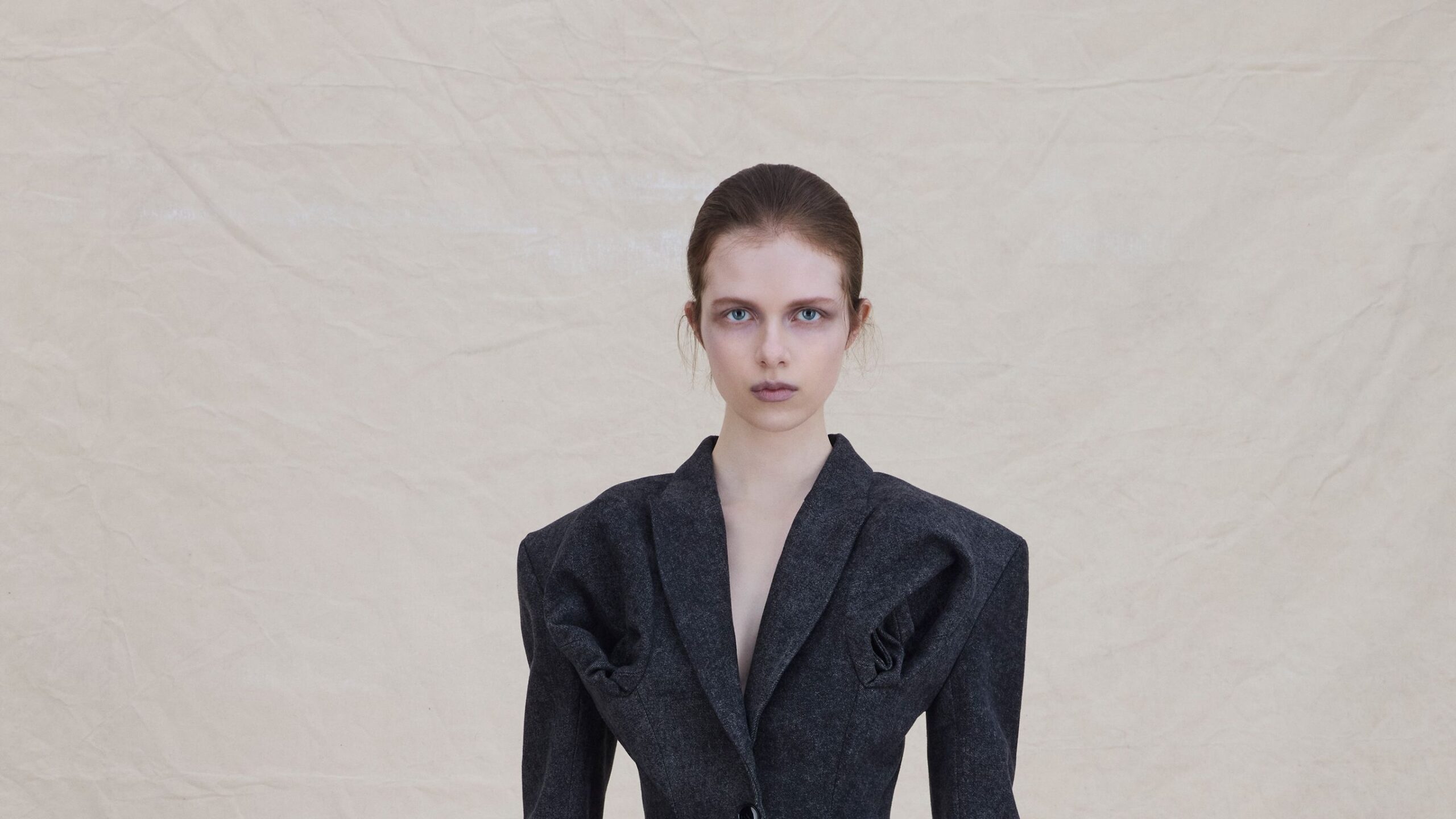
Whenever there’s a lot going on in the world, Torishéju Dumi thinks we all need an armor of love: If dressing is a way of forcing order out of chaos, so is making clothes.
The first look was a homage to Dior’s Bar jacket, “almost like a cocoon, a cage,” Dumi said. And those threads on the front of the shoulders? She sees them as “the corners moved to the front of the jacket, like a cape.” But she’s open to other explanations, such as black holes.
“I can’t create a world without taking into account what’s going on around me. It happens from the heart, unconsciously,” she said. “But I’m not going to create something that has a negative reaction, it’s more of a reaction to a weird, weird, Lynchian place that we’re in right now, so if it’s a black hole, I want to see what’s in it.”
She achieved the elegant look of this look with vintage canvas and pony hair, finished in denim at the back. But the idea returned in other materials, such as boiled wool or shearling skirt suits. (“I like the idea of not needing a jacket,” the designer offered.) A black corduroy suit paired with a white funnel-neck shirt was a continuation of her first collection. A knitted draped dress made from deadstock had a twist at the back, leading the minimalist trend: Like the yellow mohair tartan dress that followed, it was pieced together. “I wanted to create something that had an incredible sense of quirkiness, but at the same time was elegant,” explains Dumi. Yes, the tartan skirt was paired with a petticoat—another holdover from her Spring 2025 “Ship of Fools” collection—but she swore it was lightweight.
Even in the season of trompe l’oeil layering, some pieces have more sleeves than one might expect. The cardigan style comes in four sets: one for the arms, plus others that are adjustable at the neck, waist and hem. A corset-style corset gown also follows this theme, with sleeves that can be tied at the chest or behind. Dumi also enjoys crafts. With her mother’s help, she crafted a heavy, knotted silk top and skirt, a shared labor of love that, to date, remains a one-off. This craftsmanship, with rustic materials and bold volumes, is why Torishéju won the LVMH Savoir-Faire award last year.
Somehow it’s not surprising to learn that she attended drama school from the age of 8 to 17. She later taught costume courses at the London College of Fashion, so her fascination with 18th and 19th century clothing grew out of practical experience. “It’s about world-building,” she said. “When you take apart the different layers, it’s like giving the garment a little bit of a modern edge, and it becomes special, real and alive. I think that’s why we create it.”