The Tamesis
March 16, 2026
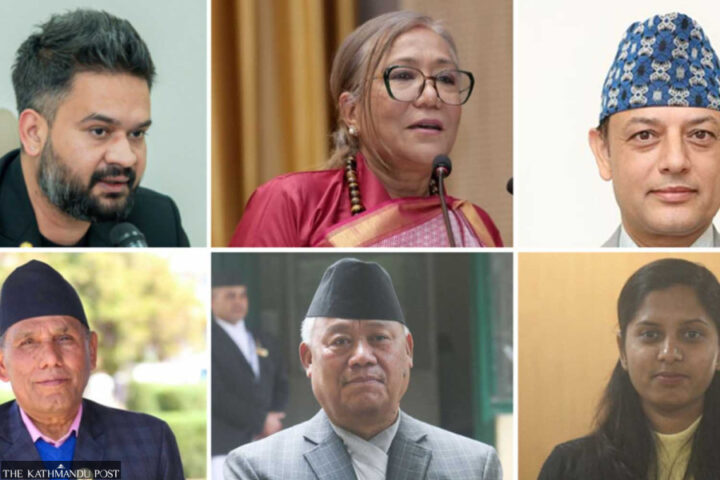
kathmandu – The Rastriya Swatantra Party won nearly a two-thirds majority in the House of Representatives elections and will meet on Sunday to discuss government formation.
Party chairman Rabi Ramichane, senior leader Balendra Shah, who is expected to serve as prime minister, and members of the party secretariat will discuss government formation issues, including the selection of ministerial candidates.
Immediately after the secretariat meeting, the party plans to hold a Central Committee meeting to finalize the list of MPs elected under the proportional representation system. Also on the agenda is changes to party rules to make it easier to elect parliamentary party leaders.
The two RSP leaders said the two leaders would meet only once on Thursday and discuss the way forward as both Ramichahn and Shah fell ill after intense national campaigning. They later contacted by phone.
RSP leader Shishir Khanal, who won a seat in the Sixth House of Assembly in Kathmandu, said that on the government formation agenda, the meeting may entrust Ramichani and Shah to pick ministers.
Shah, the prime ministerial candidate, favors forming a cabinet of about 15 members. Khanal said Lamichahn had dominated decision-making after the RSP emerged on the national stage at the 2022 election, but this time the party had two prominent leaders who would join the appeal.
Another RSP leader said the Shah wanted to form a government representing experts in different fields to help his government. The exact size of the cabinet and government is yet to be discussed. The unnamed leader said people would not be surprised if Shah “forms a government of 100 experts”.
The leader of the Real Socialist Party said that this time, the party hopes to make some changes in the formation of the cabinet, the oath of office and the operation of the government.
The meeting will also decide on amending the party constitution to pave the way for Shah to become prime minister.
The Shah could not become prime minister without amending the charter. The party is planning to amend Article 66 of the party constitution, which involves the election of the leader of the parliamentary party. Currently, Article 66(8) of the Party Rules stipulates that the parliamentary party leader shall be elected by all members of the party.
Section 66(8)(a) provides: “Prior to a federal election, an election shall be held among interested candidates for the election of the leader of the parliamentary party in the House of Representatives, among the candidates selected by that party in a proportional and direct manner. All ordinary members of the party shall be eligible voters for the election. [of the parliamentary party leader]”.
But the party failed to follow procedures set out in the party’s constitution ahead of the March 5 vote.
Provisions of the charter that allow not only RSP legislators but also rank-and-file party members to elect parliamentary party leaders conflict with Article 25 of the 2017 Political Parties Act.
The law states: “In accordance with the instructions of the political party concerned, the members of the parliamentary party in the Federal Assembly or the Provincial Assembly shall elect a member of Parliament as leader of the parliamentary party.”
On December 28, Ramichani and Shah signed a seven-point agreement. Ramichani will continue to serve as the central chairman of the People’s Party, and Shah will become the leader of the parliamentary party after the House of Representatives election.
After amending its charter, the RSS will elect Shah as its parliamentary leader. President Ramchandra Paudel will then appoint him as Prime Minister. Since the Real Socialists have a single-party majority in the House of Representatives, the president will appoint the party’s parliamentary leader as prime minister.
“Due to the illness of the two leaders, we have not yet discussed other details such as what the new government can deliver in its first 100 days,” Kanal said. “We have committed to reducing the size of the cabinet to 18 people so that the size of the new cabinet does not exceed that number.”
With some party leaders and sections of the media speculating that Shah will form a cabinet made up entirely of non-parliamentarian experts, Khanal said that would not be the case this time.
“We must first amend the constitution to appoint ministers from outside parliament,” he explained.