The Tamesis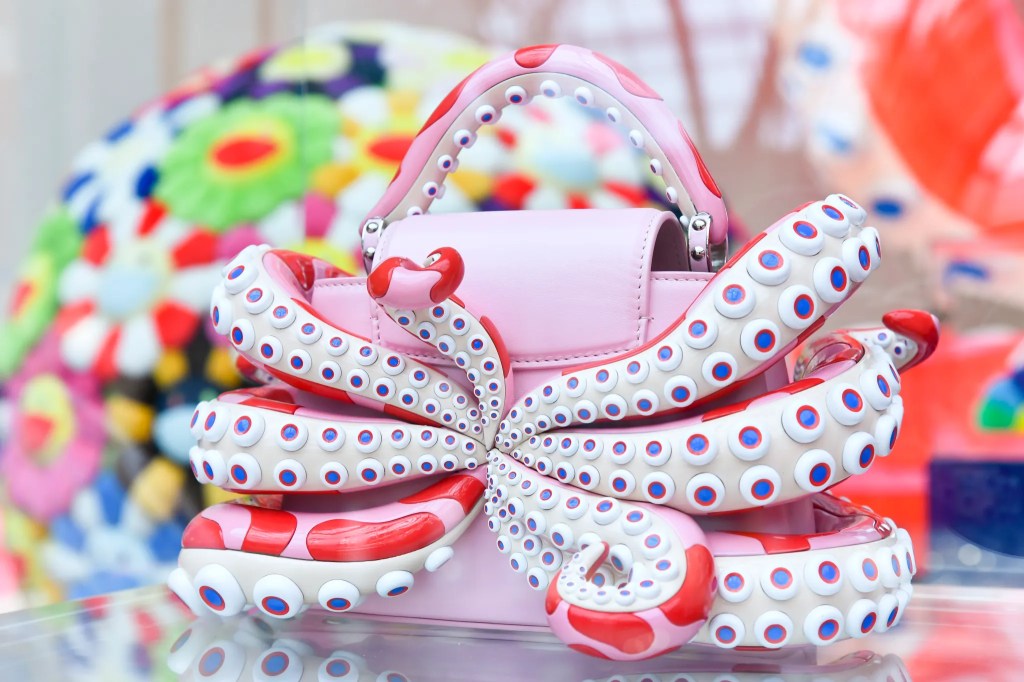
Just look at the auction houses for evidence of the increasing intertwining of art and luxury goods. Both Sotheby’s and Christie’s are cushioning the blow of sluggish art sales in 2025 by doubling down on luxury goods. Handbags, jewelry, watches, cars, you name it: these items now account for about a third of Sotheby’s total revenue, and sales of private luxury goods have soared 350% year-on-year. Christie’s is not far behind, with luxury goods accounting for a quarter of its total sales.
This isn’t just an auction game. The art fair has also strengthened its cooperation with luxury brands in 2025. However, as this year’s crowded art fair circuit has proven, luxury brands are no longer happy to linger on the sidelines as sponsors. They are now fully embedded partners.
Related articles

At Frieze London and Art Basel’s global venues (Paris, Basel and Miami Beach), luxury brands are now supporting curated exhibition spaces, mentoring programmes, immersive installations and large-scale commissions. Take Tiffany & Co.’s support of Artist-to-Artist at Frieze, a mentor-based program that pairs established artists with emerging ones, or Ray-Ban Become an official exhibition partner of Art Basel Miami. The latter created Ray-Ban Clubhouse, an immersive installation that blends art, music and style. But are these partnerships just sophisticated marketing ploys, or do they truly enrich the art fair ecosystem?
The answer depends on how decentralized brands are willing to go, said Marc Spiegler, who served as global director of Art Basel for 15 years and now serves as a cultural strategy consultant. “Luxury brand collaborations can definitely lead to great projects that wouldn’t happen otherwise,” he told us art news.
Spiegler noted that these precedents have become a fixture on the art world calendar. These include UBS’s long-term sponsorship of Art Basel’s Infinity Zone, BMW’s Art Journey program and the Chanel Cultural Fund. “None of these projects have any direct connection to sales,” he said. “All of them are marked by the positioning of the artist well ahead of the brand.”
This artist-first, brand-second principle has become a touchstone over the past 12 months as art fairs navigate a crowded sponsorship environment in a cautious market. Frieze London, a series of brand-led events across the city this year, is particularly explicit about how to build these relationships.
“Frieze’s fashion partners are collaborators, not just sponsors,” Frieze chief commercial officer Emily Glazebrook told us art news. “They are integrated into the show through carefully curated areas, lounges or initiatives that are a core part of the show’s identity.”
She highlighted Stone Island’s support of Focus, Frieze’s section for young galleries, and Tiffany & Co.’s support of Artist-to-Artist, a mentor-based program that pairs established artists with emerging artists. “These collaborations exemplify Frieze’s commitment to cultivating community and building partnerships to help raise the profile of artists,” added Glazebrook.
Tiffany’s participation in Artists to Artists, now in its third year, is in line with Spiegler’s thinking. The program emphasizes peer nominations, intergenerational conversations and individual showcases of emerging artists, with minimal branding on the floor. De Beers, which is partnering with Frieze Masters for the first time this year, is taking a similarly hands-off approach, presenting a video installation that traces the geological and cultural history of natural diamonds. Designed to explore deep time rather than product display, the installation does its best not to feel out of place among the historical material that defines the Masters section.
In 2025, other collaborations are closer to the line between cultural production and brand building. While Prada isn’t fully partnering with Frieze, the luxury brand’s “private travel club” Prada Mode launched an art and luxury event during London’s major fair. It was conceived in conjunction with artist duo Elmgreen and Dragset, whose partnership dates back to 2005 Pradama Dharma Art installation in West Texas, a Prada boutique that doesn’t actually sell anything. This year’s Prada format is an immersive environment where guests can watch movies, attend presentations, and just be immersed in the experience audiencea cinematic installation created by the artist. But the project is neither a retail opportunity nor a traditional exhibition. Rather, it is a hybrid space that cannot exist without corporate support, but whose meaning cannot be reduced to promotion.
If Frieze London was the testing ground for these partnerships in 2025, Art Basel in Paris is where they will really shine. Now a fixture in the glass-covered Grand Palais, the fair reflects the city’s dual identity as a global art capital and center for fashion and luxury goods. The brand is not only located adjacent to the show, but also embedded in its public programming. (Art Basel CEO Noah Horowitz declined to comment for this article.)
One of the most ambitious examples this year is 30 blizzarda major exhibition by Turner Prize-winning artist Helen Martin. Commissioned by the Italian fashion brand Miu Miu, the work officially became part of the public program of Art Basel in Paris and was performed at the Palais d’Iéna during the exhibition. Free and open to the public, the project is a five-channel installation activated at intervals by 30 performers, combining video, sculpture, music and live performance.
“The invitation was very broad, very generous, but made clear [needed] including a performance element,” Martin told The Art Newspaper. “It kind of goes against all the traditional gallery or museum invitations I usually get.”
Elsewhere at Art Basel in Paris, luxury partnerships played a more overt structural role. Miu Miu served as the official partner of the show’s public program, while Louis Vuitton attracted large crowds with its Artycapucines handbags designed by Japanese artist Takashi Murakami. “Honestly, as an artist, it’s very nerve-wracking to give a talk like this at an art fair,” he told us WWDHe added that two decades ago, he was criticized for incorporating the Vuitton monogram into some of his paintings. “People always wonder if art should be so commercial.”
Audemars Piguet continues its longstanding cultural involvement at the show, while a scaled-down Art Basel store showcases artist collaborations as well as luxury goods.
For Vincenzo de Bellis, chief artistic officer and global fair director of Art Basel, the adjustment reflects broader changes in contemporary practice. “Contemporary art today is more interdisciplinary than before,” he told us WWD. “This interdisciplinarity spans fashion, design, moving image and music.”
2025 shows that audience strategy is at the heart of this convergence. “Our fair takes place in the world’s leading art capital,” Glazebrook told art news“and appeal to a cosmopolitan, culturally savvy crowd, which is particularly attractive to luxury brands.”
Young collectors, especially women, are driving growth and tend to collect across categories, from art and design to jewelry, watches and fashion, according to Art Basel and the UBS Global Collections Survey. For brands, art fairs provide concentrated cultural exposure. For art fairs, brand funding provides stability and clout.
Still, balance issues remain. Spiegler warned that the true measure of success is longevity and restraint. He believes the most effective partnerships are those that transcend seasonal visibility and resist the urge to leverage artists’ tools.
As art fairs continue to expand geographically and luxury brands seek cultural legitimacy amid changing consumer behavior, such restrictions may become increasingly difficult to maintain. Demand for bags and other products is very strong, so it will be interesting to see how luxury collaborations unfold at these shows. Do they risk eclipsing the art itself?
Watch this space in 2026, especially for the new major fairs taking place in the Gulf, namely Frieze Abu Dhabi and Art Basel Qatar. These events are held in areas where the luxury market is booming. The market grew 6% last year to nearly $13 billion, according to a recent report by Dubai-based retailer and distributor Chalhoub Group, and these two shows will only drive that number further.