The Tamesis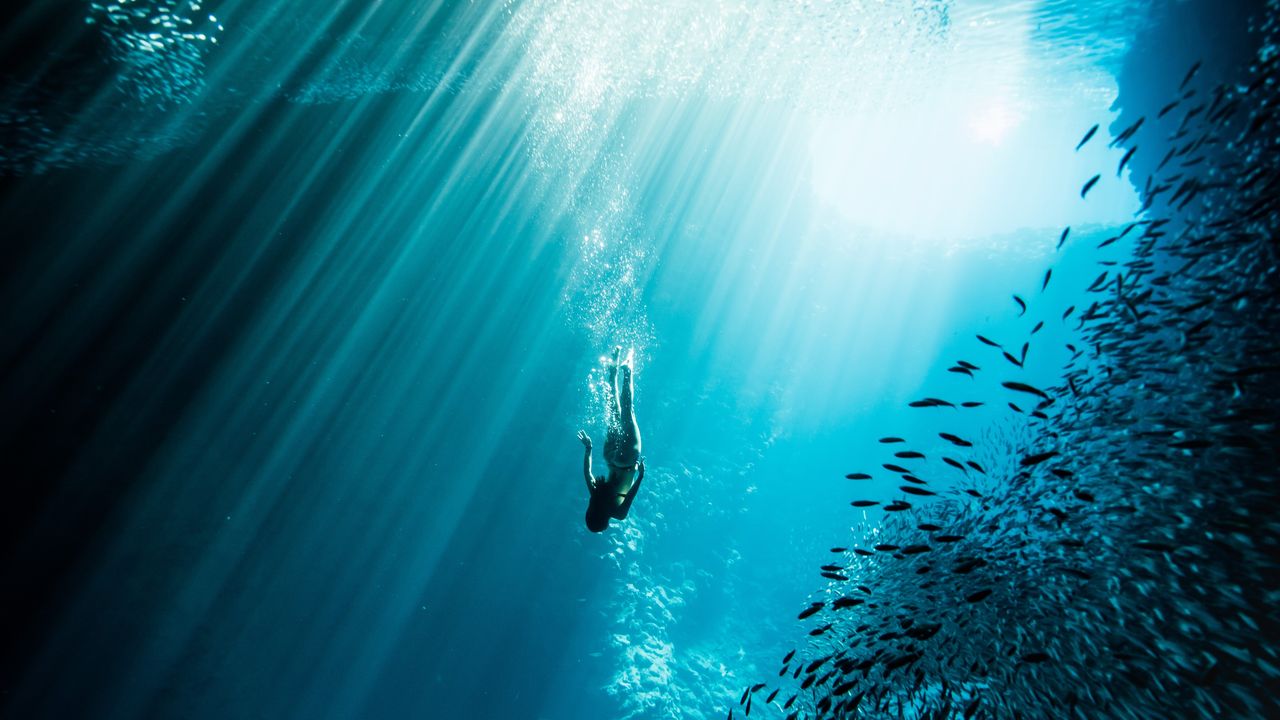
I had been floating face down in the pool at Fiji’s Matamanoa resort for nearly three minutes, eyes closed, breathing through a snorkel, when my freediving instructor’s voice echoed faintly through the water. “Dobrina… Dobrina? We’re done. You can get up.” This exercise was part of my freediving certification and was originally designed to activate my “mammalian diving reflex,” which kicks in when we submerge our faces in water.
It is also known as the “master switch of life” and can instantly reduce the heart rate by about 25%, thus saving oxygen and extending the breath-holding time. Or, as author James Nestor describes it: “[…] It makes us efficient deep-sea diving animals. “
Another side effect of the master switch? It relaxes your body and mind into a meditative state, which apparently caused me to lose focus and float to the other side of the pool, inadvertently ignoring my instructor calling me for at least a minute.
More often than not, my brain is in a constant race against time—the finish line seems to move before I cross it. But in that pool, under the glistening Fijian sun and the waves crashing on the beach below, my mind went completely blank as I thrust my head underwater and focused on the rhythmic hiss of my exhale.
Freediving—the ability to dive underwater with a single breath—has been practiced for thousands of years, primarily by people in coastal communities around the world as a method of gathering food (or, in Japan, for pearls). In many places, it’s also a way to deepen your spiritual connection with the ocean. In Korea, haenyeo, Women in their 70s still dive underwater without any modern equipment, relying only on breath-holding.
But freediving is now attracting a new audience of health seekers looking for calmness, focus and improved lung and cardiovascular health. Celebrities are taking notice, too—Orlando Bloom dedicated an entire episode to his Apple TV series to the edge to freediving. Basic pursuits like recreational freediving are gaining momentum as urbanites search for an antidote to data-obsessed, tech-heavy health habits. In 2023 alone, the International Apnea Development Association (AIDA), one of the global freediving organizations, issued 35,000 new certifications. By 2024, this number will almost double.
Freediving is as much about body awareness and fitness as it is about tapping into your natural instincts and learning to live fully in the moment. “It’s been a journey of self-discovery,” my coach in Matamanoa, Trevor Neal, told me one breezy afternoon after practice. Humans have a close relationship with the ocean, even if we don’t live in it.
Amniotic fluid and seawater share many chemical similarities in composition (scientifically speaking, one study calls it “an ontogenetic recapitulation of the prebiotic ocean”). In the 19th century, French doctor René Quinton discovered that plasma and seawater are 98% identical. We’ve all seen videos of babies swimming underwater: that’s because six-month-old babies have a natural diving reflex that causes them to hold their breath. Humans have amphibious skills—all life begins in the water—and freediving training can help unlock these skills.
On the first day of training in the pool, I could barely hold my breath for 40 seconds, but after a few hours of breath-holding exercises and relaxation techniques, I easily managed a minute and a half underwater the next day. What really surprised me was the level of relaxation and self-awareness my body was able to achieve – something no amount of meditation practice could help me achieve.