The Tamesis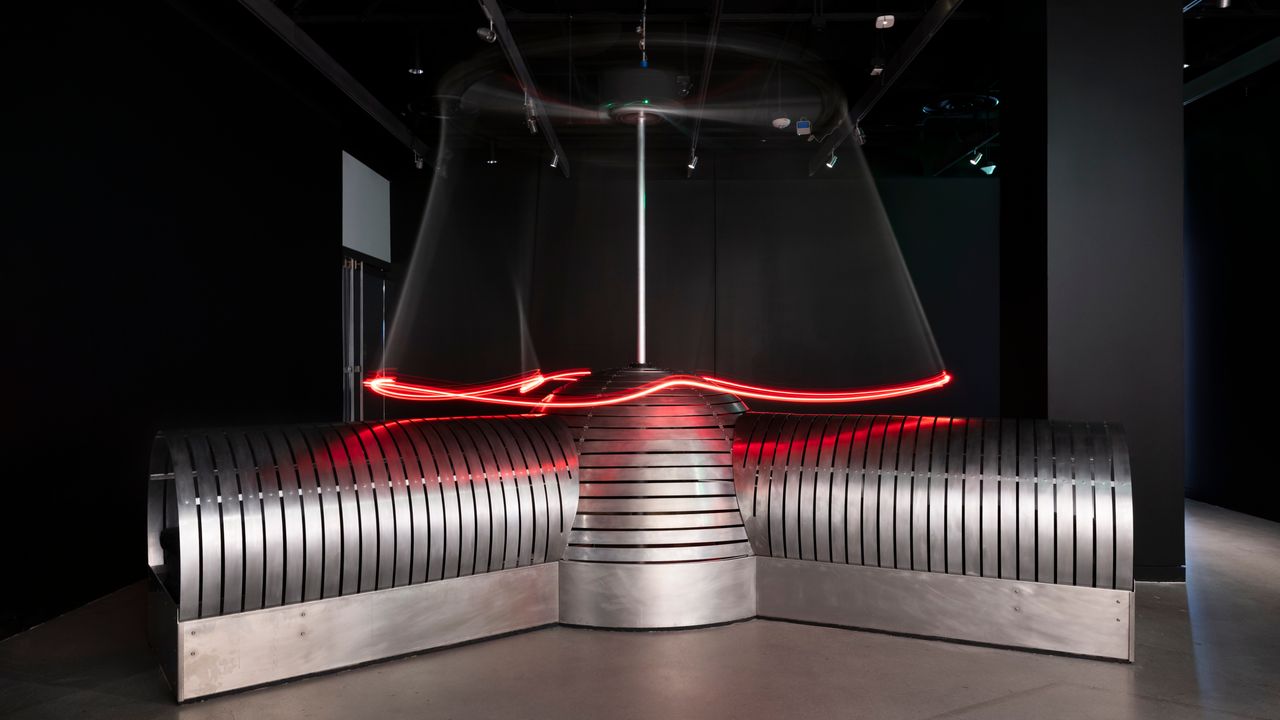
Three beds, arranged in a gleaming, sculptural Y-shaped aluminum installation: they invite you not only to lie down, but also to surrender to the suggestion, to linger on the edge of consciousness. You climb in, and once you’re settled, a dance begins – the gentle descent and soaring of colorful light beads, the subtle pulse of sound, the almost imperceptible twirling of the wand above. You feel your body react before your mind can fully catch up.
The experience is disorienting, intimate and completely compelling. For brief pauses, the lines between waking and dreaming become blurred, reminding us that perception is flexible and science feels like pure magic wrapped in light and sound.
title Hotel Room #2: Shared Dreams, This immersive sleep and perception installation by German artist Carsten Höller proposes the uncanny—shared dreams—while tapping into a cultural moment obsessed with tracking bodies, measuring and optimizing our most intimate experiences.
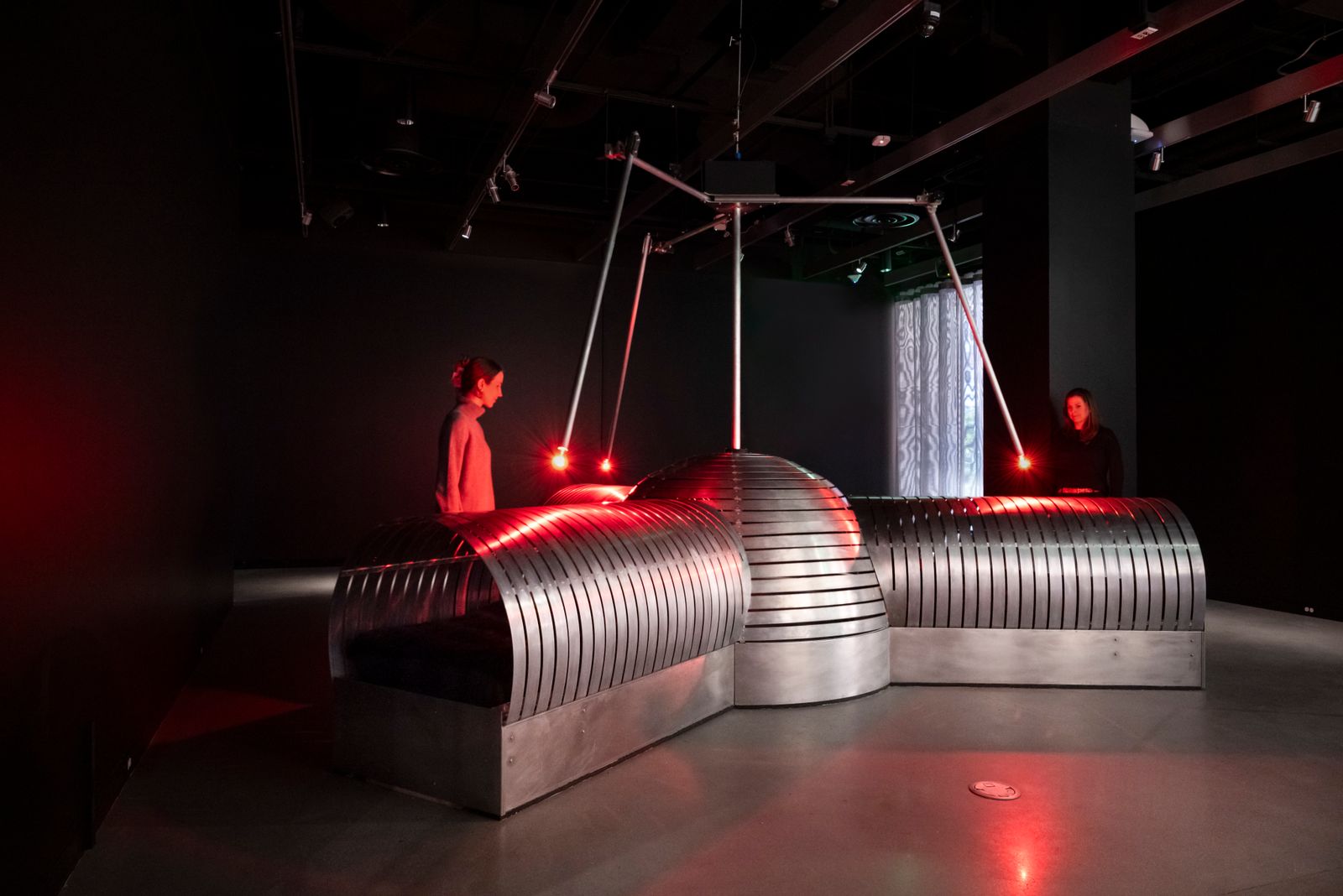
Photo: Ana Oliveira
It happens to take place in a museum gallery. It was created in Cambridge for “Light Up! Biology and Time,” a new exhibition at the MIT Museum (running through August) that tracks the rhythms of life itself: circadian patterns, the control of light on the body, and the subtle structures of alertness and rest. Important daylight, body clock and sleep cycles come together in 18 works that blend science and art, from immersive soundscapes to visualizations of circadian patterns, and reflective spaces that allow you to observe your heartbeat and alertness in new ways.
exist Hotel Room #2: Shared DreamsHoller’s goal is to explore whether dreams—often private and uncontrollable—can become instructive and public. It draws on emerging research showing that dreams can be influenced in real time by sensory cues such as light, sound and movement. Programmed sequences of stimuli—pulsing colored lights, spatialized sounds, and subtle atmospheric effects—are orchestrated to influence the transition from wakefulness to sleep and potentially guide the content of dreams.
Participants often reported a sense of liminality—vacillating between alertness and sleep—rather than falling completely asleep during brief training sessions. However, even without sleep, synchronized movement and light can produce a strong sense of time change and body awareness.
In fact, the pre-sleep state is crucial here, as MIT Museum Studio Director Seth Riskin explains in his lab, located directly beneath the MIT Grand Dome in the center of campus. said Carsten experience is the material he is studying. ” said Riskin, who collaborated with Höller and dream scientist and MIT alumnus Adam Haar Horowitz on the study. Hotel Room 2. “All the attention is focused on the conscious experience, but it’s this semi-conscious experience that’s the work of art. Because of the unusual characteristics of the environment, you can’t help but pay attention to it, but you start to lose conscious control, lose your sense of time — and it turns into something else. Once you start to zone out, that’s the problem.”