The Tamesis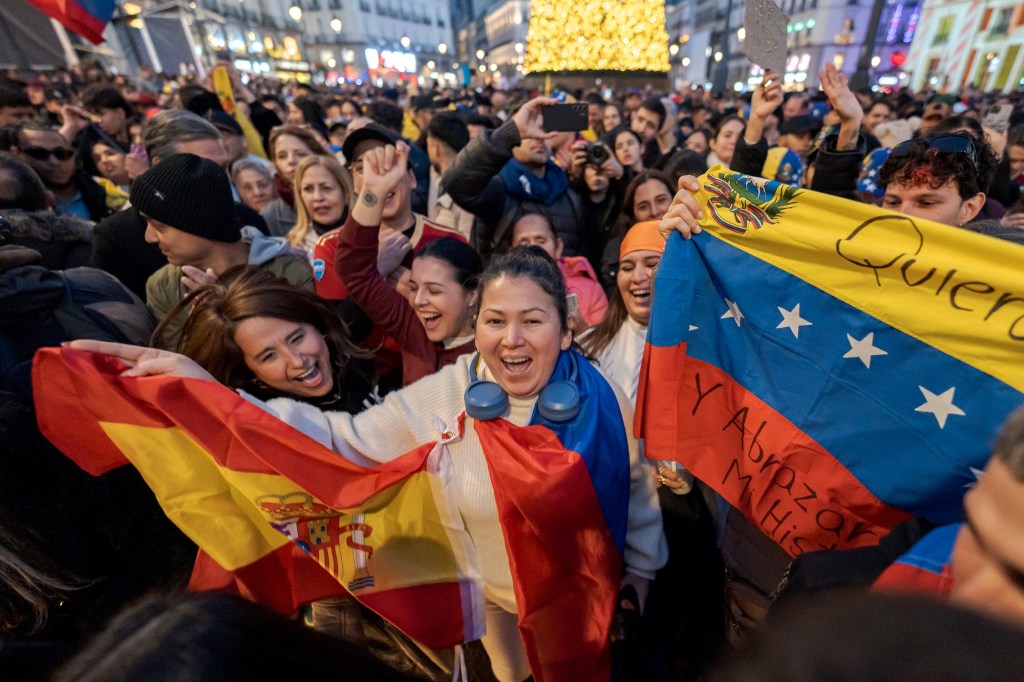
In a historic military operation that flouts international law, the United States invaded the South American country of Venezuela early Saturday, capturing the country’s leader Nicolás Maduro and his wife, Celia Flores, who face federal charges in New York. U.S. President Donald Trump has publicly said his administration will “run” the country until a favored administration takes control and has said the U.S. will restore crumbling petrochemical infrastructure in the country with the world’s largest oil reserves, even noting that he notified oil industry executives before the military strike but not Congress until the action was complete.
Related articles

Millions of people around the world have gathered to protest a return to gunboat diplomacy and naked regime change, even as many Venezuelans around the world celebrated Maduro’s ouster. Vice President Delcy Rodriguez has been sworn in as interim president; questions remain about whether her rule will be significantly different from Maduro’s, but Trump has publicly threatened her that her fate will be worse than that met by Maduro.
Venezuela has been ruled by brutal dictators for decades, and its cultural sector has suffered as a result. Hugo Chávez came to power in 1999, causing the country’s economic collapse. Deadly riots, attempted coups, food shortages, severe poverty and inflation that at one point reached 1.4 million percent. Millions fled, and artists, dealers and cultural leaders set up shop in friendlier locales such as New York, Paris, Mexico City and Buenos Aires.
Caracas was a cultural capital for much of the 20th century, with several notable museums and a history of strong patronage of the arts. This has not been the case since Chávez came to power. Contemporary artists are considered enemies by the state because they are believed to be influenced by capitalism.
Artists, art dealers and arts administrators in Caracas and cities like Miami and Madrid are watching the situation closely.
“Caracas used to be the capital of Latin America’s cultural scene. It’s not anymore,” one arts administrator in Caracas said in a telephone interview, unable to speak publicly for fear of government reprisal. “The state of museums in this country is very bad. Recently, there have been some changes in the cultural scene, but only in the private sector.” She cited galleries that participate in international fairs, such as GBG Arts (founded by Gabriela Benaim Ginnari and Mario Matos) and Beatríz Gil in Caracas, as well as overseas galleries founded by Venezuelans, such as Ascaso Gallery and Durban Segnini Gallery in Miami.
“An artist might sell one or two pieces and that’s their only income,” the arts administrator said. “The museum does not hold major exhibitions. I know that the Museum of Contemporary Art has held exhibitions of big-name artists such as Picasso. But there are doubts about the authenticity of the works.
“Of course, we don’t like the way it’s done,” the administrator continued. “If you look at it objectively, it’s completely crazy. But we need change. On Saturday, some people called me and said we have to celebrate, but I don’t want to celebrate. I want the country to grow and give people opportunities. Maybe things will get better, but come on, another president saying, ‘I’m going to run this country?’ What is this? But we need something radical. It’s going to be a transition. Let’s see how it’s managed.”
“No one is protesting in the streets. Only people who have to go to work. There are government troops on the streets with long guns. They stop people and check their phones.” People don’t know whether to carry their phones and risk finding criminal material on them, or leave them at home, which could arouse suspicion, she said. “Maduro is gone,” wrote new york times“But repression intensified in Venezuela.”
Artist José Antonio Hernández Des was born in Caracas and now lives in Barcelona. After becoming famous in the 1980s, he exhibited at the Venice Biennale (1993), the Gwangju Biennale (1995), and had solo exhibitions at the New Museum in New York (2003) and MACBA in Barcelona (2016).
“Around 7 o’clock in the morning, my son woke me up with the news: ‘Dad, what I told you was going to happen is happening,'” Hernandez-Diz said in an email. “I thought he was referring to what was going on around the house, but then out of the blue he told me about Maduro – that they had taken him away. For years we thought that with his downfall it would all be over. That’s not the case.
“A few hours later I heard an analyst describe it as a ‘Headless Snake’ and Don Chaffee’s movie Jason and the Argonauts I thought about it. I watched it many times, and the image of the Hydra left a deep impression on me. Some snakes bite each other, and some have no heads.
“This is exactly what is happening in Venezuela: snake medusas are constantly moving, biting each other, some without heads, but all equally dangerous. So we continue to wait and see what happens, and the situation is getting more and more tricky.”
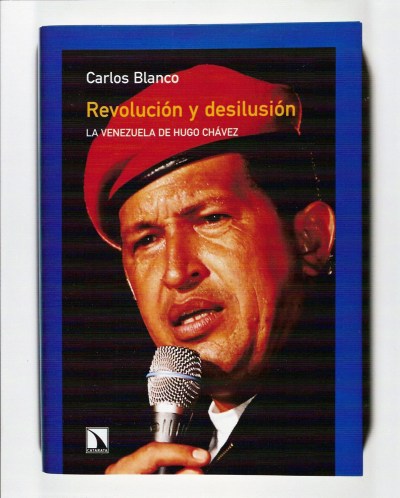
Luis Molina-Pantin, Bestseller-The Nation-(Ugo Chavez)2001-2004.
Courtesy of the artist
Artist Luis Molina-Pantin lives in Mexico City and travels frequently to Venezuela; his works are in the collections of many international institutions, from the National Gallery of Art in the Venezuelan capital to the Museum of Modern Art in New York. This fall he will participate in the group show “Telenovela” at the American Society in New York.
“This is a very delicate situation,” he said in a telephone interview. “The information coming out of the country is not very accurate. There are still people protesting. Just because they hate Trump doesn’t mean Maduro isn’t a criminal. People really don’t understand the situation.
“Countries like Cuba, Mexico and Brazil are producing very good artists, both in quality and quantity. And then Argentina, or maybe Colombia is catching on. Brazil is a phenomenon. The galleries in São Paulo are really respected. In Caracas, there is no art world. It has been torn down.
“Chavez never recognized contemporary art. He said it was elitism. For example, when Chavez came in, the museums took out all contemporary art and turned everything into folk art. When the museums closed down, the private sector started creating spaces. That’s what really worked. The most famous was the Los Garbones Art Center. Another one was the Parque Cultural Estate of La Trinidad.

On January 5, 2026, supporters of the Communist Party of India and the Indian Students Federation held a protest rally outside the US Embassy in Kolkata, India, to oppose the US attack on Venezuela and the arrest of Venezuelan President Maduro and his wife.
Debarchan Chatterjee/NurPhoto via Getty Images
Dealer Federico Luger lived in Venezuela in his early years and co-founded the gallery of the same name in Milan in 2005; in 2020, the gallery was renamed Wizard Gallery. The gallery represents international artists and has participated in fairs such as Artissima Turin, Expo Chicago, Zona Maco Mexico City, Miami and Untitled San Francisco.
“Venezuela has never been a perfect country, but it is deeply social. People from different backgrounds and cultures are part of everyday life,” Lugar said in an email. Hugo Chávez fueled resentment against foreigners and those who think differently, which normalized hostility and led to a rise in crime and fear. Chavez came from the military and led with an authoritarian mentality. However, the situation has worsened under his successor Nicolás Maduro. Systems collapse, violence is systematized, democracy is hollowed out, and justice disappears. These are dark days in our history.
“My family had lived in Venezuela for more than fifty years, working in the construction business there, but we were forced to leave. Corruption became overwhelming. Arbitrary detentions, kidnappings and torture became part of daily life. This is not a political opinion, but a reality witnessed by countless Venezuelans and documented by international observers.
“In 2024 we had elections and Venezuelans voted Maduro out. Due to a lack of transparency and electoral fairness, many governments, including the United States and European countries, refused to recognize his victory. Maduro’s refusal to respect the will of the electorate means he remains in power as an authoritarian figure rather than an elected leader.
“As Venezuelans, it is difficult to fully explain how those who are not natives feel about this moment. There is a complex of emotions that can coexist. On the one hand, there is relief and even cautious hope at the sight of an authoritarian figure who has usurped power and caused so much destruction. At the same time, there is concern about what will happen next, especially when change involves the intervention of foreign actors. These conflicting emotions are not contradictory; they are all valid, and they reflect the deep trauma and uncertainty Venezuelans endure after decades of political and cultural devastation.
“The cultural loss is enormous. Venezuela once had serious collectors and a vibrant art ecosystem. Artists like Jesus Rafael Soto and Carlos Cruz-Diz were respected around the world. Over time, collectors and creatives were forced into exile, and Venezuela’s artistic voice disappeared from the global stage. Independent cultural institutions disappeared, and so did art magazines.
“For more than two decades, Venezuelan artists have lacked freedom, platform, and communication. The world can easily name American or European artists, but Venezuela’s is almost invisible.
“What is happening in Venezuela is extremely brutal and difficult to understand from the outside. A society’s ability to dream, create and be seen has been systematically eroded. The restoration of cultural life requires justice and space for Venezuelans to regain their creativity.”