The Tamesis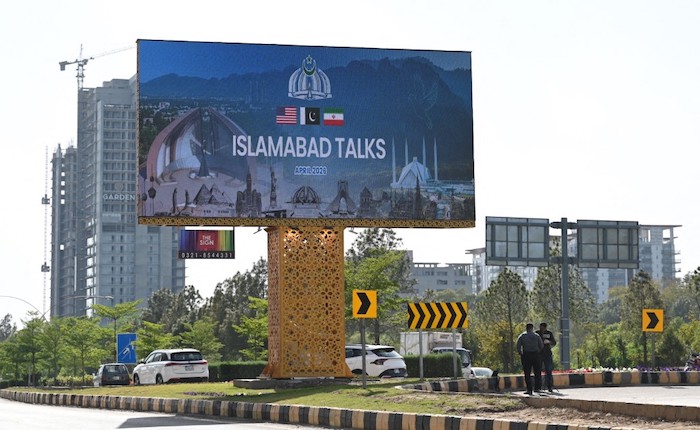
US Vice President Vance said that Iran and the United States failed to reach an agreement to end the war in the Middle East.
Vance made the remarks after two days and 27 hours of negotiations in the Pakistani capital, Islamabad. He said U.S. negotiators were leaving after making their “final and best offer” to Tehran.
He said Washington had sought a “basic commitment” from Iran not to develop nuclear weapons, but “we have not seen that” after the highest-level meeting between the two sides since the 1979 Islamic Revolution.
See also: Iran ceasefire has little impact on damaged Hormuz ships
However, Vance said he was still giving Iran time to consider the proposal from the United States, which said on Tuesday it would suspend attacks on Israel for two weeks pending negotiations.
US President Donald Trump attended a UFC cage match in Miami on Saturday night and later said he did not care about the outcome of the negotiations, insisting the United States had moved on from the war.
However, despite what Saudi Arabia said on Sunday, the shadow of conflict continues to hang over global energy supplies. Restored full oil pumping capacity of east-west pipelineBypassing the Strait of Hormuz, it can transport about 7 million barrels of oil per day.
‘Atmosphere of distrust’
The Pakistani leadership, which hosted the talks, brought the rival sides to the negotiating table, and Pakistan said it would continue to promote dialogue and urged both countries to continue to abide by the temporary truce.
Iran’s state broadcaster IRIB said the talks had stalled due to “unreasonable demands from the US side”, although a spokesman for the country’s foreign ministry later noted that the negotiations were “atmosphere of distrust“.
The spokesman said “no one” could have predicted that after 40 days of war they would reach an agreement in just one meeting.
There were few changes to the tanker blockade in the Strait of Hormuz as Israel launched a barrage of attacks on so-called Hezbollah targets in Beirut, killing hundreds and more attacks were reported on Saturday shortly after the ceasefire was launched.
Most tankers remain in the Gulf
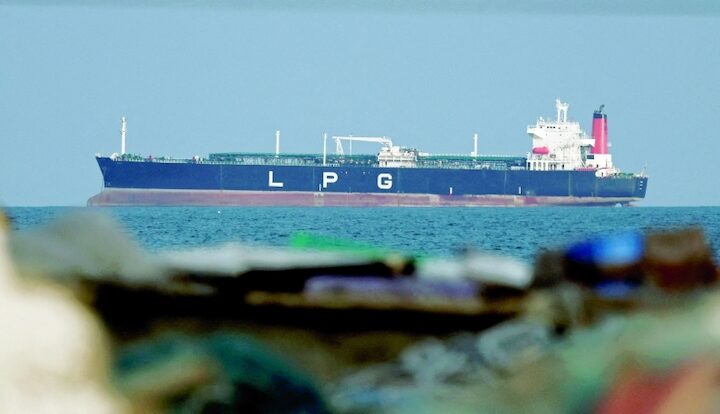
Three supertankers were among the 16 or so ships that passed through the strait on Saturday, but some were empty tankers, and owners of about 800 ships stranded in the area are reportedly still in a “wait-and-see” mode, wondering whether they can leave safely.
On February 28, the United States and Israel attacked Iran, triggering Tehran’s retaliation, plunging the Middle East into conflict and the global economy into turmoil.
Iran and the United States took a maximalist stance in the negotiations mediated by Pakistan, and Washington stepped up pressure and said it had sent a minesweeper through the crucial Strait of Hormuz.
There were signs of tension in the talks when Iranian media accused the United States of making “excessive demands” on the strait. During the war, one-fifth of the world’s oil was transported through the strait. The strait was effectively closed by Iran during the war.
U.S. President Donald Trump also insisted hours into Saturday’s talks that the United States had won on the battlefield by killing Iran’s leaders and destroying key military infrastructure.
“It doesn’t matter to me whether we make a deal or not. The reason is we won,” Trump said.
After marathon talks in the Pakistani capital, Vance told reporters that no deal could be reached yet.
“We leave here with a very simple proposal, a way of understanding, which is our final and best proposal. We will see if the Iranians accept it,” Vance said before setting off for a nearby airport and flying out of Pakistan.
Tehran wants to end war on Hezbollah
Pakistan’s Foreign Minister Ishaq Dar hinted at continued efforts to maintain dialogue between the two sides and said his government would “continue to play its role in promoting engagement and dialogue between the Islamic Republic of Iran and the United States of America in the coming days.”
“All parties must continue to abide by their ceasefire commitments,” he added.
The high-stakes meeting is taking place in Islamabad amid deep mistrust on both sides.
In February, when the United States and Israel launched their attacks, Iran was negotiating its nuclear program with Trump’s real estate friend Steve Witkoff and son-in-law Jared Kushner. The first salvo of the war killed Iran’s supreme leader, Ayatollah Ali Khamenei.
Kushner and Witkoff were both members of Vance’s team in Pakistan. The 70-member Iranian delegation is led by powerful Speaker Mohammad Bagher Ghalibaf and includes Foreign Minister Abbas Araghchi.
Iran has demanded any deal to end the war, including the unfreezing of sanctioned Iranian assets and an end to Israel’s war against Hezbollah in Lebanon, issues that Vance said would not be discussed in Islamabad.
The opening of the Strait of Hormuz has also become a key friction point.
Throughout the war, Iran has exercised its global economic influence by controlling vital sea lanes, sending oil prices soaring and putting political pressure on Trump as Americans complain about the rising cost of refueling.
US sells warships through strait
The U.S. military said on Saturday that two Navy warships passed through the strait to begin clearing the strait of mines and ensuring that the strait becomes a “safe passage” for oil tankers.
Iran’s military has denied any U.S. warships have entered the waterway and threatened to respond if it did.
The Revolutionary Guards’ naval command said Iran’s commitment to safe passage during the two-week ceasefire only applied to “civilian vessels under certain conditions.”
The United States has been severely affected by the surge in oil prices on global markets, but direct imports from the Gulf are lower than many of its European allies – which Trump has rebuked for not entering a war in which they were not consulted beforehand.
“Even if we don’t use the strait, we will open the strait because there are many other countries around the world that use the strait, but they are either afraid, weak or cheap,” Trump said.
Israel continues attacks on Lebanon
Speaking shortly after arriving in Pakistan, Ghalibaf made it clear that Iran remains highly suspicious of the United States.
“Our experience in negotiations with the Americans is always failures and broken promises,” Ghalibaf said.
Before traveling to Pakistan, Vance said the United States would “negotiate in good faith” if Iran wanted to but would not accept it “if they try to play us.”
A major complicating factor is Israel’s assertion that the ceasefire will not affect Lebanon, where Israeli forces have launched massive attacks and ground incursions in response to artillery fire from the Iran-backed Shiite Muslim movement Hezbollah.
Lebanese authorities said an Israeli attack in the south of the country on Saturday killed 18 people, bringing the death toll from Israeli operations since the war began to more than 2,000.
Israel and Lebanon will hold their own talks in Washington next week. Israeli Prime Minister Benjamin Netanyahu said on Saturday he hoped to reach a peace deal with Lebanon that “will last for generations.”
But Israel has ruled out a ceasefire with Hezbollah, suggesting it will instead seek to pressure Beirut’s historically weak central government.
- AFP With additional input and editing by Jim Pollard
See also:
Energy crisis triggered by Iran war fuels renewable energy boom, IEA says
Asian fuel importers eye Saudi ports amid uncertainty in Strait of Hormuz
Asia ‘worst hit by energy crisis’ due to Iran war
Two more LPG tankers transit Strait of Hormuz bound for India
India’s demand for wood, coal poor as gas prices soar due to Iran war
War with Iran could hit some of Asia’s biggest economies hard
India races to secure supplies as new attacks threaten ‘energy war’
Iran war sends gas prices soaring, Asia ramps up coal power generation
Iran war trumps sanctions, Indian refiners snap up Russian oil
Iran threatens to ‘destroy world economy’ as more ships attacked
Oil prices top $100 a barrel as Asian leaders rush to limit impact of war