The Tamesis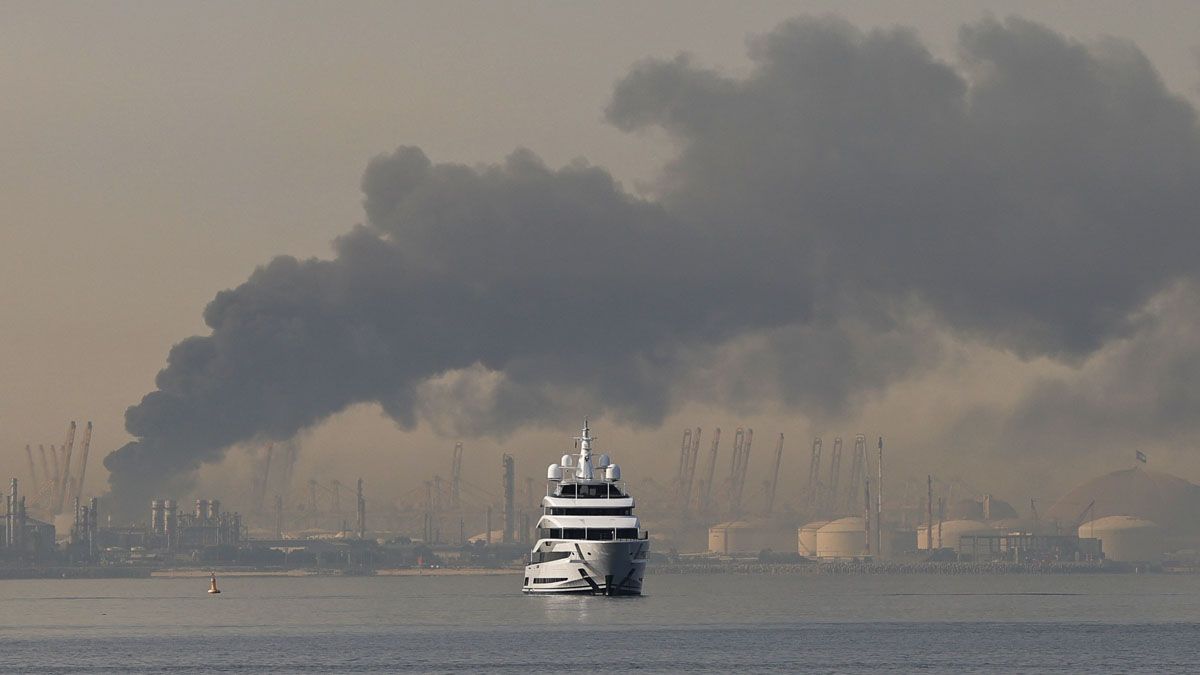
For fashion supply chains that rely on the port as a transit point for goods shipped between South Asia, Europe and the United States, the impact is immediate.
Records show that Old Navy and Gap are major U.S. importers in the Pakistan-Salala corridor — Old Navy alone logged more than 2,300 shipments — with Levi’s, Walmart and Banana Republic also severely affected.
Traffic through the area has been drastically reduced. Daily ship calls at major Gulf hubs including Bandar Abbas (Iran), Jebel Ali (UAE) and Salalah (Oman) have fallen by more than 50% since early March as carriers adopted a wait-and-see approach or diverted cargo to other ports, according to data from Everstream Analytics.
Steve Lamar, CEO of the American Apparel & Footwear Association (AAFA), noted that risk exposure is more affected by sourcing location than company size, and the compounding effect is severe.
“Apparel, footwear and travel goods are low-margin products, which means increased shipping costs could significantly impact a company’s bottom line,” he said, “especially as the industry is already managing new Section 122 tariffs while still awaiting refunds of illegally imposed IEEPA tariffs.”
Read more
Fashion’s new trade realities
A Supreme Court ruling on Friday struck down President Trump’s emergency tariffs, but within hours the administration turned to new legal tools. For fashion, the mechanics have changed, but the volatility has not.
The situation in Myanmar is getting more complicated: fuel restrictions imposed by the military junta are disrupting upstream production for brands that still rely heavily on the country’s garment regions. Adidas became the largest U.S. importer to Myanmar ports, ahead of H&M, LLBean and Cutter & Buck – all of which had their cargo pass through Yangon, Myanmar’s largest city, in early March, according to ImportGenius data. “If the Strait of Hormuz remains closed, we will likely see production cuts there as well,” said Lynn Hughes, chief analyst at ImportGenius.
Geographic distribution of risk
In addition to the physical threat to ships, electronic interference also adds to the damage. Mirko Woitzik, head of supply chain risk management products at Everstream Analytics, said widespread GPS and Automatic Identification System (AIS) interference was discovered in the Arabian Gulf and Strait of Hormuz, disrupting ship navigation and traffic management.
The Red Sea has been blocked by Houthi attacks since late 2023, and ships have been forced to reroute the longer route to the Cape of Good Hope. But the fashion world is immune to this disruption—and this asymmetry matters.
Aside from fuel surcharges, transpacific and Asia-to-North America routes are largely unaffected. The real pain centers on two areas: air freight from Asia to Europe, and any cargo entering the Gulf countries themselves.
The Red Sea passage to the Suez Canal has been effectively closed to commercial shipping since a Houthi attack in 2023 forced ships to reroute the longer route to the Cape of Good Hope. Sanne Manders, president of Flexport, said most ocean freight bound for Europe had already absorbed this detour before the Strait of Hormuz was closed, so in that sense the recent disruption in the strait did not further extend those journeys. Ships simply continued to reroute to Cape Town, cutting off the bay rather than adding to it.
The damage extends beyond ocean shipping lanes. Emirates and Qatar Airways jointly rank among the world’s five largest air cargo carriers, handling a disproportionate share of Asia-Europe belly cargo, given how landing rights concentrate traffic across Gulf hubs. Following the strike on February 28, both companies suspended or severely curtailed operations. “Capacity is very limited,” Manders said.