The Tamesis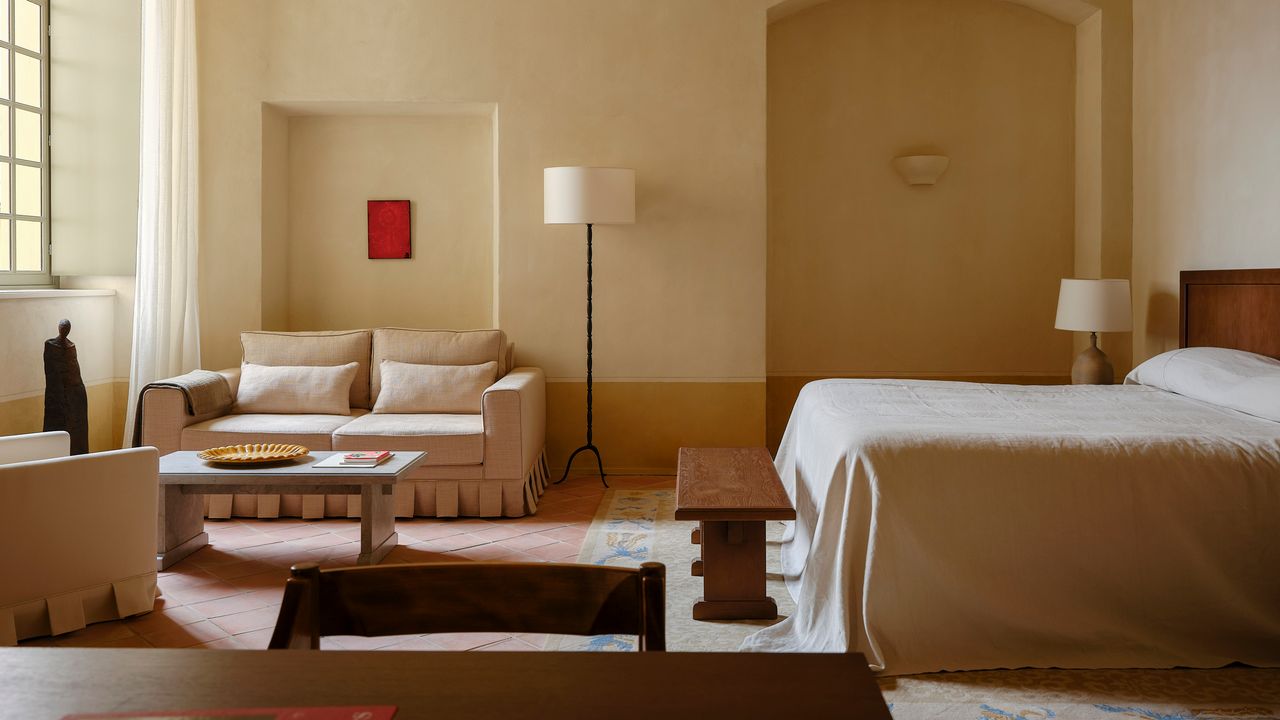
You don’t have to be religious to embrace the principles behind one of 2026’s most notable interior design trends: turning monastic. From sconces and lime-washed walls to stained glass and rustic wood, serene and characterful spaces are top of mind for the year ahead.
Howard Byrom, founder of the Antique Society—who himself owns a former Methodist church—summed up this aesthetic well. “Simplicity is key, as well as natural, unfussy materials. It’s functional, not performative. Indigenous and close-by, not exotic, and soft furnishings are kept to a minimum.”
The Hôtel du Couvent in Nice, a restored 17th-century abbey, is perhaps the best example of this trend among these destinations. With a simple wooden bed covered in cream linen, stone arches and a plaster relief hanging above the bed, it offers a modern interpretation of traditional monastic life – simple and luxurious, rather than cold and echoey. Byrom also mentioned the Edwin Lutyens-designed Castle Drogo kitchen in Devon, England, as a good example.
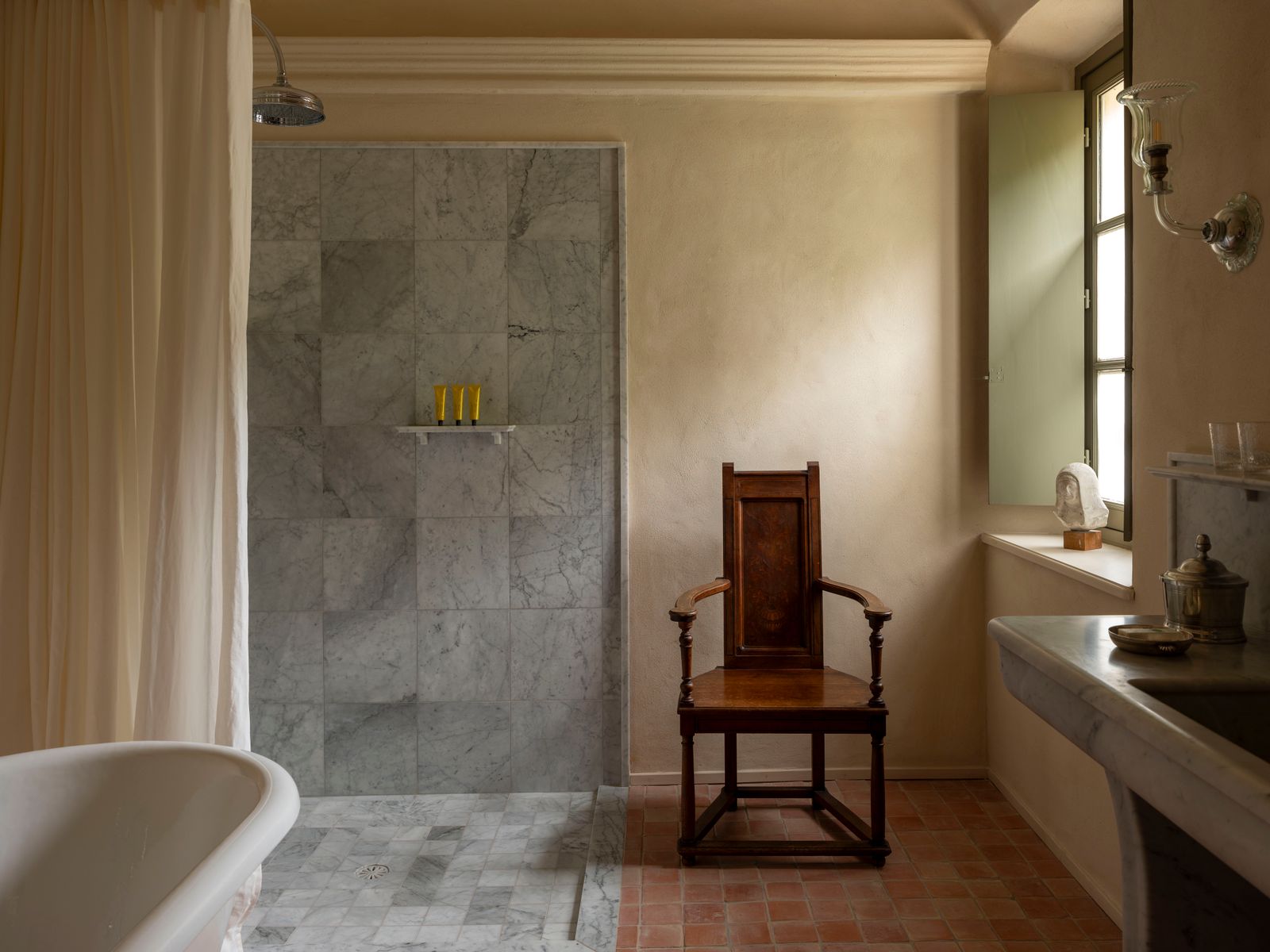
Sculptor Emily Young lives in southern Tuscany in a former convent that she bought from a family friend after years of careful restoration. “The architecture of the early 1600s is strong and elegant, with excellent acoustics,” she said.
While the space is filled with books, paintings, a piano and a collection of plants, restraint is central. “Simple approaches always work best here,” she says, noting that despite its austerity, it’s a calm and peaceful space.
Elsewhere, makeup artist Isamaya Ffrench took a darker, more gothic approach. Her home features a massive sooty stone fireplace, religious iconography and vaulted beamed ceilings. Sparse and deliberately “cold,” in her own words, it’s a testament to the versatility of the monastic look.
6 Tips for Creating a Monastic Space at Home
If you live in a spacious house with a spacious fireplace, you’re already halfway there. But even without the monastic bones, there are some ways to emulate this aesthetic:
Try bare or stone floors
Stone floors have long been favored in monastic buildings for their durability and use of local materials and remain a timeless choice underfoot. In Young’s home, original masonry floors are found throughout. “If you don’t have stone floors, bare floors will do,” Byrom says, and this look is often more accessible. Choose reclaimed oak or pine: these woods have seen the test of time and bear the signs and imperfections of time.