The Tamesis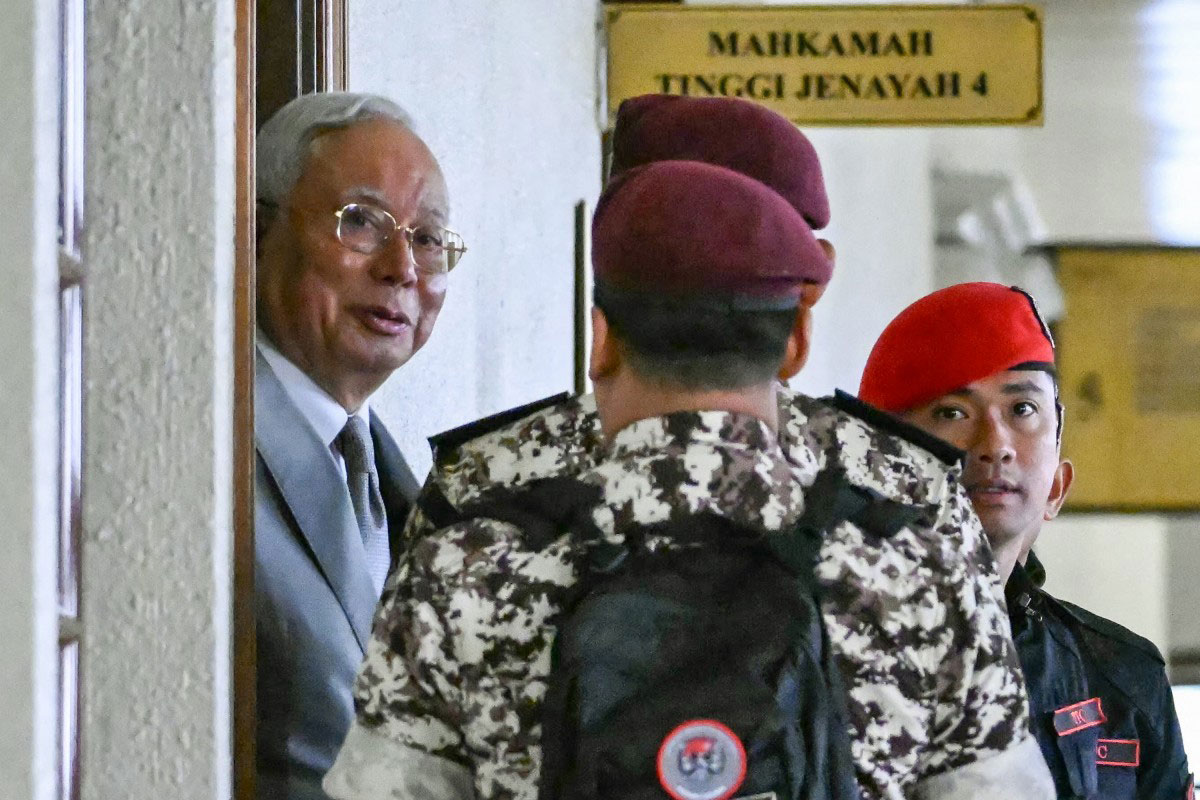
January 5, 2026
Kuala Lumpur – As 2025 draws to a close, the question of whether Datuk Seri Najib Razak is a “statesman” or a “kleptocrat” remains unresolved.
The issue has been the focus of a tug-of-war between his supporters and opponents since the 1MDB scandal broke.
Najib’s supporters and those who cannot believe that he would “steal” national assets remain convinced that the 1MDB case is an elaborate political conspiracy.
On the other hand, those who believe the evidence and findings insist Najib’s fate is well-deserved, although they do not entirely erase his achievements as prime minister.
This is a question that may never have a universally accepted answer.
As long as there is no final outcome to Najib’s legal battles, they will continue to be ammunition for public opinion and political manipulation.
In the courts, the debate over this issue is inevitably emotionally charged.
The prosecution worked hard to convince the judge of Najib’s guilt through witnesses and evidence, while the defense, acting in the best interests of its clients, worked to portray Najib as a man who cared deeply about the country despite the charges.
On Friday, the Putrajaya High Court found Najib guilty on all 25 money laundering and abuse of power charges related to 1MDB.
During his appeal against the sentence, Najib’s lead defense lawyer Tan Sri Muhammad Shafee Abdullah told the court that Najib is currently studying for a PhD at Universiti Kebangsaan Malaysia (UKM) while serving his sentence in prison.
Shafee highlighted Najib’s dedication to his thesis, tentatively titled “Malaysia’s Economic Transformation”, a project he started in 2023 and is expected to be completed next year.
By this, the provocateurs believe that in Najib’s mind, he is still thinking about Malaysia’s development, using his paper to convey the best path for the country’s economic future.
These words were not only an attempt to seek leniency from the judge but also to project a noble image to the public, ensuring that supporters and those who began to sympathize recognized that Najib had always been committed to building a better Malaysia.
Unsurprisingly, prosecutors stood firm, calling Najib’s crimes “one of the most serious financial crimes in Malaysian history” – the most extreme form of kleptocracy.
Ultimately, the High Court sentenced Najib to a total of 165 years in prison (with 15 years to serve) and a fine of nearly RM1.14 billion.
The judge’s considerations were outlined in the key points of the judgment: Najib was found to be deeply involved in 1MDB affairs and authorized key decisions; his claim that the funds were “political donations” lacked official records and evidence; and Jho Low was seen as Najib’s agent.
The lesson is clear: “political contribution” should not be a criterion for evading the law. What we need is a social consensus that adheres to principles and demands clean government.
The judge believed that Najib, as the prime minister at the time, was not an ordinary person and had no reason to be easily deceived when making major decisions.
It is undeniable that Najib served the public for 47 years, holding various positions before becoming the sixth prime minister and leading the country in major economic reforms and infrastructure development.
These contributions are facts that no one can deny. However, the court’s decision is based on facts and evidence.
While public sympathy or recognition of his services may have sway in the court of public opinion, the judiciary must uphold the rule of law and dispense justice impartially, unswayed by emotion or external pressure.
It must be noted that the legal process remains open to Najib, who has decided to appeal.
Shafee described the verdict as a “zero score” case, the first in his nearly 50-year career, and argued the judge made several errors.
In the upcoming appeal, Shafee has every right to seek justice for his client and himself.
Outside court, the High Court’s decision prompted mixed reactions.
Some hailed it as a victory for justice and a reward for years of hard work; some were relieved that the judiciary remained independent and free from political interference.
Others are disappointed and even angry, believing that the current government has mistreated a former prime minister who has contributed greatly to the country’s development for political gain.
The case appears to have divided society, with emotions, opinions and positions intertwined. But if we put aside political leanings and return to the fundamentals of the law, this trial has far-reaching significance for the country’s recovery and progress.
As former deputy chairman of PKR Rafizi Nangli once said, the prerequisite is that no matter which side you are on, you must respect the court’s decision.
No one should be forced to accept the views of others, but all discussions should be conducted within a rational and restrained legal framework.
Malaysia has suffered huge losses due to the 1MDB scandal. The lesson is clear: “political contribution” should not be a criterion for evading the law. What we need is a social consensus that adheres to principles and demands clean government.
If abuse of power and corruption occur again in the future, we must face it with the same spirit and standards.
Only in this way can the country truly move toward transparency and justice.
Anthony Chong Lip Teck is the chief writer of Sin Chew Daily.