The Tamesis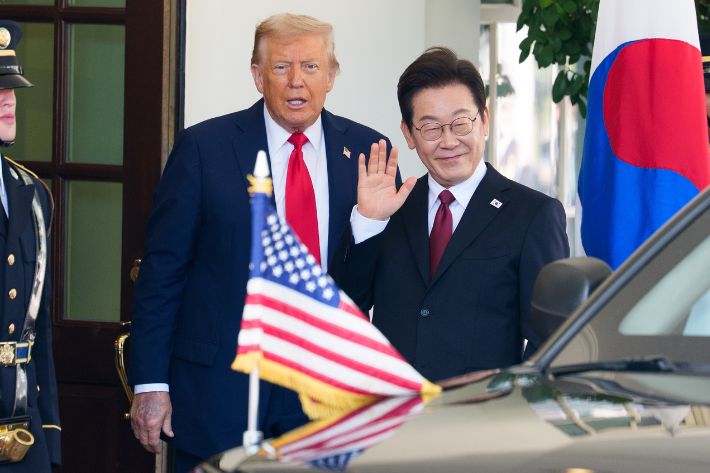
South Korea rushed to assure Washington on Tuesday that it would act in line with its trade deal with the Trump administration, after President Trump threatened to raise tariffs on South Korean cars and other imports.
Trump on Monday accused Seoul of being slow to gain parliamentary approval Significant investment in US business projects agreed The agreement was reached late last year with President Lee Jae-myung and senior South Korean officials.
Lee Myung-bak’s chief policy officer held an emergency meeting in Seoul and plans to visit the United States soon to meet with U.S. trade chiefs at the White House. The ruling Democratic Party said it would A bill approving the deal will be passed next month (February).
See also: Carney leads trade shift away from US, China, India, Australia
in a post truth societyTrump said: “The South Korean Legislature did not honor the agreement we made with the United States. President Lee and I reached a great agreement between our two countries on July 30, 2025, and we reiterated the terms when I was in South Korea on October 29, 2025. Why did the South Korean Legislature not ratify it?
“Because the Korean legislature has not yet enacted our historic trade agreement, which is their prerogative, I hereby increase tariffs on Korean automobiles, lumber, pharmaceuticals and all other reciprocal tariffs from 15% to 25%.”
The decision by Trump and his top trade officials came as a surprise to Seoul officials, Reuters reported, with the newspaper saying Seoul was trying to navigate alliances and trade partnerships amid potential challenges to its security and financial stability from Trump’s demands.
South Korean President Cheong Wa Dae said the U.S. government has not yet officially notified South Korea, one of the U.S.’s largest exporters of goods, of the tariff increase. It’s unclear when the rate hike will take effect.
In July last year, the two presidents initially agreed in principle that Seoul would U.S. investment $350 billionThat’s despite concerns that such a massive outflow could undermine financial stability in Asia’s fourth-largest economy.
According to the agreement, South Korea agreed to pay US$200 billion of the above amount in cash, in phased installments, with an annual cap of US$20 billion to maintain the stability of the Korean won. But its finance minister warned that payments may not begin until the second half of 2026 due to currency weakness.
The court decision is still pending
The White House move surprised some analysts, who said trading partners may be hesitant and unsure how to move forward with a trade deal because United States Supreme Court A ruling has yet to be made on whether Trump’s tariffs were issued in a legally permissible manner.
In November, Supreme Court Justice express doubt Trump’s authority to impose tariffs is under the International Emergency Economic Powers Act of 1977 (IEEPA), which makes no mention of tariffs, only language regulating imports during a national emergency declared by the US president.
There are also suggestions that South Korea’s recent regulatory action against publicly traded U.S. e-commerce company Coupang, which has complained that the measures are unfair and discriminatory, may have prompted Trump to take action.
South Korea’s KOSPI index fell more than 1%, and Hyundai Motor shares plunged more than 5% before rebounding late Tuesday.
See also:
The United States and South Korea announce details of building ships and nuclear submarines
Supreme Court defeat adds uncertainty over Trump tariffs
Modern raids: How visa loopholes leave South Korean workers in limbo
South Korea’s Lee Myung-bak will try to appease Trump with big shipbuilding push
South Korea to invest $350 billion in U.S. energy projects; gets 15% tariff