The Tamesis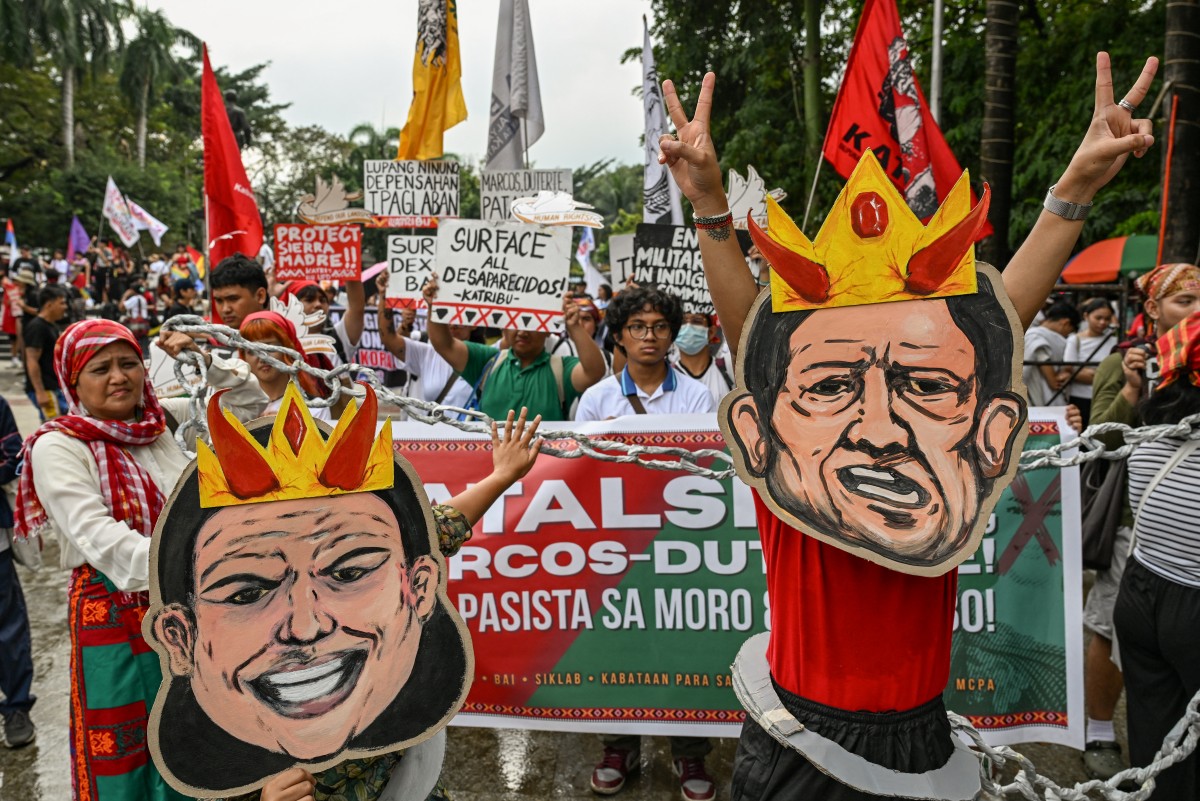
Baguio — “There is nothing more beautiful than the art of freedom, but nothing more difficult to learn how to use,” Alexis de Tocqueville said in his magisterial overview of democratic politics nearly two centuries ago. The greatest tragedy of our democracy lies in its origins: it was given to us by a retreating colonizer (the United States), not directly won by our collective struggle. Because of this, there is a huge gap between the ideas of the great generation of Jose Rizal for an independent Philippines, on the one hand, and the increasingly corrosive form of oligarchy that colonized our country on the other.
Yet the tragedy also saved us from the brutal vicissitudes of revolutionary nationalism that claimed tens of millions of lives in neighboring Asia. Violent revolutions from Latin America to the Middle East and Russia have overwhelmingly followed “reverse fairy tale” scripts, in which post-turmoil regimes end up worse than the old regimes they replaced in politically hoped-for halcyon moments. As activist Robert Francis “Bobby” Garcia explains in his harrowing political memoir, “Make Your Comrades Suffer: How Revolutions Destroy Themselves,” had postwar “revolutionary” forces succeeded in our country, the Philippines might have ended up more like the Khmer Rouge than communist Vietnam.
As a result, even the country’s most radical progressives, notably former Secretary of State Ronald Lamas and former Senator Antonio Trillanes, have been warning against shortcut “solutions” to our current predicament. The “revolutionary” option opens a Pandora’s box that will only strengthen the power of militants and extremists. However, this does not mean that we should rely on passive reformism.
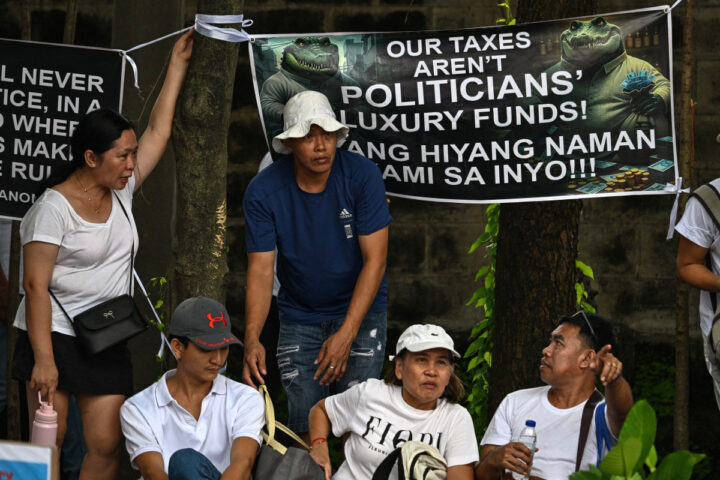
In principle, if power can stop the “big fish” involved in large-scale corruption, we should consider large-scale civil disobedience.
As philosophers such as John Rawls have argued, if normal constitutional processes fail to do their job, persistent and pervasive injustices need to be fundamentally confronted. Indeed, if it is the only way to tackle the worst forms of corruption and institutionalized abuse of power, incivility may even be justified – driven by the principle of “protective harm” and explicitly taking into account elements such as necessity, proportionality and effectiveness. As Frantz Fanon warned in The Wretched of the Earth, violence can be instantly addictive but can also sow the seeds of long-term tyranny.
Given the scale of corruption and injustice in our country, what we need is a “radical reformist” agenda—the golden mean between wanton revolutionary violence and irresponsible reformism—that defends our constitutional democracy while keeping in mind our shared national interests. Let’s not forget that the Philippines is in the midst of an ongoing new Cold War, with foreign powers ready to exploit any political vacuum in frontline countries like us.
The ultimate goal is not only to hold erring officials accountable, but to change the fundamental character of our deeply unjust and unequal society. However, the only way to build a just and democratic Philippines is to build a “strong democratic state” that is free from oligarchy and capable of providing security and basic goods to the masses.
Amateurs often think of progress as the product of “strongman” politics. However, real history tells us that most authoritarian regimes eventually move towards the tyranny of poverty. For every Lee Kuan Yew, one can name a thousand Mugabes and Gaddafis. Today’s most prosperous countries – especially those in Scandinavia, but also post-Napoleonic France and post-independence America – are the product of sustained and organized social struggle in the early stages of democratization combined with the best development policies.
Interestingly, postwar Japan and nearby Taiwan and South Korea—where protests were a daily occurrence thanks to well-organized civil society groups and unions—experienced their most transformative phases of economic prosperity under democratic politics. While authoritarian leaders oversaw the initial stages of industrialization, the Samsungs and TSMCs of this world emerged under democratic conditions, allowing for hyper-innovation.
Therefore, our current priority should be to create a progressive social movement and a competitive political party of national leaders that can not only lead us out of the current political dilemma, but also serve as a vehicle for structural reforms in 2028 and beyond.
After “Corruption in the Philippines”: Reform or Revolution? appeared first on Asia News Network.