The Tamesis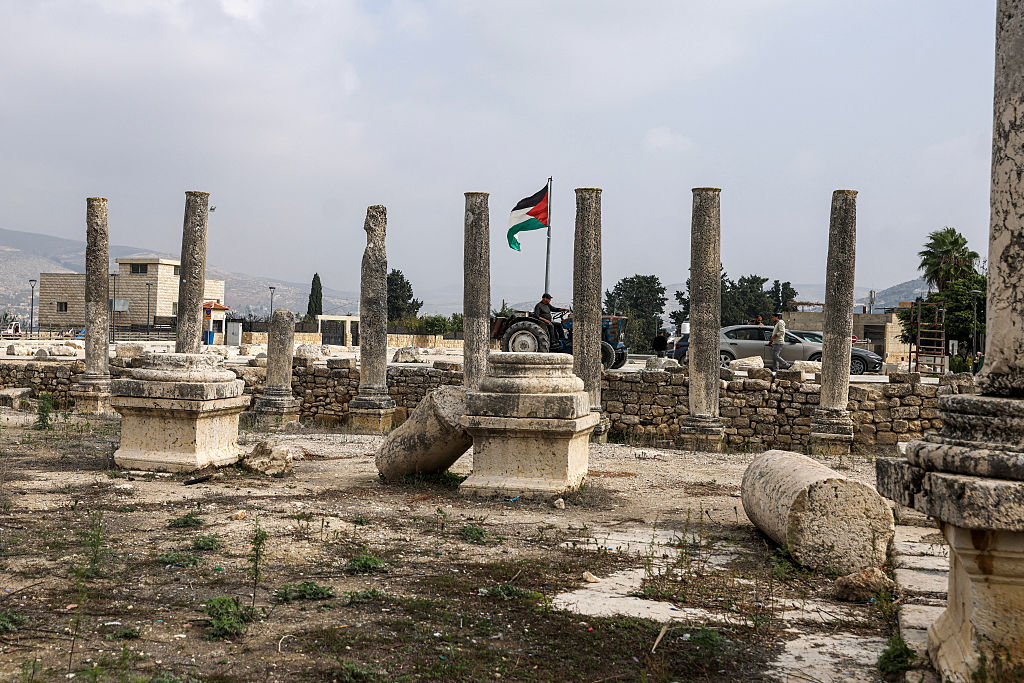
Israeli authorities have announced plans to seize a sprawling archaeological site overlooking the Palestinian town of Sebastiya in the West Bank, a move that has sparked outrage among some 3,500 Palestinians who depend on tourism at the site and nearby olive groves.
Sebastia residents denounced the planned confiscation as a pretext to expand illegal Jewish settlements and a means to erase Palestinian identity by appropriating heritage sites, The Guardian reported on Monday.
Related articles
Sebastia Mayor Mahmud Azem received the notification from Israeli authorities in November, according to Israeli authorities. guardian. However, talk of settlement expansion has circulated for years as land grabs by Israeli settlers escalate in the West Bank. Current development plans call for a visitor center, a parking lot and a fence to separate the archaeological site from the town, cutting off Palestinian access to the site and surrounding olive groves.
“Unfortunately, Sebastian has gone down a dark tunnel,” Azeem, 50, told the outlet guardian. “This is an invasion of Palestinian landowners, olive trees, tourist attractions and a violation of Palestinian history and heritage.”
At 182 hectares (approximately 450 acres), Sebastian will be the largest land occupied by an archaeological project in the West Bank since the occupation began in 1967. Israeli authorities have sought to redesignate the area as Israeli territory, citing biblical references and Sebastian’s status as the capital of the kingdom of Samaria in northern Israel between the 9th and 8th centuries BC.
Critics situate the multi-million dollar heritage project within the broader expansion of Jewish settlements in the West Bank. Since much of the land planned to be confiscated is privately owned, opponents warn that the move sets a disturbing precedent under Israel’s current government, in part due to the ultra-nationalist Otzma Yehudit party.
Alon Arad of the Israeli NGO Emek Shaveh said in a statement that archeology was being “weaponized.” The organization works to preserve archaeological sites “as public assets belonging to members of all communities, faiths and peoples”.
“The scale of what is planned for Sebastian is truly unprecedented,” Arad added. He described the plan as “very cynical” and said it had “nothing to do with history… it’s really just about land and annexation”.
Amichai Eliyahu, Israel’s minister of heritage and an Ozma Yehudit member living in a West Bank settlement, has been an outspoken advocate for outright annexation of the territory.
“Our desire is to breathe new life into the site and make it an attraction that attracts hundreds of thousands of visitors every year, which will strengthen the ties between the people, their heritage and their country,” Eliyahu said in a statement last year.
Settlement movement leaders often refer to the region by the names of the Iron Age kingdoms that once ruled it – Judea in the south and Samaria (Hebrew Shomron) in the north – while Israeli and Palestinian representatives accuse each other of emphasizing different aspects of the region’s history to suit competing political agendas. Under Israeli plans, the new development in Sebastia will be called Shomron National Park.
Wala’a Ghazal, director of a small museum in the courtyard of a 13th-century mosque in Sebastia, denounced the politicization of archaeological sites and emphasized the area’s stratified history. Rebuilt by the Ottomans, this mosque was once a Crusader cathedral, itself a former Byzantine church and now the tomb of John the Baptist.
“There have always been people living here,” she said. “It’s wrong to focus on just one period. Samaria happened during the Iron Age, but there were people living here before that.”
In July 2023, the Palestinian Authority reported multiple attacks by Israeli forces and settler militias in Sebastiya, near the northern city of Nablus. The Palestinian Authority called on UNESCO to intervene, citing ongoing renovation projects in Sebastia’s public square overseen by UNESCO.
“This was an attack based on a plan to seize Palestinian archaeological sites throughout the West Bank and impose Israeli control over them and annex them,” the Palestinian Authority foreign ministry said in a statement.